Emergencies involving children rarely come with warning signs. A child can stop breathing or lose consciousness in seconds, and the minutes before help arrives are the most critical. Pediatric CPR is not a skill that belongs only in hospitals or training centers. Parents and caregivers can learn it, and doing so before a crisis happens can determine whether a child survives. Preparation is not an overreaction. It is the most grounded form of care a parent can offer.
Cardiac arrest in children most often follows breathing failure rather than a sudden heart event. That distinction is important because it changes how CPR is performed on younger patients. For families who want proper hands-on guidance, enrolling in pediatric CPR classes gives caregivers age-specific techniques, correct compression depth, and the kind of practiced confidence that reading alone cannot build. Step-by-step instruction from a trained facilitator is genuinely difficult to replace.
Recognizing When CPR Is Needed
Starting CPR at the right moment is just as important as performing it correctly. A caregiver should tap the child firmly on the shoulder, call their name, and look for a response. If the child does not react and shows no visible chest movement, CPR should begin without delay. Emergency services must be contacted immediately, either by the caregiver directly or by directing a bystander to call while compressions begin.
The Core Steps of Pediatric CPR
Check the Scene and the Child
The first obligation is making sure the environment is physically safe before approaching. Once confirmed, check for responsiveness. Look for signs of normal breathing for no more than ten seconds before proceeding.
Position and Open the Airway
Place the child on a firm, flat surface. Tilt the head back gently and lift the chin to clear the airway. Infants require a much subtler tilt. Overextension in very young children can actually obstruct breathing rather than improve it.
Deliver Rescue Breaths
After opening the airway, give two rescue breaths. For a child, seal your mouth over theirs and pinch their nose shut. For infants, cover both the mouth and nose together. Each breath should last approximately one second and produce a visible rise in the chest. Avoid blowing with force, as excessive pressure can cause harm.
Begin Chest Compressions
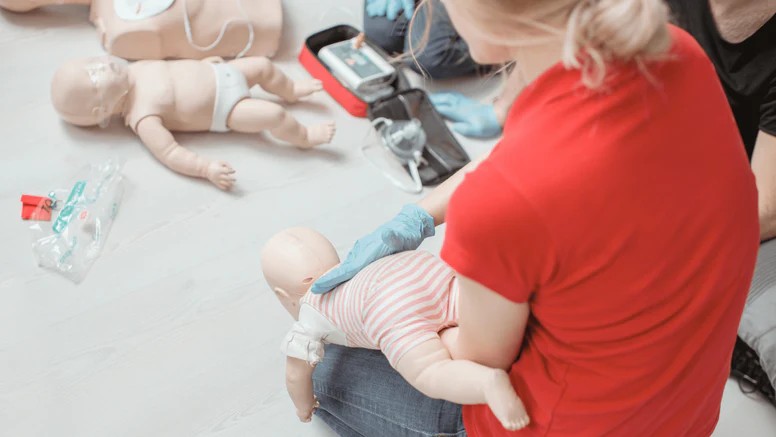
For children between one and eight years old, use the heel of one or two hands placed at the center of the chest. For infants, use two fingers positioned just below the nipple line. Compressions should reach about two inches deep for children and around one and a half inches for infants. Deliver 30 compressions at a pace of 100 to 120 per minute, then follow with two rescue breaths.
Maintain the Cycle
The cycle of 30 compressions and two breaths should continue without extended pauses. Interrupting chest compressions reduces blood flow to the brain. Continue until emergency responders arrive or the child begins breathing independently.
How Pediatric CPR Differs From Adult CPR
In adults, cardiac arrest is typically triggered by a heart-related event. In children, breathing failure usually comes first and then causes cardiac arrest. Rescue breaths are therefore more important in pediatric resuscitation than in adult care. Hand placement, compression depth, and overall force also vary considerably based on a child’s size, which is why age-specific technique matters.
Why Practicing Matters as Much as Learning
Reading about CPR builds awareness, but technique accuracy depends on repetition. Research consistently shows that hands-on practice improves both physical precision and decision-making speed during real emergencies. Revisiting training every one to two years is strongly recommended, since the finer details of technique are among the first things to fade without regular reinforcement.
Conclusion
No parent hopes to use what they learn in a CPR course. Even so, preparing for that possibility reflects genuine care for a child’s safety. Knowing the correct sequence, building physical familiarity through practice, and staying current with training puts any caregiver in a far stronger position during those first critical minutes. The time invested in learning these skills is never excessive. For a child in danger, it may be everything.