
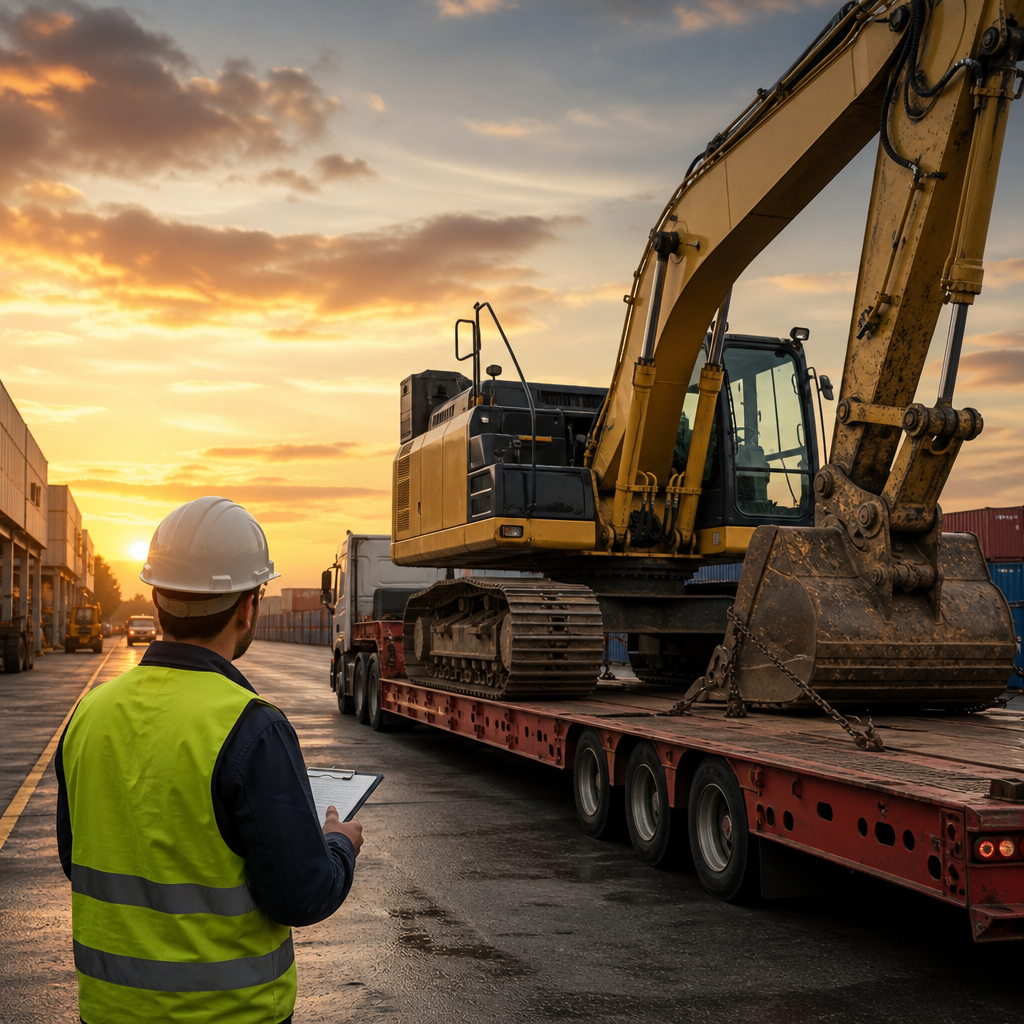
Moving heavy machinery is not a task that tolerates shortcuts. Whether you are relocating a construction fleet, transferring industrial equipment between job sites, or decommissioning a manufacturing facility, the logistics involved demand a level of precision that goes far beyond standard freight shipping. Businesses that underestimate the complexity of heavy equipment transport often face costly delays, regulatory violations, and equipment damage that could have been entirely avoided with proper planning and the right service provider.
Understanding the Scope of Heavy Equipment Logistics
Heavy equipment encompasses a broad range of machinery — from bulldozers, cranes, and excavators to industrial generators, agricultural combines, and large-scale manufacturing presses. Each category presents its own set of transportation challenges. Weight distribution, load height, axle pressure, and dimensional clearances are just a few of the variables that must be calculated before a single piece of equipment is loaded onto a trailer.
Unlike standard freight, oversized and overweight loads are subject to state and federal regulations that govern everything from the type of trailer required to the hours during which transport is permitted. Permits must be obtained in advance, and in many cases, pilot cars or law enforcement escorts are legally required. Failing to comply with these regulations can result in fines, impoundment, and significant project delays.
Why Route Planning Is Non-Negotiable
One of the most overlooked aspects of heavy equipment transport is route planning. A route that appears straightforward on a map may present serious obstacles in practice — low bridges, weight-restricted roads, sharp turns, or construction zones that make passage impossible for oversized loads. Professional logistics providers conduct thorough route surveys before transport begins, identifying potential hazards and developing contingency plans to ensure the load arrives safely and on schedule.
This level of preparation is especially critical in dense urban environments where infrastructure constraints are more pronounced. Cities like Los Angeles present unique challenges, including heavy traffic corridors, strict municipal regulations, and a complex network of freeways and surface streets that require expert navigation for any oversized transport operation.
Selecting the Right Transport Partner
Choosing a transport provider for heavy machinery is a decision that carries significant financial and operational consequences. Not all freight carriers are equipped to handle oversized loads, and not all heavy haul specialists have the experience, equipment, and licensing required to operate safely across state lines or within specific metropolitan regions. When evaluating potential partners, businesses should look beyond price and focus on credentials, fleet capabilities, and demonstrated experience with similar cargo.
Key factors to assess include the provider’s insurance coverage, their familiarity with permit acquisition processes, the condition and variety of their trailer fleet, and their track record with time-sensitive deliveries. References from past clients in similar industries can provide valuable insight into how a carrier performs under real-world conditions.
The Role of Specialized Equipment in Safe Transport
The type of trailer used in heavy equipment transport is not a minor detail — it is a fundamental safety consideration. Lowboy trailers, step-deck trailers, RGN (removable gooseneck) trailers, and flatbeds each serve different purposes depending on the height, weight, and configuration of the load. A provider that operates a diverse and well-maintained fleet is better positioned to match the right equipment to each unique transport requirement, reducing the risk of load shifting, structural stress, and transit damage.
Proper securement is equally important. Chains, binders, straps, and blocking materials must be applied according to federal standards, and drivers must be trained to inspect and adjust securement throughout the journey. Any movement of the load during transit can compromise both the equipment and the safety of other road users.
Freight Forwarding and Multi-Modal Considerations
For businesses moving heavy equipment across international borders or over very long domestic distances, freight forwarding becomes a critical component of the logistics strategy. Freight forwarders coordinate the movement of cargo across multiple transportation modes — truck, rail, ocean vessel, and air — managing documentation, customs clearance, and carrier relationships on behalf of the shipper. Understanding how freight forwarding integrates with heavy haul transport can help businesses design more efficient and cost-effective supply chains. For a comprehensive overview of how freight forwarding works and why it matters, this detailed guide on freight forwarding fundamentals offers an excellent starting point for logistics decision-makers.
Coordinating Timelines Across Complex Moves
Heavy equipment transport rarely happens in isolation. It is typically one component of a larger operational transition — a facility relocation, a project mobilization, or a fleet redeployment. Coordinating the transport timeline with other moving parts requires clear communication between all stakeholders, including project managers, site supervisors, equipment operators, and the transport provider. Delays in equipment arrival can cascade into significant project cost overruns, making timeline reliability a top priority when selecting a carrier.
Businesses that are simultaneously managing other aspects of a relocation — such as office moves or personnel transfers — may benefit from working with logistics professionals who understand the full scope of complex transitions. Choosing reliable interstate movers for your next relocation is a decision that deserves the same level of diligence applied to heavy equipment logistics, as both require vetted professionals, clear contracts, and realistic timelines.
Bear Down Logistics: A Trusted Name in Heavy Haul Transport
For businesses operating in Southern California, finding a carrier with deep regional expertise and a proven heavy haul capability is essential. Bear Down Logistics has built a strong reputation in the Los Angeles market by combining operational precision with a client-first approach. Their team understands the regulatory landscape, the infrastructure challenges, and the time pressures that define heavy equipment transport in one of the country’s most demanding logistics environments. With a commitment to safety, compliance, and transparent communication, Bear Down Logistics delivers results that businesses can depend on across a wide range of industries and equipment types.
Making the Right Decision for Your Equipment Move
When the stakes are high and the equipment is irreplaceable, the choice of transport provider matters enormously. Businesses that invest time in vetting their logistics partners, understanding the regulatory requirements, and planning their routes carefully are far more likely to experience smooth, damage-free transport outcomes. Those that treat heavy equipment moves as routine freight shipments often learn the hard way that this category of logistics demands a fundamentally different level of expertise and preparation.
Selecting a provider with the right credentials, the right equipment, and the right experience is not just a best practice — it is a business imperative. Whether you are moving a single piece of machinery or an entire fleet, the quality of your logistics partner will directly determine the success of your operation. Choose wisely, plan thoroughly, and work with professionals who treat your equipment with the same care you do.
Conclusion
Heavy equipment transport is a specialized discipline that sits at the intersection of engineering, regulatory compliance, and operational logistics. The businesses that navigate it most successfully are those that approach it with the seriousness it deserves — partnering with experienced carriers, planning meticulously, and maintaining clear communication throughout the process. In a field where the margin for error is narrow and the consequences of failure are significant, expertise and preparation are the only reliable foundations for success. For companies in the Los Angeles region, working with a provider who knows the local landscape inside and out is not just an advantage — it is a necessity. Heavy Equipment Transport in Los Angeles requires a partner who combines technical capability with regional knowledge, ensuring your machinery arrives safely, on time, and in full compliance with all applicable regulations.