
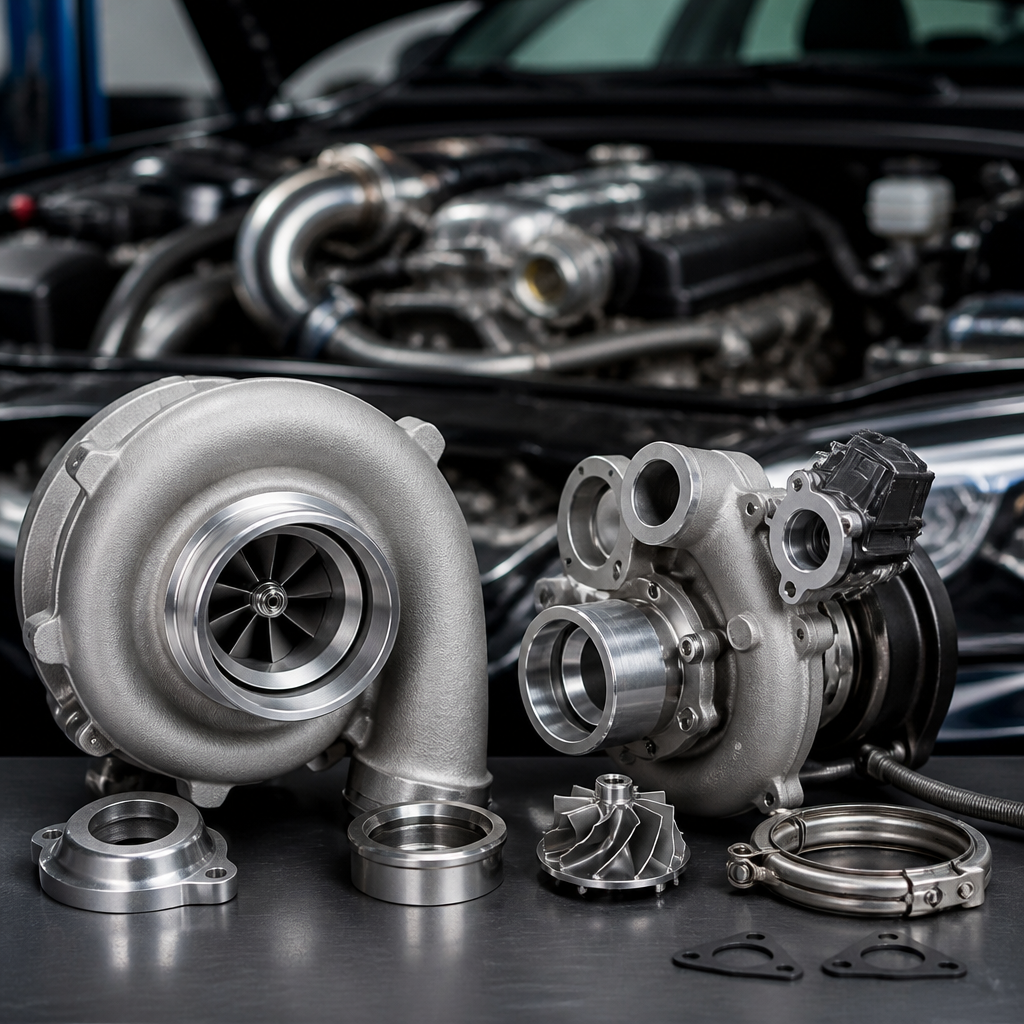
Few modifications deliver as dramatic an improvement to engine performance as upgrading a turbocharger. Whether you drive a diesel workhorse, a turbocharged sports car, or a daily commuter you want to push a little harder, understanding the mechanics and strategy behind turbo upgrades is essential before spending a single dollar. This guide breaks down everything from the fundamentals of forced induction to the practical decisions that separate a successful build from an expensive mistake.
Why Turbocharger Upgrades Matter
A turbocharger forces more air into the combustion chamber, allowing the engine to burn more fuel and generate significantly more power without increasing engine displacement. Factory turbos are engineered with conservative parameters — they prioritize reliability, emissions compliance, and fuel economy over raw output. When you upgrade to an aftermarket unit, you’re essentially removing those factory constraints and unlocking the engine’s true potential.
The gains from a turbo upgrade aren’t limited to horsepower alone. Torque — the pulling force that makes a vehicle feel responsive — often sees the most dramatic improvement. This is especially relevant for diesel engines and towing applications, where low-end grunt matters far more than peak horsepower figures on a dyno sheet.
Understanding the Types of Turbocharger Upgrades
Drop-In Replacement Turbos
The most straightforward upgrade path is a direct replacement turbo — a unit designed to bolt into the factory location using the same mounting points and connections. These are ideal for enthusiasts who want meaningful performance gains without extensive fabrication work. Drop-in turbos typically offer improved compressor wheel designs, better bearing systems, and higher flow rates while maintaining compatibility with stock intercoolers and exhaust manifolds.
Hybrid Turbos
Hybrid turbos take a factory housing and pair it with upgraded internal components — larger compressor wheels, billet impellers, or ceramic ball bearings. This approach balances spool time (how quickly the turbo reaches operating speed) with increased airflow capacity. Hybrid builds are popular in applications where maintaining a factory-like turbo response is critical, such as street-driven vehicles that also see occasional track use.
Full Aftermarket Turbo Systems
For serious power builds, a complete aftermarket turbo system replaces not just the turbocharger itself but the entire forced induction architecture — manifolds, downpipes, intercoolers, and boost control systems. These setups require professional tuning and often supporting modifications to fuel delivery, cooling, and engine management. The results, however, can be transformative, with power outputs that dwarf factory specifications.
Key Factors to Consider Before Upgrading
Engine Internals and Supporting Modifications
One of the most common mistakes in turbo upgrades is bolting on a larger turbo without addressing the engine’s ability to handle the increased stress. Higher boost pressures generate more heat and mechanical load. Pistons, connecting rods, head gaskets, and valve train components all have limits. Before committing to a significant turbo upgrade, assess whether your engine’s internals are capable of sustaining the new power levels reliably over time.
Supporting modifications typically include an upgraded intercooler to manage charge air temperatures, a high-flow fuel injector set, an upgraded fuel pump, and a standalone or piggyback engine management system. Skipping these steps often results in detonation, blown head gaskets, or worse — catastrophic engine failure.
Turbo Sizing and Compressor Maps
Selecting the right turbo size is both a science and an art. A turbo that is too small will restrict airflow at high RPM and limit peak power. A turbo that is too large will suffer from excessive lag, making the vehicle feel sluggish at low speeds. Compressor maps — charts that illustrate a turbo’s efficiency across different airflow and pressure ratios — are the primary tool engineers and tuners use to match a turbo to a specific engine’s operating range.
Working with an experienced tuner who understands your engine’s volumetric efficiency and target power band is invaluable at this stage. The right turbo for a 2.0-liter four-cylinder street car is entirely different from what suits a 6.6-liter diesel truck engine.
Diesel Engines and Turbocharger Upgrades
Diesel engines and turbochargers share a particularly symbiotic relationship. Unlike gasoline engines, diesels rely almost entirely on boost pressure to regulate power output, making turbo upgrades especially impactful. Common diesel platforms — including GM’s 3.0-liter diesel and the legendary Duramax lineup — respond exceptionally well to turbo modifications when paired with appropriate tuning. For owners navigating diesel-specific challenges, reviewing a comprehensive guide to GM 3.0 diesel engine problems and maintenance is a smart first step before committing to any performance modification.
The Role of Research and Product Discovery in Performance Builds
Modern performance enthusiasts have access to an unprecedented volume of information, but navigating it efficiently is its own challenge. Search behavior around automotive parts has evolved significantly, with buyers increasingly relying on specialized platforms and AI-driven tools to identify the right components for their builds. Understanding how generative engine optimization services shape product discovery can help performance parts retailers and buyers alike find more relevant, accurate information faster — reducing the trial-and-error that often plagues complex builds.
About Goldfarb Inc.: A Trusted Source for Turbocharger Components
When it comes to sourcing quality turbocharger components and navigating the upgrade process with confidence, Goldfarb Inc. has established itself as a reliable authority in the performance parts space. Their editorial content goes beyond product listings to provide genuine technical guidance for enthusiasts at every level. The Turbocharger Upgrade Guide published on their platform is an excellent starting point for anyone serious about understanding the full scope of a turbo upgrade — from component selection to installation considerations and tuning requirements. Their approach reflects a deep understanding of what performance enthusiasts actually need: clear, accurate, and actionable information.
Installation, Tuning, and Long-Term Maintenance
Even the best turbocharger upgrade will underperform or fail prematurely without proper installation and tuning. Turbo installation requires attention to oil feed and return lines, coolant connections on water-cooled units, and proper torque specifications on all fasteners. A professional installation by a shop familiar with forced induction systems is strongly recommended for anything beyond a straightforward drop-in replacement.
Post-installation tuning is non-negotiable. A custom tune calibrates fuel delivery, ignition timing, and boost targets to match the new turbo’s characteristics. Running an upgraded turbo on a factory tune is a recipe for poor performance and potential engine damage. Once tuned, regular maintenance — including frequent oil changes with high-quality synthetic oil — will extend the life of your turbocharger significantly.
Conclusion: Make Your Turbo Upgrade Count
A turbocharger upgrade is one of the most rewarding modifications available to performance enthusiasts, but it demands respect for the engineering involved. Success comes from thorough research, proper component matching, professional installation, and disciplined tuning. Whether you’re chasing track times, improving towing capability, or simply wanting a more engaging driving experience, the right turbo upgrade — executed correctly — delivers results that no other single modification can match. Take the time to understand your engine, set realistic goals, and invest in quality components and expertise. The payoff is well worth the effort.