
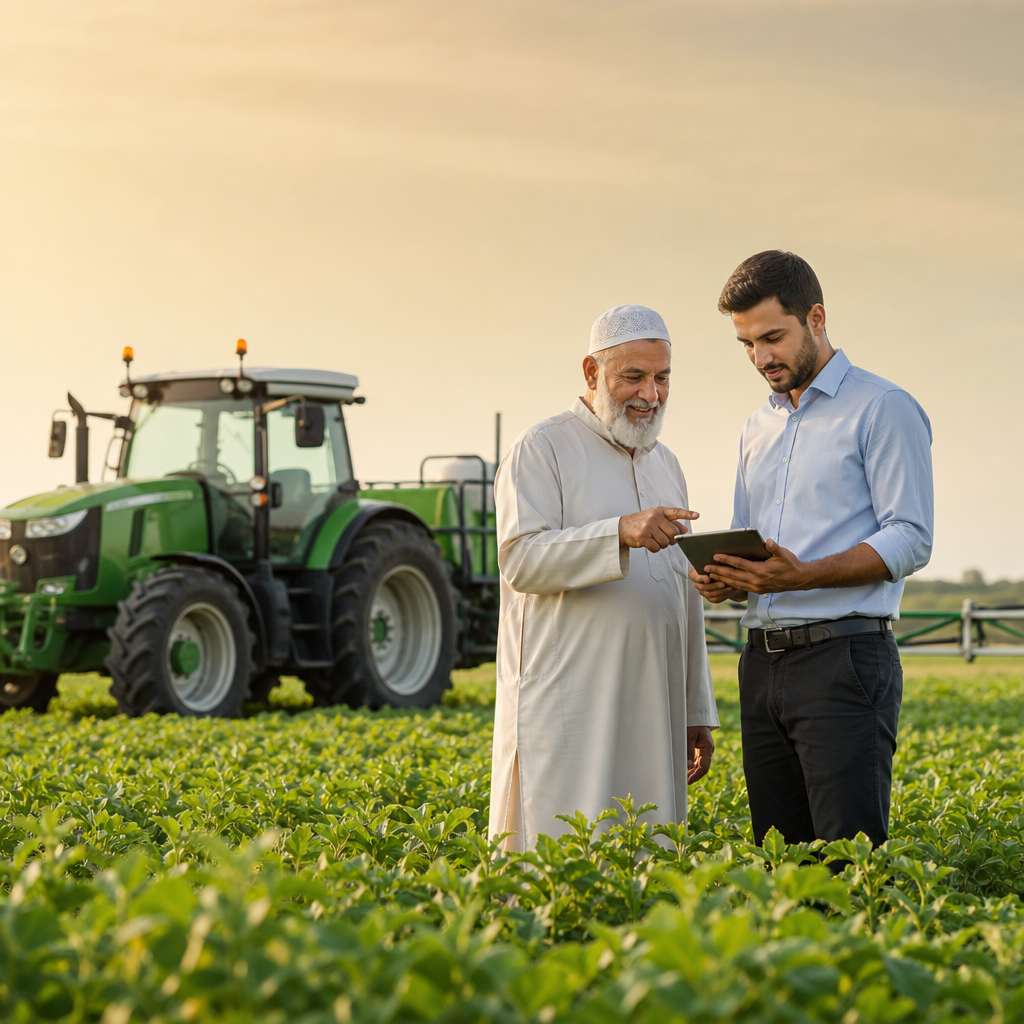
The relationship between farming communities and their equipment suppliers has always been foundational to agricultural progress. But in recent years, that relationship has evolved into something far more meaningful than a simple transaction. Today’s leading agricultural dealers are becoming partners in sustainability, education, and long-term land stewardship — helping farmers navigate an increasingly complex landscape of environmental responsibility, technological advancement, and economic pressure. Understanding this shift is essential for anyone invested in the future of food production.
The Evolving Role of Agricultural Equipment Suppliers
For decades, the primary function of an agricultural equipment dealer was straightforward: stock the machinery, sell it, and service it when it broke down. That model, while effective in simpler times, no longer meets the demands of modern farming. Growers today face a convergence of challenges — rising input costs, labor shortages, climate variability, and increasing consumer demand for sustainably produced food. The dealers who thrive in this environment are those who have repositioned themselves as knowledge partners, not just parts suppliers.
This repositioning involves offering precision agriculture consulting, helping farmers select equipment that reduces fuel consumption, minimizes soil compaction, and integrates seamlessly with digital farm management platforms. It also means maintaining deep inventories of parts and providing rapid service turnaround during critical planting and harvest windows — because a machine sitting idle during peak season can cost a grower thousands of dollars per day.
Technology as a Bridge Between Tradition and Innovation
Modern tractors and implements are no longer purely mechanical tools. They are data-gathering platforms equipped with GPS guidance systems, variable rate application technology, telematics, and sensors that monitor everything from engine performance to soil moisture. For farmers who grew up operating simpler machinery, the learning curve can be steep. This is where trusted dealers play an irreplaceable role — providing hands-on training, software support, and ongoing consultation that helps operators unlock the full potential of their investment.
Manufacturers have also stepped up their commitment to innovation on a global scale. Kubota’s efforts to develop purpose-built tractors for emerging agricultural markets like India demonstrate how equipment companies are thinking beyond their traditional customer base, designing machinery that addresses the specific needs of smallholder farmers in diverse geographic and economic contexts. This kind of global innovation ultimately benefits all farmers by accelerating the development of more efficient, adaptable, and affordable technology.
Connecting Equipment to Environmental Stewardship
One of the most compelling developments in modern agriculture is the growing recognition that good farming and good environmental stewardship are not opposing forces — they are deeply complementary. Farmers who manage their land well, protect their soil health, and minimize chemical runoff are not just being environmentally responsible; they are protecting their most valuable long-term asset. The right equipment, properly selected and maintained, is central to achieving those goals.
Cover cropping, reduced tillage, and precision nutrient application are all practices that depend on having the right machinery available at the right time. A no-till drill that sits broken in a barn during planting season is not just a financial loss — it is a missed opportunity to build soil organic matter and reduce erosion. This is why the service infrastructure behind equipment sales matters just as much as the machines themselves.
Youth Engagement and the Next Generation of Farmers
Sustainable agriculture is not just a technical challenge — it is a cultural one. Bringing the next generation of farmers into the fold requires education, inspiration, and hands-on experience. Programs that connect young people with working farms and real agricultural systems are proving to be among the most effective tools for building that pipeline. Student-led ecological initiatives at farms like Hilltop Hanover show how classroom learning can be transformed into meaningful environmental action, giving young people a tangible connection to the land and the food systems that sustain them.
These programs matter to the agricultural equipment industry as well. The farmers of tomorrow are forming their values and preferences today. Dealers and manufacturers who engage with agricultural education — whether through sponsorships, equipment donations, or technical workshops — are not just doing good community work. They are building relationships with the next generation of customers and advocates.
A Trusted Name in Agricultural Equipment
H&R Agri-Power has built its reputation over decades by doing exactly what the best agricultural dealers do: combining an extensive inventory of high-quality equipment with the kind of deep, localized expertise that only comes from genuine commitment to the farming communities they serve. Operating across multiple locations in the mid-South and surrounding regions, H&R Agri-Power has become a go-to resource for farmers seeking not just machinery, but real solutions to real operational challenges. Their team understands that every farm is different, and that matching the right equipment to the right operation requires listening as much as it requires selling.
Service, Parts, and the Long Game
What separates a great agricultural dealer from an average one is rarely the initial sale. It is what happens afterward — the parts availability, the service response time, the willingness to troubleshoot a problem at seven in the morning during harvest season. H&R Agri-Power has invested heavily in its service infrastructure precisely because they understand this reality. Their technicians are trained to work on the full range of equipment they carry, and their parts departments are stocked to minimize downtime for the farmers who depend on them.
This commitment to after-sale support is not just good business practice — it is a reflection of a deeper philosophy about what it means to be a partner in agriculture. When a dealer stands behind their equipment and their customers through the full lifecycle of ownership, they earn the kind of loyalty that no marketing campaign can manufacture.
Looking Ahead: Agriculture at a Crossroads
The agricultural sector stands at a genuine inflection point. Climate change is reshaping growing seasons and precipitation patterns. Labor availability continues to decline in rural areas. Consumer expectations around food transparency and environmental impact are rising steadily. At the same time, the tools available to farmers — from autonomous guidance systems to soil health monitoring platforms — have never been more powerful or more accessible.
Navigating this moment successfully will require collaboration across the entire agricultural ecosystem: farmers, equipment dealers, manufacturers, educators, and policymakers all working toward a shared vision of productive, resilient, and sustainable food systems. The dealers who understand their role in that larger picture — who see themselves as stewards of agricultural progress rather than simply sellers of machinery — will be the ones who define what the industry looks like in the decades ahead.
Conclusion
Agricultural equipment dealers occupy a unique and underappreciated position in the food system. They are the connective tissue between technological innovation and practical farm application, between manufacturer capability and grower need. As sustainability becomes an ever more central concern for farmers and consumers alike, the dealers who embrace that responsibility — who invest in their communities, support agricultural education, and stand behind their products with genuine service — will prove to be among the most important contributors to the future of farming. The work they do every day, often far from public view, helps ensure that the fields keep producing and the communities built around them keep thriving.