
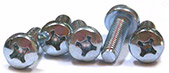
Threaded insert selection rarely gets the attention it deserves in early project planning. Yet these small components carry significant responsibility in any bolted assembly, holding joints together through vibration, thermal shifts, and years of repeated loading.
Specify the wrong type and the consequences show up as field failures, rework cycles, and avoidable cost overruns. Understanding the key selection criteria before a design is finalized saves far more time than correcting mistakes after production begins.
Material Compatibility Matters First
Base material is the starting point for any insert decision. Aluminum, steel, thermoplastic, and composite panels each behave differently under load, and they expand and contract at different rates with temperature change. Wall thickness also plays a role. An insert that performs well in 3mm steel plate may not grip reliably in a thinner aluminum extrusion, even if the thread size is identical.
Choosing the Right Insert Type
Different assembly conditions call for different insert families. In hollow sections, thin-walled tubing, and enclosed sheet metal profiles, threaded rivet nuts offer a practical solution; they expand against the blind side of a panel during installation, creating permanent load-bearing threads without requiring rear access. For applications where both faces are open, other insert types may be more efficient, but blind-side options remain the most versatile across varied geometries.
Matching Insert Material to the Application
Stainless steel suits corrosive environments, including marine, chemical, and food-processing settings. Zinc-plated carbon steel works well in dry indoor assemblies where budget is a constraint. The risk of pairing incompatible metals is real. Galvanic corrosion between the insert and the base material can degrade joint strength faster than the design load ever would.
Thread Size and Load Requirements
Thread size affects pull-out resistance, torque capacity, and the overall load path through the joint. Engineers should calculate expected axial and shear loads, account for vibration exposure, and apply a safety factor of at least two to one over anticipated service loads. Catalog minimum values are tested under ideal lab conditions. Real assemblies rarely replicate those conditions exactly, so independent verification against actual material and thickness specifications is worth the effort.
Installation Method and Tooling
Installation method influences both consistency and production throughput. Press-fit inserts, heat-set inserts, and mechanically expanded inserts each require different tooling and process controls. Selecting an insert that demands specialized equipment without confirming tooling availability early can stall a production launch.
Blind-Side vs. Through-Access Installation
Blind-side inserts are designed for one-face-only access, which covers a large share of real-world assemblies. Through-access inserts simplify installation when geometry permits but are not always an option. Misclassifying access requirements at the design stage introduces process steps that slow down assembly lines and increase the chance of installation errors.
Pull-Out Strength and Testing Standards
Manufacturer data sheets present pull-out values under controlled test conditions, often with base materials and thicknesses that may not match a specific application. Engineers should request test results relevant to their actual substrate and request clarification when data ranges are broad. High-cycle applications, those involving repeated loading or thermal cycling, warrant closer scrutiny. A two-to-one safety factor is a reasonable floor, not a ceiling, in demanding environments.
Head Style and Flush Requirements
Head geometry is both a functional and an assembly concern. Countersunk heads allow mating surfaces to sit flat, which is critical in precision assemblies. Flanged heads spread the bearing load across a larger surface area, reducing pull-through risk in softer or thinner materials. Neither is universally better; the choice depends on the joint geometry and surface requirements.
When Flush Finish Is Non-Negotiable
In aerospace structures and consumer electronics, even a fraction of a millimeter of protrusion can interfere with mating components. Countersunk or headless inserts are the only viable options in those cases. Catching this requirement early prevents a late-stage design change that forces a supplier swap and delays the build schedule.
Corrosion and Surface Finish Requirements
Outdoor, marine, and food-grade assemblies carry specific finish requirements that standard zinc plating often cannot meet. Salt-spray resistance, chemical compatibility, and regulatory compliance all factor into finish selection. Engineers who address this during concept development avoid the cost of requalifying a different insert after prototyping is already complete.
Conclusion
Every threaded insert decision affects how well a joint performs over its service life. Engineers who work through material compatibility, load calculations, access geometry, head style, and environmental requirements before committing to a specification will build more reliable assemblies and avoid the rework that comes from late-stage corrections. A thorough selection process at the start of a project is one of the simplest ways to protect both product quality and production timelines.