
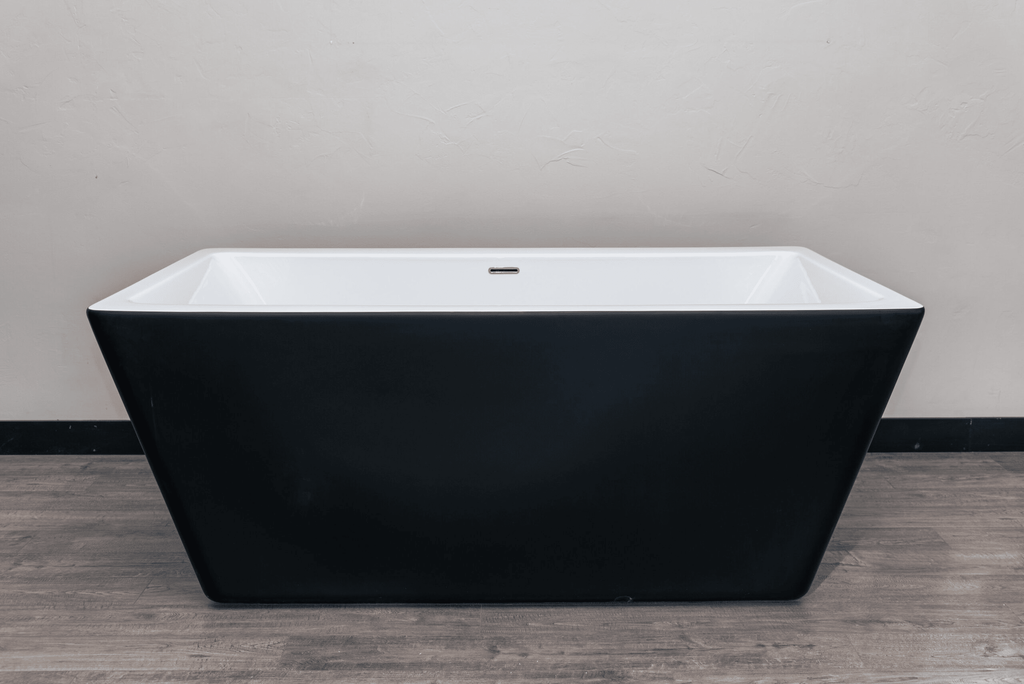
Most homeowners treat the primary bathroom as an afterthought until they’re staring at a dated alcove tub and wondering why the room feels like a motel. That one fixture carries more visual weight than any tile or vanity you’ll ever pick, and the data on renovation spending makes clear that Americans have figured this out. The bathroom is no longer the last room you update. It’s the first one buyers notice, and the first place you feel the difference at the end of a long day.
Here’s what the numbers show, what designers are actually specifying, and a concrete method for deciding whether a freestanding tub belongs in your remodel.
Americans Are Spending Serious Money on Bathrooms
Bathroom renovations have quietly become one of the country’s most active spending categories. American homeowners poured $827 billion into home improvement projects during the two-year period ending in 2023, according to the latest U.S. Census Bureau American Housing Survey. Bathrooms pulled a significant share of that total. The 2023 American Housing Survey, published by the U.S. Census Bureau and the Department of Housing and Urban Development, found that bathroom remodels accounted for $68.9 billion in total expenditures, with homeowners spending a median of $5,000 on bathroom projects over the 2021 to 2023 period.
That figure is a median. If your tub is the centerpiece of the room and you want the redesign to actually feel different when you walk in, you’re almost certainly spending more than that. The interesting question isn’t whether to spend money on the bathroom. It’s where to put the money so the room changes.
The alcove tub tucked against three walls isn’t that place. A freestanding tub is.
What Designers Are Specifying Right Now
The design industry tracks these choices methodically, and the 2026 Bath Trends data tells a specific story. The National Kitchen and Bath Association (NKBA), the world’s leading trade association for the $228 billion kitchen and bath industry, released its 2026 Bath Trends Report based on a survey of nearly 700 industry experts, including designers, manufacturers, remodelers, and architects.
The picture that emerges is one of the bathroom evolving into something closer to a private retreat than a utility room. In the NKBA’s 2026 Bath Trends Report, 77% of design professionals said tying bath design to a homeowner’s hotel or resort experience is expected to be popular. That shift has a direct effect on fixture choices. Luxury hotel bathrooms made the freestanding tub the visual shorthand for a premium bathing space, and residential designers have been copying that playbook ever since.
“Bath design is becoming deeply personal. Beyond considerations like resale value, designers are focusing on how spaces support a homeowner’s individual rituals, preferences, and self-care routines.”
— Bill Darcy, Global President and CEO, NKBA | KBIS
That’s a meaningful shift from where bathroom design conversation was five years ago. Back then, the discussion was almost entirely about resale value and square footage. Now the primary question is whether the room actually does something for you on a daily basis, and a freestanding tub is the single fixture that answers that question most visibly.
The National Kitchen and Bath Association’s trend reporting names freestanding and soaking tubs among the styles designers expect to stay popular for the next several years, with oval the leading shape. That matters if you’re worried about picking something that looks dated in four years. You’re not making a bold bet; you’re picking the current industry default for a primary bath upgrade.
The Tub-First Design Method
Most bathroom remodels start with tile, then work outward to fixtures. That order produces bathrooms that look coordinated but rarely feel intentional. The better approach is to flip the sequence entirely.
Here’s the Tub-First Design Method, which treats the freestanding tub as the anchor of the design rather than its last addition:
- Pick the tub silhouette first. Oval and slipper shapes read softer and work in most room proportions. Rectangular profiles suit modern minimalist rooms with hard lines elsewhere. Choose before you lay a single tile.
- Set the tub’s position before finalizing plumbing rough-in. A freestanding tub can sit away from the wall, which means your drain and supply lines need to come up through the floor rather than the wall. Decide placement early or you’ll pay to move it later.
- Build your color palette outward from the tub. If the tub is matte white, warm neutrals on the wall give you contrast without competition. If the tub is a deeper tone, keep the surround lighter and let the fixture do the visual work. The NKBA’s 2026 Bath Trends Report found that 96% of respondents identified neutrals as the most popular bath colors, with off-white at 58%, light brown/tan at 54%, and white at 40%.
- Choose hardware and floor finish last. Matte black and brushed brass both work with freestanding fixtures. Contrast is fine; just commit to one metal throughout the room.
- Leave breathing room. A freestanding tub needs a minimum of 12 to 18 inches of clearance on at least three sides to read as a true design statement rather than a squeeze. If your room can’t give you that, a drop-in or alcove tub will serve the space better.
This method works because it eliminates the most common mistake in bathroom design: building a beautiful backdrop for a fixture that doesn’t deserve it. Start with the tub, and everything else becomes easier to decide.
The ROI Question (and the Honest Answer)
If you’re renovating with resale in mind, the return on investment question comes up fast. The short answer is that bathrooms are one of the stronger interior renovations for recouping costs, but the returns vary significantly by project scope.
The national average return on investment for a midrange bathroom remodel in 2025 is 80%, the highest it’s been since 2007, according to Fixr’s 2025 analysis of bathroom remodel ROI by state. A freestanding tub, depending on the model and material, can fit inside a midrange budget or push you into the upscale tier, where returns tend to come down. If you’re buying with resale in mind, the sweet spot is a well-crafted tub at a midrange price point, paired with durable tile and quality fixtures, rather than a stone-resin statement piece in a neighborhood where the price ceiling won’t support it.
For buyers renovating a home they plan to keep, the ROI math matters less than the daily experience. A freestanding tub changes how you use a bathroom in ways that a standard tub simply doesn’t. The act of choosing to fill a tub, setting it up as a dedicated ritual rather than a quick soak, is different when the fixture itself commands the room.
Finding the Right Tub for Your Space
Sizing is the practical decision most people underestimate. A two-person tub in a compact bathroom overwhelms the room and makes every other element feel crowded. A single-slipper tub in a large primary bath can feel like an afterthought. Measure the room, mark out the footprint of the tub with painter’s tape on the floor, and live with the outline for a day before you commit.
Material matters too. Acrylic is the lightest option and the easiest to maintain. Stone resin and solid surface hold heat longer and have a denser feel underfoot. Cast iron is the heaviest and requires a structural assessment before installation in older homes. If your priority is heat retention for long soaks, go heavier. If you’re working with a second-floor installation and don’t want to worry about load calculations, acrylic is the practical default.
For homeowners in the Intermountain West who want to see options in person before committing, browsing freestanding tubs utah gives you a direct look at locally manufactured models across a range of sizes, from compact single-person designs to full two-person configurations with deck-mount faucet capability.
One Decision, One Room That Feels Different
A bathroom remodel has a lot of moving parts: tile, vanity, lighting, flooring, hardware, mirrors. Most of those choices are reversible or refinishable in five years. The tub isn’t. It’s the one fixture you pick once, live with for a decade, and either love or regret. So pick it first, pick it deliberately, and build the rest of the room around it. Your primary bathroom is probably the room you spend the least intentional time designing. Given that it’s also the room most buyers inspect most closely at resale, and the room where you start and end every day, that imbalance is worth fixing. A freestanding tub is the best argu