
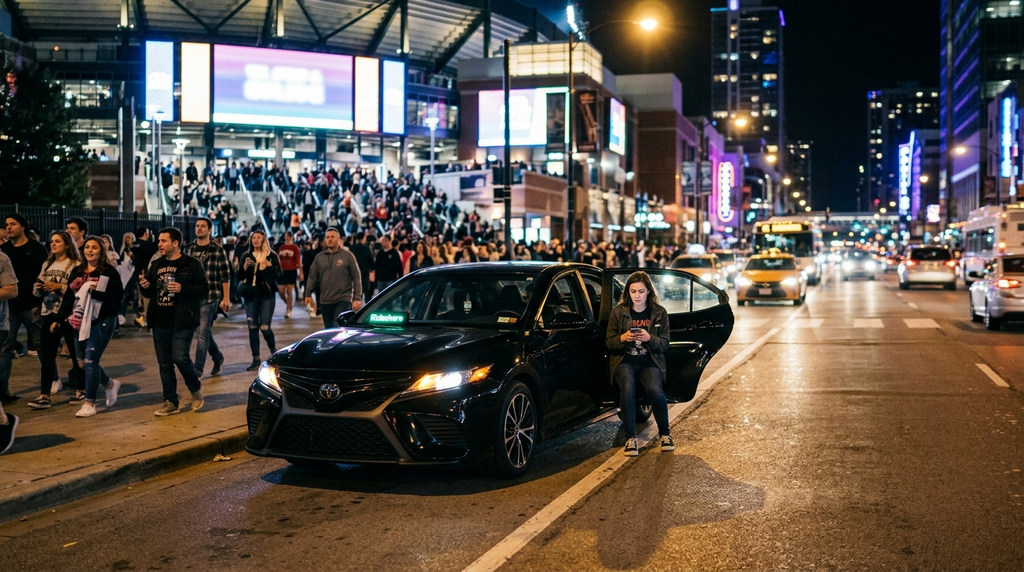
The ride home is the part of the night nobody plans. The show ends, twenty thousand people reach for their phones simultaneously, surge pricing spikes, and the pickup zone outside the venue becomes a slow-moving scrum of identical sedans and people who are not paying attention to traffic.
It is a genuinely elevated risk environment, and it is also the moment when passengers have the least information about who is responsible for them. Most people assume the answer is Uber. In Massachusetts, the real answer arrives in layers, and the first layer is not what anyone expects.
Massachusetts Pays Before It Blames
Before any question of liability is reached, the state’s no-fault system responds.
PIP covers passengers too
Personal Injury Protection is mandatory on Massachusetts auto policies and provides up to $8,000 per person for medical expenses and a portion of lost wages, paid regardless of fault. It is not limited to the policyholder. A passenger in the back of a rideshare vehicle is generally within its reach.
This is a benefit with a deadline
The statute requires the claim to be presented as soon as practicable, and in every case within two years of the accident. Nobody files it on the passenger’s behalf automatically.
Coverage Depends on What the App Was Doing
Massachusetts regulates transportation network companies under chapter 159A½ of the General Laws, and the insurance obligations attached to a rideshare vehicle are tiered according to the driver’s status at the moment of the collision.
The three phases
The framework distinguishes a driver who is offline, a driver logged on and waiting for a request, and a driver who has accepted a ride or is carrying a passenger. Coverage obligations increase across those phases, with the highest requirements attaching once a ride is underway.
Why a passenger sits in the strongest position
If you are in the vehicle after a game, the trip is active. That is the phase carrying the most substantial coverage obligation, which is why preserving proof of the trip matters more than almost anything else you do that night.
Screenshot the trip
Capture the driver’s name, the vehicle, the trip identifier and the timestamps before you do anything else. The app record is what establishes the phase, and phase is what determines the coverage available.
Then the Tort Threshold Decides Whether There Is a Claim
No-fault handles bills. It does not compensate for the experience of being injured, and Massachusetts restricts when it will.
What has to be shown
A plaintiff may recover for pain and suffering only where reasonable medical expenses exceed $2,000, or where the injury causes death, consists in whole or in part of loss of a body member, consists in whole or in part of permanent and serious disfigurement, or results in loss of sight or hearing.
The practical effect on a young passenger
People in their twenties are the most likely to skip the follow-up appointment and the most likely to be in the back of a rideshare at midnight. Those two facts combine badly, because not treating is what keeps a claim below the threshold.
The Complications Specific to Event Nights
Venue departures produce their own recurring problems.
The at-fault party is frequently a third driver
If another vehicle caused the collision, that driver’s liability coverage is the primary target and the rideshare coverage may sit behind it. Massachusetts minimum limits are not generous, so a serious injury can exhaust an at-fault driver’s policy quickly.
Pedestrian and loading-zone collisions
A meaningful share of injuries near venues happen to people entering or exiting vehicles rather than riding in them. The analysis shifts, but PIP through the involved vehicle frequently still applies.
Multiple passengers, one policy
Four friends sharing a ride are four claimants against the same coverage. Where injuries are serious, available limits stop being a question of entitlement and become a question of allocation, and claimants who document early tend to fare better in that division than those who wait.
According to Matthew A. Rabin, Partner and Managing Attorney at RTRLAW, rideshare cases are usually decided by which policy was live at the moment of impact rather than by whether someone drove badly, which means the platform’s own trip data frequently matters more than the police narrative. Passengers injured leaving an event often consult a Massachusetts rideshare accident lawyer for that reason, since the coverage question is resolved well before anyone evaluates the injury.
What to Do Before You Leave the Scene
Call 911 rather than relying on the driver to do it, and make sure a report is generated even if everyone seems fine. Adrenaline at the end of a long night is an unreliable diagnostic.
Screenshot the trip. Photograph the vehicles and the location, including the venue signage, which establishes where and when. Report the incident through the app so a record exists on the company’s side.
Then get evaluated within a day or two. Massachusetts allows three years to file suit, but the threshold that determines whether you have a claim at all is built from medical records created in the first few weeks.