
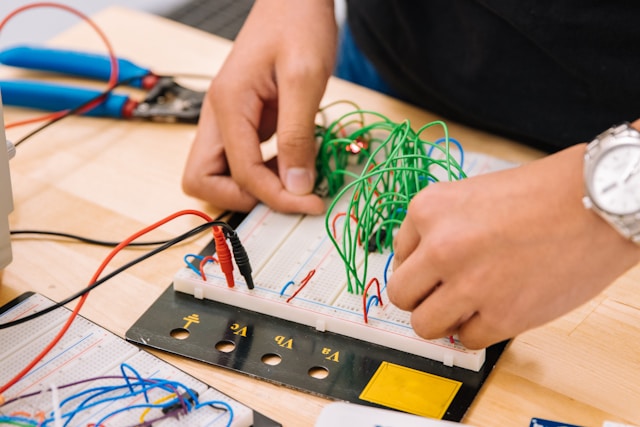
Walking into a modern science classroom looks completely different from how it did a generation ago. Students no longer sit silently at rows of individual desks copying words from a green chalkboard. Instead, they gather around spacious lab stations to solve real-world problems using active experimentation.
This dynamic approach helps kids connect deep scientific concepts to their daily lives outside school. When learning becomes a hands-on activity, young minds stay focused and retain information much better. Instructors see huge benefits from trading old passive lectures for active classroom experiences.
Transforming Traditional Science Spaces
Modern classrooms are shifting away from textbook learning to boost student participation. Many schools adopt comprehensive curricula like OpenSciEd and similar ones to give teachers ready-made tools for hands-on investigations. This shift helps kids grasp complex ideas through direct experience rather than memorization.
Classrooms need the right physical layout to support this style of active learning. Moveable furniture allows kids to shift from individual writing to group experiments in seconds. Having tools accessible makes a massive difference in how smoothly daily lessons flow.
Teachers act as facilitators rather than simple lecturers in these updated spaces. They move between groups to guide discussions rather than standing at the front of the room. This approach builds a supportive environment where kids feel safe testing out new theories.
Boosting Classroom Engagement Metrics
Academic research highlights the clear power of bringing technology into science lessons. A recent journal article showed that using interactive tools led to major improvements in student focus, social teamwork, and personal goal setting. Kids feel more connected to the material when they can control the outcome of an experiment.
High engagement means fewer behavioral disruptions during the school day. When students have a clear task to complete, their attention stays locked on the project at hand. They become active participants in their education instead of passive observers who watch the clock.
This focus carries over into other subjects throughout the week. Learning how to stay engaged helps young minds develop better study habits for high school. Teachers report that these interactive habits create a positive atmosphere across the entire grade level.
Developing Critical Thinking Habits
Science challenges force kids to ask deeper questions about how things work around them. They cannot just memorize a fact sheet to pass their next big test. Instead, they must analyze real data and defend their conclusions with solid proof.
Making mistakes turns into a normal part of the learning journey. When an experiment fails, students work backward to find out what went wrong with their design. This trial-and-error process builds a resilient mindset that serves them well outside of school walls.
Problem-solving skills grow sharper when kids face open-ended challenges. There is rarely just 1 correct answer to a real engineering problem. Finding multiple paths to a solution teaches flexibility and creative reasoning skills.
Collaboration In Action
Group work forms the backbone of any successful laboratory environment. Students learn to listen to different perspectives as they work toward a shared goal. They divide tasks based on individual strengths to complete their projects on time.
Communication skills improve dramatically through these constant peer interactions. Kids must explain their ideas clearly so their teammates can understand the plan. This constant dialogue helps quiet students find their voices in a crowded room.
Conflict resolution becomes an accidental lesson during these intensive group challenges. Disagreements about how to build a model or interpret data will happen. Learning to compromise teaches emotional intelligence alongside traditional academics.
Inspiring Future Technology Careers
Hands-on science exposure at a young age directly shapes what kids want to do when they grow up. A state legislative report revealed that 52% of students felt they could pursue a STEM career after a design challenge, plus 69% of teachers felt more confident leading those projects. Giving kids early wins in the lab removes the fear surrounding technical fields.
Early exposure helps bridge the gap for groups underrepresented in technical fields. Seeing real results from their own designs proves to kids that they belong in modern laboratories. This representation matters when students begin selecting high school and college courses.
Modern industries need workers who can handle complex machinery and digital tools. Introducing these concepts in middle school sets up a strong foundation for future training. Students enter the workforce ready to adapt to fast-paced technological changes.
Practical Tools For Educators
Teachers need reliable materials to make these lessons work without constant stress. Setting up an interactive lesson requires careful planning and robust supply kits. Having organized materials prevents lost instructional time during short class periods.
Successful classrooms often rely on a few specific resources to track experiments:
- Digital sensors that collect real-time temperature data.
- Shared online dashboards where groups log their findings.
- Versatile modeling software to test designs before building.
Training sessions help instructors get the most out of these tech tools. Schools that invest in professional development see much better adoption rates for new tools. When teachers feel supported, their enthusiasm transfers directly to their students.
Long Term Educational Benefits
The impact of interactive learning stretches far beyond a single school year. Students retain foundational concepts since they experienced them firsthand rather than reading them in print. Active lessons embed knowledge deeply into a child’s mind.
Test scores frequently show steady improvement when schools embrace active science models. Kids perform better on standardized exams when they truly understand the underlying logic of a question. They can apply their lab experience to unfamiliar word problems with ease.
True academic success means creating lifelong learners who stay curious about the world. Interactive classrooms grow this curiosity by encouraging kids to explore their own questions. This mindset helps them succeed in any career path they choose to follow.

Photo from Pixabay.com
Shifting to an interactive model requires effort from both schools and teachers. The investment pays off immediately through excited students and a deeper understanding.
Transforming these spaces builds a stronger foundation for every student involved. Giving kids the tools to explore shapes a brighter future for education.