
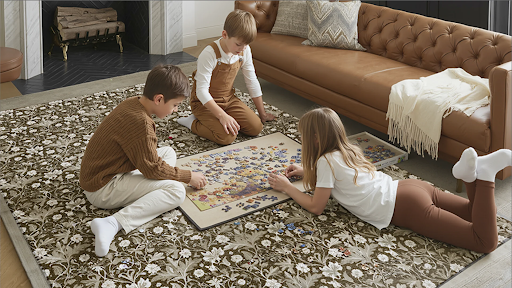
Toddlers are constantly learning through movement. A climb over a cushion, a crawl through a tunnel, or the careful placement of a block may look like ordinary play, but these simple activities give young children opportunities to understand their bodies and surroundings. During the toddler years, children are developing balance, coordination, strength, spatial awareness, and control at a rapid pace.
The right toys can make these everyday learning experiences more engaging without making play feel like a lesson. Movement-based toys and sensory activities allow children to practice physical skills while following their natural curiosity. For parents, the goal is not simply to provide more toys, but to choose options that encourage meaningful exploration.
Brands such as banasuper reflect this approach through play products centered on movement, sensory learning, physical coordination, and active exploration.
Why Motor Development Matters for Toddlers
Motor development refers to the physical abilities children gradually build as they learn to control their bodies. Gross motor skills involve larger movements such as walking, climbing, crawling, balancing, and jumping. Fine motor skills involve smaller movements, including grasping, stacking, turning, drawing, and manipulating objects.
Toddlers need frequent opportunities to practice both types of movement. A climbing toy can encourage a child to coordinate their arms and legs while moving across different surfaces. Building blocks can require careful hand movements while also introducing concepts such as size, shape, position, and stability.
Play becomes particularly valuable when children can repeat an activity without being pressured to perform perfectly. A toddler may climb the same soft structure several times, each attempt providing another opportunity to practice balance and movement planning.
Active toys can also encourage children to become more confident in their physical abilities. Completing a simple movement challenge gives them a chance to discover what they can do independently. This combination of repetition, exploration, and choice makes play an important part of everyday motor development.
How Climbing and Balance Toys Encourage Coordination
Climbing and balance toys give toddlers opportunities to use their entire bodies. Stepping onto a low platform, crawling over a soft block, or moving across a balance element requires children to coordinate different muscles while paying attention to their position in space.
These activities can also introduce basic problem-solving. A toddler may pause before climbing, decide where to place a foot, reach for a stable surface, and adjust their body after each movement. The child is not simply exercising; they are learning how movements work together.
Soft climbing structures can be particularly practical for indoor play because they provide a dedicated space for movement. BanaSuper’s current range includes climbing and jump play products as well as play sets designed around active exploration. Its website also highlights features such as anti-slip surfaces and products designed for sensory learning.
Parents should still choose equipment that matches a child’s developmental abilities and follow the manufacturer’s safety guidance. Active play should take place in an appropriate environment with suitable supervision. The objective is to give toddlers room to explore while maintaining reasonable safety boundaries.
Sensory Toys Give Children More Ways to Explore
Sensory development involves how children receive, organize, and respond to information from their surroundings. Touch, movement, sight, sound, and body position can all contribute to a toddler’s sensory experiences during play.
Toys do not need complicated technology to provide useful sensory opportunities. Soft foam pieces, textured surfaces, tunnels, mats, and different shapes can encourage children to touch, push, crawl, carry, and rearrange objects. These actions allow toddlers to experience pressure, movement, texture, and spatial relationships through direct interaction.
Movement itself can also provide sensory input. Crawling through a tunnel changes how a child experiences space, while balancing on a low surface requires attention to body position. Combining these experiences with imaginative play can make sensory exploration feel natural rather than structured.
A varied play environment gives children the freedom to choose activities that interest them. Some moments may involve energetic climbing, while others may involve sitting on a play mat and building with soft pieces. This flexibility is useful because toddlers do not all explore at the same pace or in the same way.
Open-Ended Toys Support Problem-Solving and Creativity
A toy with one fixed purpose can be useful, but open-ended toys can provide a wider range of play experiences. Blocks, modular foam pieces, play couches, arches, and tunnels can be rearranged into different structures as a child’s imagination develops.
One afternoon, a toddler might use foam pieces as stepping stones. Later, the same pieces could become part of a pretend house, a tunnel, or a small obstacle course. This flexibility encourages children to make decisions about how objects should be positioned and what they can become.
Open-ended play also combines physical and cognitive development. A child building a structure must use their hands while thinking about balance and placement. When they climb over it or crawl through it, they add movement and spatial awareness to the experience.
BanaSuper’s product categories include sofa and blocks, play couches, arches and tunnels, climbing and jump play, and play mats, creating several possibilities for this kind of flexible indoor play.
For parents, versatility can be an important consideration when choosing toddler toys. A product that supports several types of play can remain useful as a child develops new interests and physical abilities.
Building a Balanced Play Environment at Home
A toddler’s play area does not need to be large or filled with dozens of products. A carefully selected combination of movement, sensory, creative, and quiet activities can provide plenty of opportunities for development.
A padded play mat can create a comfortable foundation for crawling, sitting, building, and floor-based activities. A low climbing structure or soft obstacle can introduce more active movement. Blocks and modular pieces can support construction and pretend play, while an art station can encourage fine motor control through drawing and other creative activities.
It can also help to rotate toys instead of keeping everything available at once. When familiar toys are reintroduced in different combinations, toddlers may discover new ways to use them. Parents can create a simple obstacle course one day and a building area the next.
Safety should remain part of the setup. Toys should be appropriate for the child’s age and abilities, placed on suitable surfaces, and checked regularly for damage. Clear pathways can also reduce unnecessary hazards during active play.
Most importantly, children should have opportunities to make choices. A supportive environment gives toddlers enough freedom to explore while allowing adults to remain nearby when assistance is needed.
Conclusion
Toddler toys can do more than occupy a child for a few minutes. When they encourage climbing, crawling, balancing, building, touching, carrying, and creating, they can become useful tools for everyday exploration. These activities give children repeated opportunities to practice coordination, body awareness, sensory processing, fine motor control, and problem-solving.
The most useful play environment is not necessarily the one with the largest collection of toys. Instead, parents can focus on variety, age-appropriate challenges, and opportunities for open-ended exploration. A combination of soft movement equipment, sensory-friendly materials, building pieces, and creative activities can support different aspects of development while keeping play enjoyable.
As toddlers become more capable, their games naturally become more complex. Toys that allow children to adapt, rearrange, and discover new possibilities can continue to provide meaningful experiences through different stages of early childhood. Thoughtful play choices today can help create an environment where movement, curiosity, creativity, and confidence develop together.