The landscape of the modern office has fundamentally been altered in recent years in major business districts, including the financial heart of Manhattan, the manufacturing centers of Pennsylvania, and tech-oriented Northern Virginia, because of the degree to which business leaders are now viewing office amenities – traditionally viewed as optional extras – as essential components of improving their companies’ profitability and health.
As companies stabilize their post-COVID workplace models through 2026, many organisations in the Northeast and Mid-Atlantic are returning to the benefits of dining together at work as a way to enhance collaboration among employees and create a collaborative culture.
As a result, using professional dining services is not only a consideration for facilities departments but also a primary driver of operational resilience and retention of top talent.
The “Destination Office”: Driving Engagement Through Food
Regional organizations are facing what can be summarized as the defining challenge in the current economic landscape — creating a “destination” workplace. A large percentage of the workforce has chosen to work from home rather than commute long distances, creating a void in the property of a workplace offering something different to the home office.
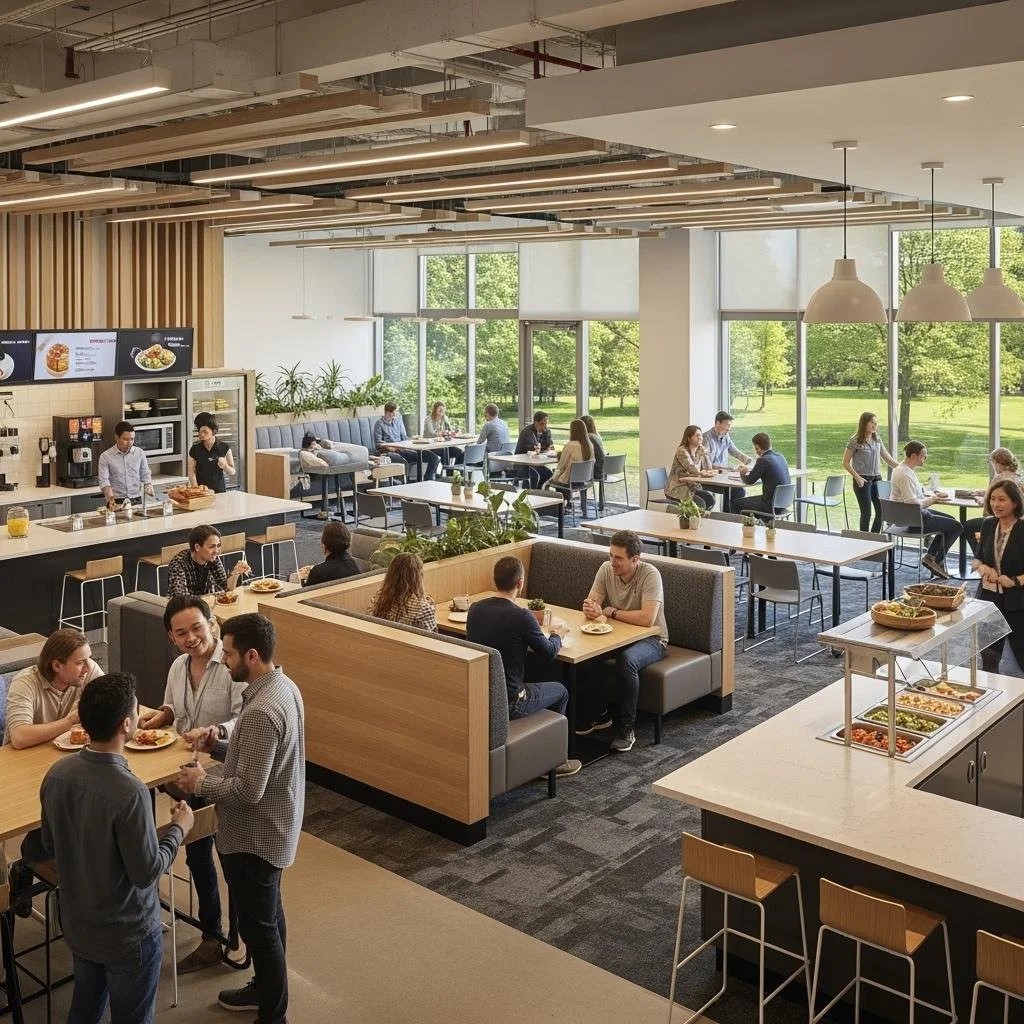
Professional food service retailers are taking this to a new level by offering culinary experiences in office buildings rather than relying on boring vending machines and repetitive deli-style catering. Companies that provide employees with access to dining resources through a chef’s approach to providing a quality dining experience create “social anchors” and promote serendipitous and collaborative interactions across departmental lines.
Chef-led dining experiences can also provide a natural place for “water cooler moments,” which foster innovative thinking and generate creative solutions to problems through the informal interaction of different department employees. The value of social interaction is a significant part of an organization’s ability to maintain a unified culture and convert routine lunchtime interactions into constructive and meaningful experiences for employees to promote engaging in work as a team.
Operational Excellence and Corporate Dining Services Solutions
Managing food service in-house is an endeavor fraught with hidden costs and significant administrative burdens. For HR and Facilities departments, the complexity of running an on-site kitchen—from navigating strict health department regulations to managing a specialized culinary staff—can quickly become a distraction from the company’s core mission. This is where the value of a specialized partner becomes indisputable.
When regional leaders choose to work with corporate dining services solutions, they are choosing to outsource operational complexity to a partner with deep, localized industry knowledge. This corporate dining services solutions approach ensures that every aspect of the dining experience—from food safety and waste management to procurement and menu innovation—is handled with professional rigor.
For businesses operating in multiple states, such as a firm with offices in both Connecticut and Maryland, this partnership provides a crucial benefit: scalability. Professional corporate dining services providers leverage extensive supply chain networks to ensure cost efficiencies that a single business could never achieve on its own. Furthermore, they provide a consistent “brand experience,” ensuring that an employee in the Ohio branch receives the same high standard of service and quality as their colleague in the Delaware headquarters.
Addressing Modern Workplace Demands
There has been a shift in what the typical American worker wants from their workplace, along with a growing awareness of health & culture. There is a general expectation from employees that employers will provide a similar culture to that which they expect from their own families and/or communities.
So what are the concrete benefits of hiring a corporate catering company?
There is an immediate impact of improving food quality, but the biggest benefit of working with a corporate catering company is dramatically reducing the amount of company liability and administrative burden associated with having a full-fledged in-house/non-specialized culinary team that would be responsible for food safety, and culinary diversity. Working with an expert allows the company to provide restaurant-quality meals while passing the burden of staffing, training, and compliance onto the expert.
How do corporate cafeteria companies accommodate all the various dietary restrictions?
As part of our inclusionary workplace expectations, today’s employers must use data-based menu planning practices to ensure that your Gluten-free, Vegan, Keto, and allergy-friendly menu items are not only “available” but are created with the same degree of quality and flavor as the main menu items. When every employee knows their needs have been considered, it helps create a culture that is more positive and inclusive within the company.
The Strategic Link Between Nutrition and Brand
The dining program at a business reflects its values and mission in both a strong and covert way. Providing fresh and whole foods is an investment in the health of employees. The “afternoon slump” is one example of how productivity can be affected due to lack of energy, by providing balanced meals prepared by a chef on-site, an employer can assist their team in maintaining energy stability through the workday.
Additionally, as more workers today are seeking companies with a sense of social responsibility, implementing initiatives such as using locally grown Pennsylvanian produce or zero-waste kitchen practices in New York will send a message to potential hires that your organization is environmentally conscious and responsible throughout the entire hiring process. A premium dining program indicates to future employees that you care about them as a complete person, not simply their ability to work.
Responsible Use and Compliance Standards
A successful dining program depends on many factors aside from good flavor, including safety elements and the ability to communicate what happened at the establishment transparently. In addition to other things, there are many laws and regulations from both state and federal governments that dictate the conduct of professional food service management; however, organizations should work with partners who have strict health verification programs and who can provide clear and quantifiable service level agreements that are used to ensure consistent long-term performance at a competitive value to both the employee and the company.
Conclusion
Professional dining services offer companies on the East Coast and the Midwest a productive investment. They help to streamline and simplify daily operations, give internal staff some relief from the demands of feeding employees at work, and develop an employee culture that appreciates the office environment.
As this is becoming increasingly essential for businesses due to the increasing need for workplaces to compete with home comforts, professional dining services will be a key differentiator in the marketplace. If a business has taken inventory of its current amenities and partnered with an appropriate vendor, it can transform a necessary service into a strategic tool that supports its people, productivity, and profitability.