
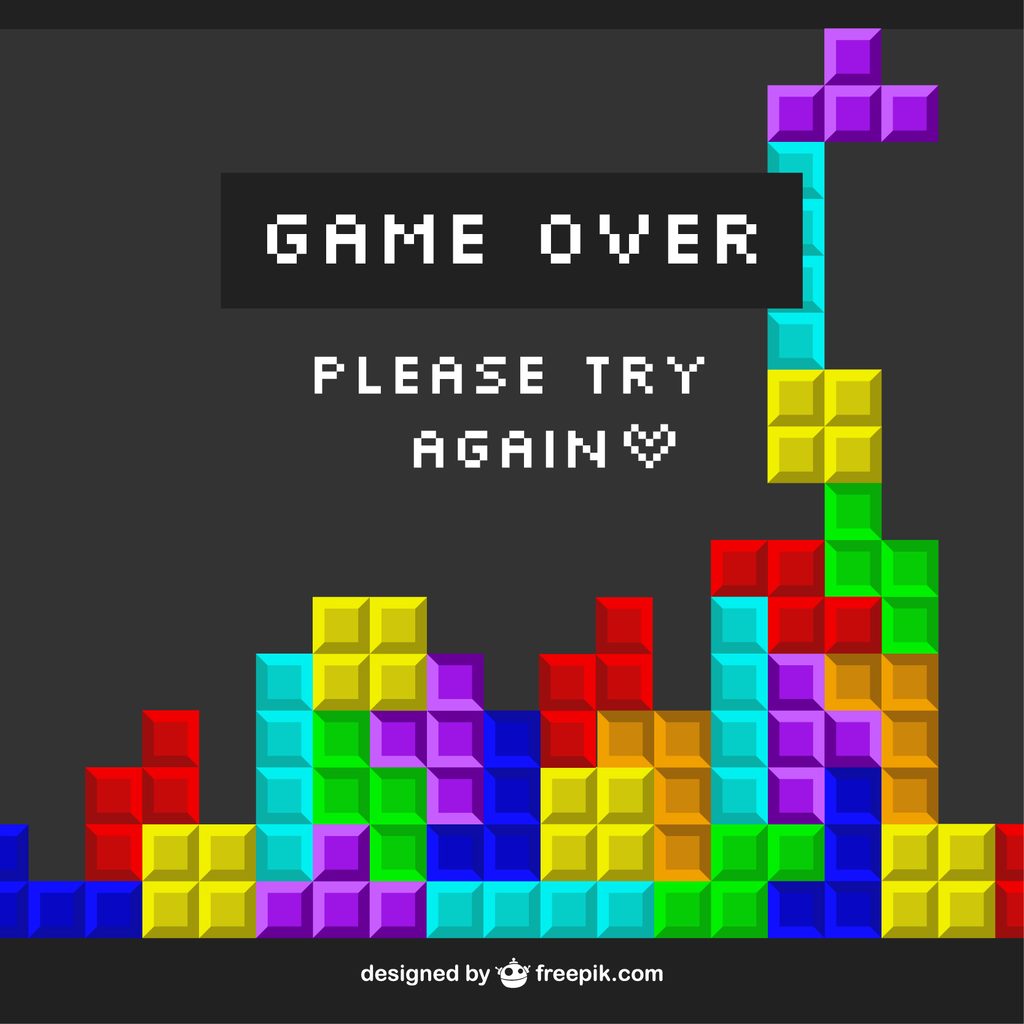
Modern games can render individual strands of hair, reflections in puddles and crowds of thousands, yet some of the most played designs on any phone or console are decades old. Falling blocks, a yellow circle in a maze, two paddles and a ball: these ideas have outlived every hardware generation built to replace them. The reason says less about nostalgia than about how people actually learn, focus and enjoy play.
Simple Rules, Endless Outcomes
The oldest successful games share a trait that game designers still chase: you can understand them in seconds and keep discovering them for years. Pong, released by Atari in 1972, needed almost no instructions. Tetris, created by Alexey Pajitnov in Moscow in 1984, asks players to do one thing, fit shapes into rows, and then keeps raising the speed until that one thing becomes a test of nerve.
That combination of a tiny rule set and a huge space of possible situations is hard to beat. Every round of Tetris is different because the order of pieces changes, and every round of Pac-Man plays out differently because the ghosts react to where the player goes. Complexity comes from the interaction, not from a thick manual. A newcomer and an expert can sit down at the same machine, and both will find something to chase, which is rare in any form of entertainment.
Graphics Age Faster Than Ideas
Visual technology dates quickly. A game that looked astonishing ten years ago can look stiff today, because the benchmark keeps moving. Abstract designs escape that problem. A block is a block in 1984 and in 2026, so a game built on geometric shapes never looks like a failed attempt at realism. It simply looks like itself.
This is part of why pixel art and minimalist styles have stayed popular with independent studios. Farming, puzzle and platform games drawn in deliberately simple styles keep finding big audiences, partly because small teams cannot compete with blockbuster budgets on detail, and partly because players respond to clarity. When everything on the screen means something, the game is easier to read and easier to love. It also runs on almost anything, from an aging laptop to a budget phone, which quietly widens the audience far beyond people with the newest hardware.
The Reels That Never Changed Shape
Few formats show this staying power better than the slot machine. Charles Fey’s Liberty Bell, built in San Francisco in the late 1890s, put three reels and a handful of symbols in a cabinet, and the basic picture has barely moved since. Cherries, bars, bells and sevens still turn up in digital versions more than a century later.
The layout survives because it is instantly readable. A player knows within a second whether the symbols lined up, and that clarity matters more than any animation layered on top. Designers of today’s sweepstakes slots add bonus rounds, themes and effects that Fey could never have imagined, but most still keep the same reel structure at the center, because players already understand it. The novelty goes into the surface while the core stays familiar, which is exactly the pattern that has kept Tetris and Pac-Man alive.
What Simple Games Do to the Brain
There is also evidence that basic-looking games can be surprisingly demanding. In a 2009 study, researchers at the Mind Research Network in Albuquerque asked 26 adolescent girls to practice Tetris for 30 minutes a day over three months, then used MRI scans to track brain changes against a control group. The players showed a thicker cortex in some regions and more efficient activity in others.
The researchers were careful about what this meant. The areas that thickened were not the same as the areas that became more efficient, and they described the link between the two as an open question. Still, the finding pushes back against the idea that a simple-looking game is a simple experience. Rotating shapes at speed draws on planning, spatial reasoning and attention all at once. Anyone who has seen falling blocks behind their eyelids after a long session has felt a small version of that effect.
Old and New in the Same Room
Museums have started to make the same point by putting eras side by side. The National Videogame Museum in Frisco, Texas, built a Giant Pong exhibit that stands more than 12 feet tall, and it invites comparison by letting visitors play classic and modern games next to each other. Placed that close together, the contrast is hard to miss. The older titles look primitive, yet they hold their own as games, which is exactly what surprises people who expected pure nostalgia.
That reaction is the whole argument in miniature. Visual polish attracts attention, but it does not hold it on its own. The games that last are the ones whose core loop still works when the graphics stop impressing anyone. Parents and children can share the same controller and the same excitement, even when one of them remembers the original cabinet and the other has only ever played on a touchscreen.
Built to Outlast the Hardware
Every new console generation promises that the old ways of playing are finished, and every generation proves that promise wrong. Designs based on clear rules, readable screens and quick feedback keep adapting to new devices without losing what made them work. The next wave of graphics will look incredible for a few years. The falling blocks, the maze and the spinning reels will still be here when it looks dated.