
What if the future of Uganda’s mountain gorillas begins with a tree planted far beyond the gorilla trail?
In Bwindi Impenetrable Forest, the sight everyone travels for is unforgettable, a mountain gorilla emerging from the thick forest, watching quietly as visitors stand nearby.
But behind that remarkable encounter is another story unfolding around the edges of the forest. Local communities, schoolchildren and conservation groups are planting trees to protect the landscape that gorillas depend on.
This matters because a gorilla trek does not begin when you enter the forest. It begins with the forest itself.
Bwindi’s steep green hills provide food, shelter and a home for one of the world’s last remaining populations of mountain gorillas. Keeping that forest healthy means protecting far more than wildlife; it also means giving nearby communities a reason to see conservation as part of their own future.
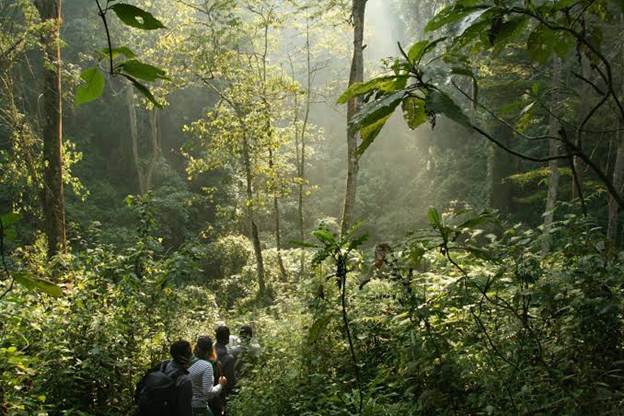
Bwindi rises across the hills of southwestern Uganda, close to the borders with Rwanda and the Democratic Republic of Congo. Its name, “Impenetrable,” feels fitting once you see the forest thick vines, ferns, moss-covered trees and dense undergrowth covering slopes that seem to disappear into the mist.
And somewhere inside that ancient green world are the gorillas that have made Bwindi famous.
They are the reason thousands of travellers come here, but they are also a reminder of what is at stake. Every tree planted around Bwindi adds another small piece to the much bigger effort to keep this extraordinary forest standing.
Why Trees Matter as Much as Tickets
Tourism has been a big factor in the gorillas’ recovery. Their numbers have grown in recent years, and a survey in 2018 counted more than 1,000 mountain gorillas across their range. Because of that progress, conservationists reclassified the species from critically endangered to endangered, a welcome improvement for an animal that came close to disappearing last century.
The gorillas’ habitat, however, has not grown with their numbers. Around the park boundary, people still cut trees for firewood, building materials, craft supplies and traditional medicine. Over time this puts pressure on the forest edge, reduces biodiversity and fuels arguments over who can use forest resources.
Bringing the Forest Closer to the People
The response is simple. Instead of asking neighbours to stop using trees, conservationists help them grow the trees at home.
The Uganda Wildlife Authority has been working with nearby communities to hand out seedlings, including medicinal species, so families can gather what they need from their own land without entering the park.
A Community Based Organisation called Change a Life, based near Bwindi, is one of the organizations behind this work. Its founder, a resident of the area, points out that the gorilla population is rising while the forest itself is not.
Planting indigenous species outside the park, she explains, adds habitat and food sources and takes pressure off the protected area.
What a Gorilla Trek Is Really Like
Your day starts at the park sector headquarters, where rangers brief you on the rules and assign you to a habituated gorilla family.
These are habituated gorilla families that have spent years getting used to the calm presence of people. Trekking groups are small, with a limited number of visitors per family, which keeps the gorilla trekking experience personal and protects the animals.
The Trek Itself
Then you walk. Trackers who left earlier radio the gorillas’ position, and your guide leads the way. Some treks take barely an hour and others stretch across several hours of steep, muddy, humid terrain.
Porters are available to carry your bag and give you a hand on the slippery sections, and hiring one also puts money directly into the local economy.
The Hour with the Gorillas
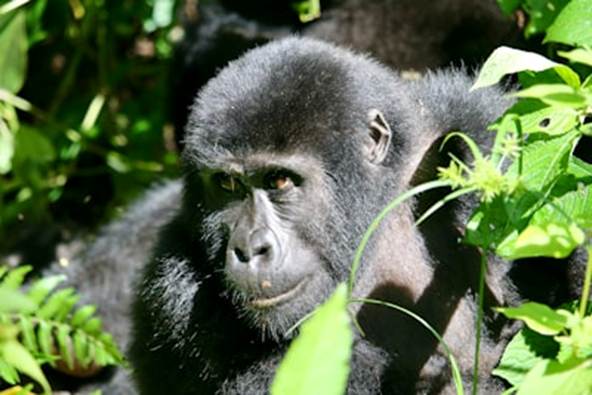
When the trackers stop and the guide asks you to lower your voice, you are close. Then the vegetation opens, and there they are, a silverback resting like a boulder, mothers grooming infants, juveniles tumbling through the branches. You get one hour in their company, and it goes fast.
Visitors keep a respectful distance, avoid eating near the animals and follow the ranger’s instructions if a gorilla comes closer. Anyone who is ill stays behind, since gorillas can catch human infections.
Permits and Planning
Gorilla permits are the main cost of a trek. Foreign non-resident visitors currently pay about US$800 per permit, and gorilla permits should be booked well ahead, especially for June to September and December to February, the drier months.
The revenue supports park management and gives neighbouring communities a direct reason to protect the forest.
The Batwa people, who lived in these forests for generations, have guided the choice of which trees to plant.
Their knowledge helps identify species that serve the community’s needs for medicine, timber and firewood while also supporting the wider ecology.
Women, Crafts and Classrooms
The effort reaches beyond forestry. Women’s craft groups near the park make products for tourists, and some have received tree species to plant near their homes and keep people and gorillas out of each other’s way.
Schools are involved too. Students at institutions along the forest boundary, such as Ruhija Seed Secondary School, now learn tree planting as a practical lesson in conservation, which they can carry into adulthood.
The message from these students is straightforward: if trees grow close to home, there is less reason to cut into the forest.
Bwindi has several gorilla trekking sectors, each with its own character:
Buhoma (north): The most established sector, with good lodges, forest walks and a lively community.
Ruhija (east): Higher and cooler, excellent for birdwatching and close to the schools and community projects working on forest edge restoration.
Rushaga (south): Offers the largest number of habituated gorilla families, which makes permits easier to secure.
Nkuringo (southwest): Known for dramatic views and challenging hikes, and popular with fit travellers.
More to Do in the Region
Most people build a longer trip around the trek. Here are the best additions.
Meet the Batwa
The Batwa cultural experience lets you walk with Batwa guides who explain how their ancestors lived in the forest, from hunting and gathering to medicinal plants and traditional songs. It gives real context to the conservation story behind the trek.
Community and Village Walks
Guided walks through villages near the park introduce you to banana beer brewing, craft making, traditional healers and local farming.
Buying crafts directly from women’s groups is one of the most useful ways to spend money in the area.
Birdwatching and Nature Walks
Bwindi is one of Uganda’s best birding areas, with Albertine Rift endemics that keen birders travel far to see.
Walks along the forest edge and through the Ruhija sector are especially rewarding. Butterflies, monkeys and forest flowers make these walks worthwhile even for casual visitors.
Lake Bunyonyi
A few hours’ drive from Bwindi, Lake Bunyonyi is a calm highland lake dotted with islands. It is a natural place to rest after a demanding trek.
Canoe trips, swimming in suitable spots and lakeside walks make it a favourite for a slower day.
The World Gorilla Day is marked every year on 24 September, and the timing is a good reminder that protecting gorillas is a shared job involving rangers, villagers, students, conservation groups and visitors.