
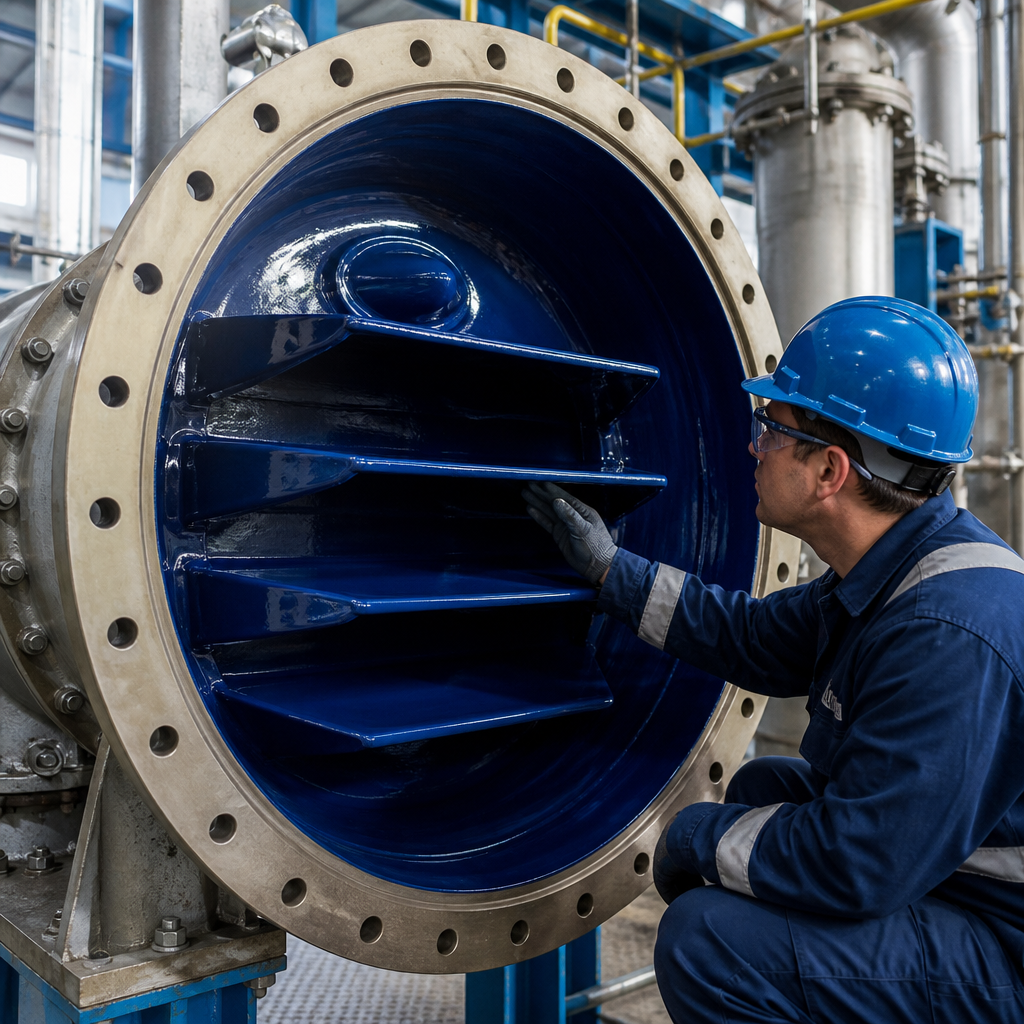
In industries where chemical resistance, thermal stability, and contamination prevention are non-negotiable, the internal components of process vessels carry enormous responsibility. Among these components, baffles play a critical but often underappreciated role. When those baffles are glass lined, their value multiplies significantly — offering a combination of mechanical function and chemical protection that few alternatives can match. Understanding how these components contribute to overall system performance is essential for engineers, plant managers, and procurement specialists working in pharmaceutical, chemical, and food processing environments.
What Are Glass Lined Baffles and Why Do They Matter?
Baffles are internal structures installed inside mixing vessels, reactors, and tanks to disrupt fluid flow patterns and promote more effective agitation. Without baffles, rotating impellers tend to create a vortex — a swirling, circular motion that looks active but actually reduces mixing efficiency. Baffles break this rotational symmetry, redirecting fluid upward and downward to create turbulent, three-dimensional flow that dramatically improves heat transfer, mass transfer, and homogenization.
When these baffles are coated with glass lining — a borosilicate glass fused to a steel substrate at extremely high temperatures — they gain a surface that is chemically inert to a wide range of acids, solvents, and reactive compounds. This makes them indispensable in processes where even trace metal contamination could compromise product quality or trigger dangerous reactions. The glass surface is also non-porous and easy to clean, supporting stringent hygiene standards in regulated industries.
How Glass Lining Enhances Baffle Performance
Chemical Resistance Across Demanding Environments
Standard steel baffles corrode when exposed to aggressive chemicals, leading to contamination, structural degradation, and costly downtime. Glass lined baffles eliminate this vulnerability. The borosilicate glass coating resists attack from most acids (with the exception of hydrofluoric acid and hot concentrated phosphoric acid), alkaline solutions at moderate concentrations, and a broad spectrum of organic solvents. This resistance is not superficial — it is intrinsic to the glass matrix itself, meaning it does not wear away with use under normal operating conditions.
Thermal Stability and Process Consistency
Glass lined components are engineered to withstand significant temperature ranges, typically from -60°C to +200°C depending on the specific glass formulation and vessel design. This thermal tolerance allows glass lined baffles to function reliably in both cryogenic applications and high-temperature reactions. Consistent thermal performance also means that heat transfer calculations remain predictable, which is critical when scaling up batch processes or maintaining tight temperature control in exothermic reactions.
Surface Smoothness and Cleanability
The glass surface achieves a smoothness that metal surfaces simply cannot replicate without extensive polishing. This low surface roughness reduces the adhesion of product residues, biofilms, and particulate matter. In pharmaceutical manufacturing, where cross-contamination between batches is a regulatory concern, this property is not merely convenient — it is a compliance requirement. Cleaning validation becomes more straightforward when the surfaces in contact with product are inherently non-reactive and smooth.
Integration with Pump Systems and Flow Optimization
Baffles do not operate in isolation. Their effectiveness is directly tied to the performance of the agitation and fluid transfer systems surrounding them. When pump systems are properly calibrated and maintained, the fluid dynamics within a vessel become far more predictable, allowing baffles to do their job with maximum efficiency. Engineers who focus on optimizing pump performance for maximum productivity often find that baffle geometry and placement are equally important variables in achieving consistent mixing outcomes. A high-performing pump paired with poorly positioned baffles will still produce suboptimal results, while a well-designed baffle configuration can compensate for moderate pump limitations by improving natural flow patterns within the vessel.
This systems-level thinking is increasingly important as process plants push for higher throughput without proportionally increasing energy consumption. Baffles that are correctly sized relative to vessel diameter, positioned at the right radial distance from the wall, and oriented to complement impeller geometry can reduce mixing time by a substantial margin — directly translating to energy savings and increased batch frequency.
Innovations in Fluid Handling Technology
The broader landscape of process equipment continues to evolve rapidly. Pump manufacturers, for instance, are developing increasingly specialized solutions for sensitive and viscous media. A recent example is the Fristam FDS Nano twin screw pump, designed to handle delicate, high-value products with minimal shear — a development that reflects the industry’s growing demand for precision fluid handling. These innovations underscore the importance of selecting every component in a process system with equal care, from the pump at the inlet to the baffles inside the reactor vessel.
Selecting the Right Glass Lined Baffle for Your Application
Not all glass lined baffles are interchangeable. Selection criteria include vessel diameter, operating pressure, the nature of the process fluid, agitation speed, and the specific chemical environment. Baffles are typically available in flat plate, finger, and pipe configurations, each offering different flow characteristics. Flat plate baffles are the most common and provide strong turbulence generation, while pipe baffles can double as heat exchange surfaces when fitted with internal fluid circulation.
The quality of the glass lining itself is equally important. Uniform coating thickness, absence of pinholes, and proper bonding between glass and steel substrate are critical quality indicators. Reputable manufacturers subject their glass lined components to spark testing and holiday detection to verify coating integrity before shipment.
International Process Plants: A Trusted Source for Glass Lined Components
For facilities sourcing high-quality glass lined process components, International Process Plants offers an extensive inventory of equipment suited to demanding industrial applications. Their catalog includes a wide range of glass lined parts designed to meet the rigorous standards of pharmaceutical, chemical, and specialty manufacturing environments. The glass lined baffle offerings available through their platform represent a practical solution for plants seeking reliable, chemically resistant internal vessel components without the lead times associated with custom fabrication. Their inventory spans multiple sizes and configurations, making it easier for procurement teams to find components that match existing vessel specifications.
Maintenance Considerations and Long-Term Value
Glass lined equipment requires careful handling to preserve coating integrity. Thermal shock — rapid temperature changes — is one of the primary causes of glass lining damage. Operators should follow manufacturer guidelines for heating and cooling rates, and avoid introducing cold liquids into a hot vessel or vice versa. Mechanical impact from tools or hard particles in the process stream can also chip the glass surface, creating exposed metal areas that are vulnerable to corrosion and contamination.
When damage does occur, repair is possible using specialized glass lining repair kits or through professional relining services. However, prevention through proper operating procedures and regular inspection is always more cost-effective. Establishing a routine inspection protocol that includes visual examination and spark testing can extend the service life of glass lined baffles significantly, protecting the capital investment and maintaining process integrity over the long term.
Conclusion
Glass lined baffles represent a convergence of materials science and process engineering, delivering chemical resistance, thermal stability, and mixing efficiency in a single component. As process industries continue to demand higher purity standards, greater energy efficiency, and more reliable equipment performance, the role of well-designed, properly maintained glass lined internals will only grow in importance. Whether specifying new equipment for a greenfield facility or sourcing replacement components for an existing plant, understanding the functional and material advantages of glass lined baffles is a foundational step toward building a more productive and compliant operation.