
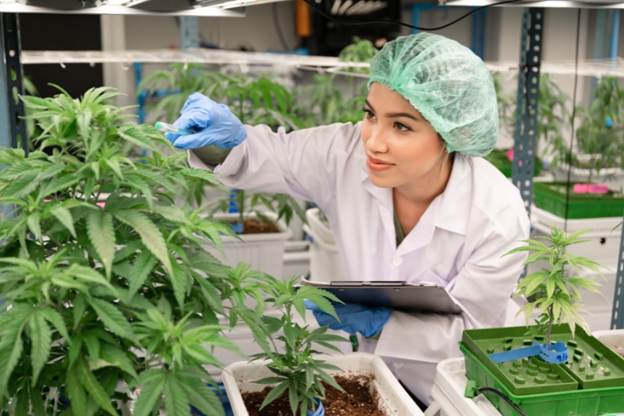
Photo by chanuth on Canva
Agriculture has always evolved alongside advances in science, technology, and consumer demand. Today, one area attracting increasing attention is cannabis cultivation.
As legal cannabis industries continue to develop in many regions, educational institutions, agricultural professionals, and aspiring growers are recognizing that cannabis is more than a niche crop. It offers opportunities to study plant genetics, sustainable cultivation, pest management, and controlled-environment agriculture through a practical, real-world lens.
For students considering careers in agriculture, horticulture, or plant science, cannabis education has become a valuable complement to traditional coursework.
Rather than focusing solely on the commercial side of the industry, many educational programs emphasize the scientific principles that apply to cannabis as well as countless other specialty crops.
Understanding these skills can prepare graduates for a wide range of agricultural careers in an increasingly diverse industry.
Why Cannabis Is Becoming Part of Agricultural Education
Cannabis cultivation draws upon many of the same disciplines taught in agricultural programs. Students interested in crop production can apply classroom concepts to areas such as soil science, irrigation, genetics, greenhouse management, and integrated pest management.
Unlike conventional row crops, cannabis often requires growers to monitor environmental conditions with exceptional precision. This creates opportunities for students to develop practical problem-solving skills while learning how plants respond to changing variables.
Educational programs that include cannabis-related topics frequently introduce concepts such as:
- Plant breeding and genetics
- Greenhouse and indoor cultivation techniques
- Soil health and nutrient management
- Water conservation strategies
- Crop monitoring and disease prevention
These subjects provide knowledge that remains valuable across many areas of modern agriculture, making cannabis education relevant even for students who pursue careers beyond the cannabis industry.
The Importance of Plant Genetics
One of the most valuable lessons cannabis education offers is an appreciation for plant genetics.
Understanding genetics helps future agricultural professionals recognize how selective breeding influences plant characteristics such as growth habits, resilience, flowering times, and adaptability. These principles are equally important when working with vegetables, fruits, grains, ornamental plants, or other specialty crops.
Learning about genetics also encourages students to think critically about long-term crop improvement rather than focusing only on short-term production goals. Selecting appropriate genetics often forms the foundation of successful cultivation strategies, regardless of the crop being grown.
By studying these concepts, students develop analytical skills that can be applied across many agricultural sectors.
Hands-On Learning Creates Stronger Professionals
Agriculture is a practical discipline, and many students learn best by applying theory in real-world settings.
Cannabis cultivation offers opportunities to develop experience with environmental controls, irrigation systems, propagation methods, record-keeping, and crop observation. These hands-on experiences reinforce classroom instruction while helping students understand the relationship between science and day-to-day farming decisions.
Practical learning also teaches students how to identify problems before they become serious issues. Whether diagnosing nutrient deficiencies, adjusting environmental conditions, or improving cultivation techniques, these experiences prepare graduates for careers that demand careful observation and informed decision-making.
Educational resources from established companies can also support learning outside the classroom. For example, Grower’s Choice Seeds provides information about cannabis genetics and cultivar selection through its blog and product pages. Reviewing examples of different cultivars can help students understand how breeders describe plant characteristics and why genetics play an important role in cultivation planning.
Career Opportunities Continue to Expand
Students who develop knowledge of cannabis cultivation often discover that their skills extend well beyond one crop. Employers across agriculture increasingly seek candidates who understand controlled environments, precision farming, and sustainable production methods.
Potential career paths include:
Greenhouse Management
Modern greenhouse operations rely on environmental monitoring, irrigation management, and crop optimization; skills directly reinforced through cannabis cultivation studies.
Plant Breeding
Students interested in genetics may pursue careers focused on developing improved crop varieties with desirable characteristics.
Agricultural Technology
Precision agriculture continues to expand through automation, sensors, environmental controls, and data analysis. Experience with intensive crop management helps graduates adapt to these innovations.
Crop Consulting
Professionals with strong plant science knowledge may advise growers on nutrition, cultivation practices, and production efficiency across various agricultural sectors.
These roles demonstrate that cannabis education supports broader agricultural development rather than existing in isolation.
Sustainability Is Becoming a Core Skill
Environmental stewardship has become a major priority throughout agriculture.
Cannabis cultivation provides useful case studies for discussing resource management because growers must carefully balance water use, energy consumption, nutrient application, and waste reduction.
Students who learn sustainable cultivation principles gain experience evaluating how production decisions affect both crop performance and environmental responsibility.
Topics commonly explored include:
- Efficient irrigation practices
- Responsible nutrient management
- Water conservation techniques
- Integrated pest management
- Waste reduction strategies
These concepts prepare graduates to contribute to more sustainable agricultural systems regardless of the crops they ultimately work with.
Education Encourages Responsible Industry Growth
As the cannabis industry matures, education plays an increasingly important role in supporting responsible cultivation and informed decision-making.
Rather than relying on assumptions or outdated information, future agricultural professionals benefit from studying established scientific principles, understanding legal considerations, and learning how responsible cultivation practices contribute to long-term success.
Educational programs also encourage critical thinking. Students learn to evaluate cultivation methods, compare growing environments, interpret plant responses, and make evidence-based decisions instead of relying solely on anecdotal advice.
This emphasis on lifelong learning strengthens not only individual careers but also the agricultural sector as a whole.
Conclusion
Cannabis education is becoming an increasingly valuable component of agricultural training because it combines plant science, genetics, sustainability, and practical cultivation experience within a rapidly evolving field.
The knowledge gained through studying cannabis often extends well beyond a single crop, helping students build transferable skills that apply across greenhouse production, plant breeding, controlled-environment agriculture, and modern farming.
As agriculture continues to embrace innovation and diversification, educational opportunities related to cannabis are likely to remain relevant for future generations of growers, researchers, and agricultural professionals.
Students who approach the subject with curiosity and a commitment to sound scientific principles will be well positioned to contribute to an industry that continues to expand while strengthening agriculture as a whole.