
By Gleb Tsipursky, PhD
Hi Yonkers Times editor,
For Yonkers workplaces, the urgent question about expanding AI use is whether frontline employees feel able to report bad answers before customers rely on them. Below is an original local letter focused on practical manager behavior and service quality. This piece is exclusive to Yonkers Times.
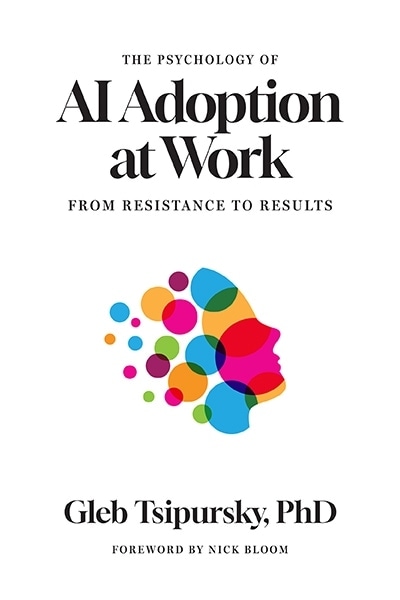
I am a behavioral scientist and the author of the peer-reviewed book, The Psychology of AI Adoption at Work: From Resistance to Results, published by Georgetown University Press, and my work and commentary have appeared regularly in newspapers including The New York Times, the Toronto Star, the New York Daily News, and The Plain Dealer in Cleveland. My book is available from Georgetown University Press, and my commentary appears in my media archive.
YONKERS EMPLOYERS NEED A SAFE WAY TO REPORT AI ERRORS
Picture a Yonkers customer-service employee noticing that an AI tool has put an outdated policy in a response. The employee can quietly fix it, report it, or let the bad answer go. The manager’s reaction will shape what happens next time.
New York Federal Reserve surveys find that AI use has spread among regional service firms and manufacturers. That increases the importance of what supervisors reward. If staff expect blame for reporting errors, they may hide problems until a customer complains.
Every Yonkers employer adopting AI should create an error channel that workers can use without a lengthy incident report. A short form should capture the task, what went wrong, the impact, and who corrected it. Discuss recurring patterns in staff meetings without treating the employee who found the flaw as the problem.
The National Institute of Standards and Technology’s AI Risk Management Framework provides a starting point for evaluating and managing these risks. Local managers can turn that principle into a practical habit: thank the person who finds the mistake, repair the workflow, and track whether the same error returns.
Trustworthy AI adoption starts with employees being safe to speak up.
Gleb Tsipursky, PhD, a behavioral scientist, CEO of Disaster Avoidance Experts, and author of The Psychology of AI Adoption at Work: From Resistance to Results (Georgetown University Press, 2026).