
By Dan Murphy
In a rare occurrence, Westchester’s two members of Congress, Rep. George Latimer and Rep. Mike Lalwer voted the same, Yes, when on January 8, 2026, the House passed a bill to extend the Affordable Care Act (ACA) enhanced premium tax credits for three years. This was a significant bipartisan move that occurred after the subsidies had officially expired on December 31, 2025.
Key Details of the Vote
- The Vote Count: The measure passed 230–196.
- Bipartisan Support: While the effort was led by Democrats, 17 Republicans broke party lines to vote in favor of the extension.
- The Mechanism: To get the bill to the floor, supporters used a discharge petition. This rare procedural move allowed them to bypass House Speaker Mike Johnson, who had opposed a “clean” extension without broader reforms.
- The Goal: The extension aims to prevent a spike in health insurance premiums. Without these subsidies, the Congressional Budget Office (CBO) and other analysts estimated that premiums for many enrollees could roughly double.
What’s Next?
The bill now moves to the Senate, where its path is more difficult:
- The 60-Vote Threshold: To pass the Senate, the bill will likely need at least 60 votes to overcome a filibuster, requiring significant Republican support.
- Potential Compromises: Senate negotiators are already discussing modifications, such as a shorter two-year extension or adding income caps and “guardrails” against fraud to make the bill more palatable to conservative lawmakers.
- Trump’s Stance: President Trump has expressed opposition to a clean extension and has signaled he might use his veto authority if the final bill does not include specific reforms or spending offsets.
NY US Senator and Democratic leader Sen. Chuck Schumer will now have to forge a compromise and get 13 republicans to cross over and join with the 47 democrats in the Senate to pass a bill, or Schumer can bring several democrats to join with the republican majority in the Senate.
Why It Matters to You
If you currently have a plan through the ACA Marketplace (like HealthCare.gov), the expiration of these credits at the end of 2025 means you may have already seen higher premium estimates for your 2026 coverage. If this bill (or a Senate compromise) is signed into law, those subsidies would be retroactively or prospectively restored, significantly lowering monthly costs for millions of Americans.
Rep. Latimer tweeted, “The hard work and determination of Democrats paid off today with the passage of the a 3-year extension of ACA enhanced tax credits. Today is a big win for Americans but the work continues. I call on the Senate to immediately take up this bill to lower healthcare costs!”
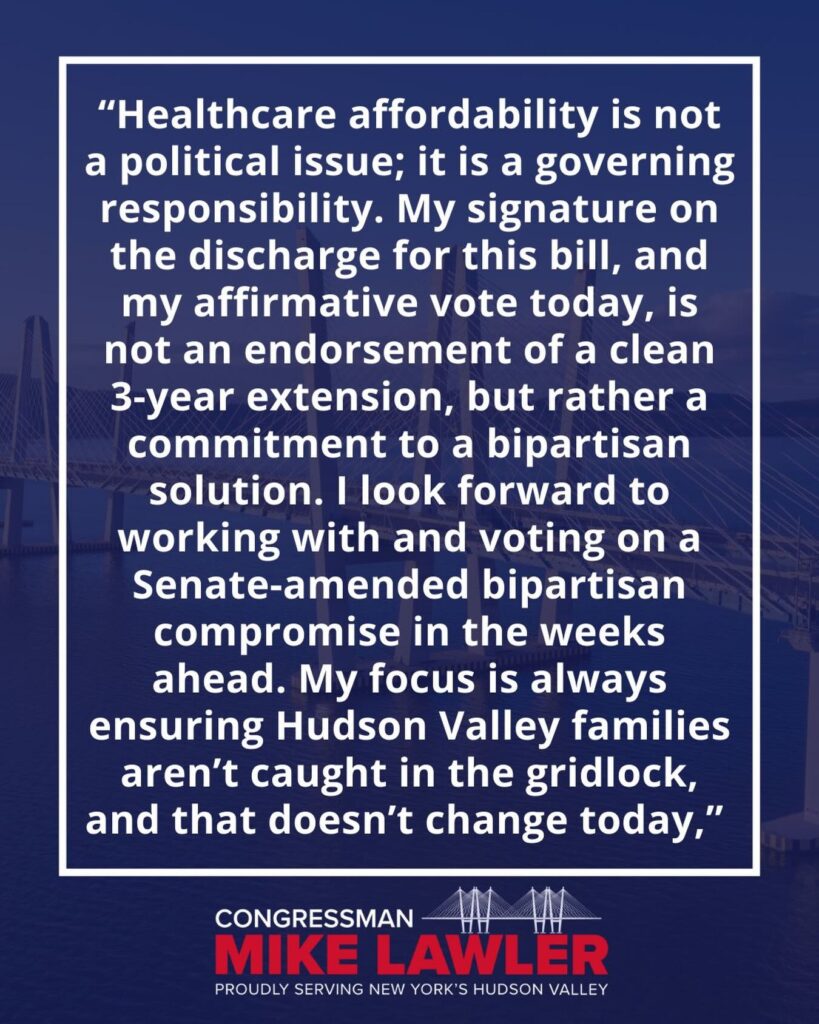
Rep. Lawler said, “Our healthcare system is broken and has been for years. Today I voted, in a bipartisan way, to advance enhanced ACA tax credits while we continue working toward a permanent fix that lowers costs for families across the Hudson Valley. I look forward to working with my colleagues in the Senate and voting on a bipartisan solution in the weeks ahead.”