
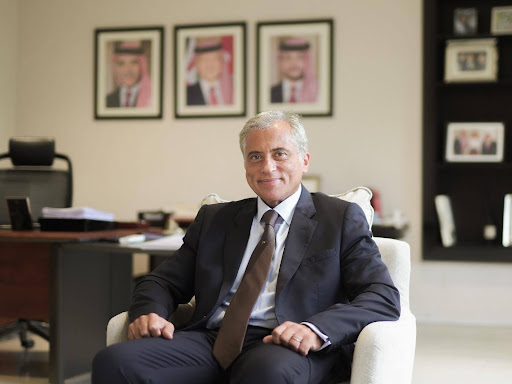
On 4 December 2024, three days after he read his ministerial statement to the House of Representatives and after 129 of Jordan’s 138 MPs had taken the floor to respond, Jafar Hassan’s new government won its vote of confidence by 82 votes to 52. The Jordan Times called it an overwhelming majority. The Rasid parliamentary monitor worked it out as 60 percent of the House and ran its report under the headline “Jafar Hassan government has lowest confidence among last three governments”. Bisher Khasawneh had started with 68 percent, Hani Mulki with 65, Omar Razzaz with 61.
Eighteen months later, the University of Jordan’s polling centre found that two-thirds of Jordanians trusted that same government, and 83 percent approved of the way its prime minister spends his weeks.
Which of those numbers tells you whether Hassan is a good prime minister? Neither, on its own. That judgement is the reader’s. What this article can do is set out what the government has done since September 2024, what it has only promised, and what the polls and the critics say, so the verdict rests on something firmer than a headline.
Who Is Jafar Hassan?
Jafar Hassan was born in Amman in 1968 into a family of Balqa origin that, according to Al Jazeera’s profile, lived off farming and livestock before his father went into trade. He finished school in Amman in 1985 and then went abroad: a bachelor’s degree at the American University of Paris, a master’s at Boston University, a public-administration degree at Harvard’s Kennedy School, and a doctorate in political science and international economics from the Geneva Graduate Institute.
His background is administrative rather than electoral. He joined the foreign service in 1991, served at Jordan’s UN mission in Geneva and at the embassy in Washington, and in December 2009 became Minister of Planning and International Cooperation, the ministry that handles the IMF, the World Bank and the donors. He kept the job through five cabinets until 2013, then twice ran the Office of His Majesty the King, from 2014 to 2018 and again from 2021, with a short spell as deputy prime minister for economic affairs in 2018. When Reuters reported on 15 September 2024 that King Abdullah had asked him to form a government, it described him simply as the head of the King’s office and a former planning minister. His is Jordan’s 44th government, and he holds the defence portfolio himself.
What He Promised
The ministerial statement of 1 December 2024 is unusual for a Jordanian government in that it contains numbers. Eighty percent of government services would be online within a year, and all of them by the end of 2026. More than 500 schools would be built within five years. An executive programme with monthly timelines would follow within weeks. The Islamic Action Front, the largest bloc with 31 seats, withheld confidence anyway, saying the programme “did not include new proposals or practical solutions”. Those pledges are the yardstick, and the rest of this article measures against them.
How Is the Economy Doing?
Growth, inflation and debt
Stable, and not a great deal more than that. The IMF’s June 2026 review recorded growth of 2.8 percent in 2025 and projects 2.7 percent this year. Inflation was 1.8 percent in 2025 and averaged 1.4 percent in the first quarter of 2026; the Fund expects 2.5 percent for the year as the war’s energy costs feed through. All of the programme’s performance criteria and most of its indicative targets were met, as Petra reported; the targets on debt were not.
Debt is where you have to read the footnotes. On the IMF’s widest measure, which folds in the electricity company and the Water Authority, government and guaranteed debt rose from 106.1 percent of GDP in 2024 to 109.0 percent in 2025. Net of the bonds held by the Social Security Corporation, it went from 82.1 to 83.6 percent, with 82.5 expected this year. Hassan’s own figure, in his December 2024 policy statement to the House, was around 90 percent, a number that predates the IMF’s revision of Jordan’s GDP series. None of these is wrong; they count different things. What they share is a direction: debt went up in the government’s first full year, and the programme’s debt targets were missed. The IMF’s projections now have the ratio easing from 2026, and the government’s commitment is 80 percent on the net measure by 2028.
Unemployment
This is the number the government is judged on at home, and it has barely moved. The Department of Statistics switched the basis of its headline figure during 2025, which has let some people claim a five-point fall that never happened. On the consistent series, unemployment among Jordanians aged 15 and over was 21.5 percent in the third quarter of 2024, the quarter the government took office, and 21.0 percent in the second quarter of 2026. Among all residents it has held at 16.1 percent. The one bright spot is women: 33.3 percent when the government arrived, a peak of 34.8 percent at the end of 2025, and 30.3 percent by the middle of 2026, two and a half points lower than a year earlier.
When MP Dima Tahboub asked for the jobs data, the government sent her two files: 96,420 net jobs in 2024 and 48,403 in the first half of 2025. She replied that much of it was low-wage work and that it had not produced a substantial fall in unemployment. Jordan Labor Watch put youth unemployment at roughly half in August 2026. Tellingly, in the one-year opinion poll, people who thought the country was heading the wrong way blamed the economy, unemployment and prices before anything else.
Investment and the Economic Modernization Vision
The Vision is a 2022 royal initiative, so Hassan inherited it. What his government added is the second executive programme, launched on 12 January 2026: 392 projects and about JD10 billion over 2026 to 2029, or 382 projects by Roya News’s count.
On investment the evidence cuts both ways. The IMF puts foreign direct investment at about 3.1 percent of GDP in 2025, with private inflows edging up from 2.5 to 3.0 percent of GDP: movement, but not much. MEED, whose June 2026 analysis is the only sustained assessment of this government by an international outlet, still listed weak FDI among the government’s unsolved problems and said the reforms that would lift growth and jobs “have gone virtually untouched”. Against that, the United States capped tariffs on Jordanian exports at 10 percent in a trade agreement signed on 21 July 2026, the UAE signed the US$2.3 billion Aqaba railway agreement in April, with financing still to be closed, and the Abu Dhabi Fund for Development agreed in August to finance five vocational schools.
Is the Cost of Living Getting Worse?
Not in the way it is elsewhere in the region. With inflation at 1.8 percent last year, Jordan’s problem is not prices going up but wages standing still. The private-sector minimum wage rose from JD260 to JD290 on 1 January 2025 and is frozen until 2027. The Phenix Center points out that JD290 is 46 percent of the average wage of JD627, under the ILO’s 55 percent benchmark, and that its own poverty-line method points to JD480.
The government’s answer has been cushions rather than pay rises. Hassan said in June 2026 that bread, fodder and gas-cylinder subsidies plus the National Aid Fund came to more than half a billion dinars, and the fund now reaches about 250,000 families. When the Iran war hit energy costs in March 2026, he ordered spending cuts across every ministry, and the cabinet paid compensation to people whose homes and cars were damaged by falling shrapnel and drones.
Health and Schools
The single most concrete social achievement of the two years is the “Ra’aya” cancer insurance programme. Signed in June 2025 and in force since 1 January 2026, it covers about 4.1 million Jordanians for treatment at the King Hussein Cancer Center: everyone aged 60 and above, everyone under 19, and every National Aid Fund beneficiary without other insurance. It is worth JD132.7 million, of which the government pays JD124.1 million. The World Bank added a health-reform programme in June 2026, a US$400 million financing agreement the cabinet approved that month.
Education is a story of structure more than bricks. The two education ministries were merged into a single Ministry of Education and Human Resources Development, drafted in January 2026 and completed in the August reshuffle. The 100-schools partnership with the private sector opened its first school, Maru Secondary for Girls in Irbid, on 3 May 2026, with the banks financing 19 in the first wave. On the overall count the sources differ: Roya News tallied 120 new schools and 132 additions in two years, while the government’s own two-year material claims 134 school projects and 340 rehabilitations. On either count the pace is behind a pledge of more than 500 schools in five years.
Infrastructure: Signed, Built, or Still on Paper
Two projects define the term. The National Water Carrier, which will desalinate 300 million cubic metres of Red Sea water a year at Aqaba and pump it 438 kilometres uphill to Amman, reached its final technical and legal agreement in April 2026, at a capital cost of about US$4.3 billion, or US$5.8 billion with financing. The US International Development Finance Corporation has since approved up to US$1 billion in loans and US$800 million in risk insurance, the largest single commitment, ahead of the EBRD’s US$475 million. Whether financial close, promised for 2025 and then for July 2026, has actually happened is disputed: a Saraha News column on 30 August said the Ministry of Water had announced it, while MEED reported on 24 September that it was still not complete. Either way, no water will flow before 2030. The project was conceived long before Hassan; what his government did was get it over the line.
The Aqaba railway, 360 kilometres from the phosphate and potash mines to the port, went from a 2024 memorandum to an implementation agreement with the UAE on 15 April 2026. It is signed, not financed: financial close is expected in early 2027, and no track has been laid.
On energy, the Risha gas field’s concession was extended to 2061 in June 2026 and output has risen sharply, and in September the cabinet approved sending gas to Lebanon through Syria.
Digital government is the pledge closest to being kept. The IMF verified the December 2025 target of 80 percent of automatable services online. By mid-2026 the figure was 85.5 percent, the Sanad digital ID had 2.88 million users and legal standing, and it had become mandatory for public services.
Field Visits and What the Polls Say
Hassan governs on the road. “Field work is my method and my school,” he said in January 2026, “and I will continue it until the government’s last day.” Cabinet sessions have been held in the governorates, starting in Karak, where he says a development vision, projects and priorities were agreed with the elected local bodies.
The public seems to like it. The University of Jordan Center for Strategic Studies tracked trust in the government from 54 percent at formation to 65 percent at 200 days, “the highest level since 2011” in the Jordan Times’s words, and 70 percent at one year in October 2025. At eighteen months, in April 2026, two-thirds still trusted the government and 83 percent approved of the field visits.
Not everyone takes the numbers at face value. JordanZad ran the one-year poll under the headline “figures rise amid many questions” and set the 70 percent against a Rasid survey in which 86.4 percent of MPs were dissatisfied with the government’s handling of unemployment. Watana had dismissed “show” field visits back in July 2025. And Barakat Al-Abadi, writing in Ammon News in August 2026, gave the government credit for finishing the long-delayed Princess Iman Hospital expansion in seven months, then added that field visits are not achievements in themselves and that nothing had yet changed citizens’ lives on a wide scale.
Political Reform, Rights and the Critics
The ministerial statement promised political modernisation. The record on civil liberties is where the government has taken the hardest criticism. On 23 April 2025 it banned the Muslim Brotherhood after arrests over an alleged weapons plot. In May 2025 the Media Commission blocked 12 news websites following reports about Gaza aid; the Committee to Protect Journalists called the decision “deeply alarming”. Human Rights Watch documented the five-year sentence handed to activist Ayman Sandouka for a Facebook post, saying he “should not have spent a single night in prison”, and a July 2025 Constitutional Court ruling ended the legal basis of the Teachers’ Syndicate.
Domestic critics have other complaints. The Kafaa performance index put the cabinet’s average age at 58, with no minister young enough to count as a millennial, under the headline “Hassan government older than Khasawneh and Razzaz governments”. The Social Security draft law, which would have raised the retirement age to 65 for men and 60 for women, ran into enough resistance that the parliamentary committee rewrote about 80 percent of its articles and the government asked for it to be deferred. On 12 August 2026 the Jordanian Conservative Party called for the government to go and for early elections.
Cabinet Changes and the Bakkar Affair
The cabinet has been reshaped three times: on 6 August 2025, when nine ministers came in and ten went out; on 14 July 2026; and on 11 August 2026. The July change followed the government’s sharpest ethics test. On 28 June 2026 it disclosed that Labour Minister Khaled Bakkar’s son had bid for, and won, a government tender. Hassan suspended the tenders, invoked the code of conduct every minister had signed, and asked for Bakkar’s resignation. A regulation on ministerial conflicts of interest followed in July. Watana’s headline, “Jafar Hassan calms a storm, but what next?”, caught the general tone: credit for acting fast, questions about what comes after.
The August reshuffle was a different animal. Nobody joined and nobody left. Two deputy prime ministers were created to chair the economic-modernisation and services committees, and Azmi Mahafzah took the merged education ministry. The Prime Minister’s Office said the merger made a reshuffle constitutionally necessary. Al-Ghad called it “a cabinet reshuffle without ministers”, Jo24 said the changes were in titles rather than people, and Al-Rai recorded complaints that MPs had not been consulted.
Wars Next Door
The whole two years have been spent with a war on at least one border. Le Monde reported that Jordan moved more than 82,000 tonnes of aid into Gaza over fifteen months and ran two field hospitals there. When the Iran war began, Hassan told the House on 4 March 2026 that “Jordan will not be a battlefield for any party”. The cabinet passed emergency energy and supply-chain measures, and transit traffic through Aqaba jumped 155 percent in the first half of 2026 as Iraq-bound cargo avoided the Gulf. Israel let the side agreement for extra water lapse in late 2025, which the government now gives as the reason the water carrier cannot wait.
So, Is He a Good Prime Minister?
Here is what the record supports. The government has done specific, checkable things: a national cancer insurance scheme, a digital-government target met on time, the water carrier agreement signed with most of its financing lined up, the railway agreement signed, a minister gone within days of a conflict of interest, and an IMF programme kept on track through a war. Public trust, by the only regular measure Jordan has, is higher than when it started.
Here is what the record does not support. Unemployment has gone from 21.5 to 21.0 percent over the government’s tenure. Debt is still above 100 percent of GDP on the broad measure, and it rose last year. Foreign direct investment, at about 3 percent of GDP on the IMF’s 2025 figure, has barely moved. School-building is far behind the pledge. The big projects will not deliver before 2030. And rights groups have recorded a narrowing of political space that the ministerial statement never mentioned.
If you weight stability and competent administration, Hassan comes out well. If you expected the economic transformation his own statement promised, the results are unfinished. Both readings fit the evidence, which is why the question in the title has no one-word answer.
Frequently Asked Questions
Is Jafar Hassan a good prime minister?
Assessments are mixed. Polls show public trust rising from 54 percent at formation to around two-thirds in 2026, and the IMF has signed off on every review of its programme, though the debt targets were missed. MEED concluded that deeper reforms have lagged, and unemployment among Jordanians remains above 21 percent.
What is Jordan’s unemployment rate in 2026?
21.0 percent among Jordanians aged 15 and over in the second quarter of 2026, or 16.1 percent among all residents. The two figures are not comparable with each other.
What is Jordan’s public debt in 2026?
The IMF projects 108.7 percent of GDP for 2026 on its broad basis, which includes NEPCO and Water Authority debt, or 82.5 percent net of Social Security Corporation holdings.
Why did Jordan reshuffle its cabinet in August 2026?
The merger of the education and higher-education ministries required a constitutional adjustment, and the government used it to create two deputy prime ministers. No minister joined or left.
What has Jafar Hassan’s government failed to achieve?
Unemployment has not fallen meaningfully, the Social Security reform was deferred after resistance in parliament, school construction is well behind the 500-school pledge, and the water carrier’s financial close slipped from its promised 2025 date.