
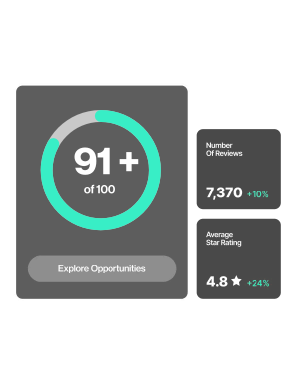
Truth is weird on the internet. The customer is unable to take the product home. No one’s behind a counter to ask, no counter, at all. So what do they do? They search for small signs such as a pile of stars, a not-embarrassed review count, a not-so-clearly taken photo of a customer in their kitchen, or a small seller rating (under a Google ad). All of this on its own is not very convincing. pile it high enough, however, they click on “buy.
So it’s really choosing how the hints are displayed. Whether it’s a discussion with store owners, or a conversation with agents, Yotpo and ResellerRatings pop up more often than not, collecting and displaying feedback and data in front of the buyer. However, they were not designed to be used for the same purpose, and this is much more important than might be indicated by a comparison of feature lists.
The following sections describe how each one can be implemented and where they are effective, and how a store owner might decide between the two.
Stars on Your Site or Stars Out in the Wild? Yotpo vs ResellerRatings
Why Trust Is the Real Product
First, some context. US shoppers have more choice than they know what to do with, and most of them have been burned at least once, by a junk product or a site that turned out to be sketchy. So they want proof now. Not promises, proof.
Reviews are the first proof point
Pretty much everyone reads reviews before buying anything that isn’t milk or toilet paper. Yotpo’s own numbers say close to two out of three buyers get hesitant when a product has fewer than five reviews.
Google is a major trust stage
Lots of purchases start on Google. If your ad or Shopping listing has stars on it and the one next to it doesn’t, guess which one gets the click.
AI assistants are the newest trust stage
People now ask ChatGPT and similar tools what to buy, and those tools lean on review text to decide what to mention. You won’t see those chats. Your reviews are still in them.
Yotpo at a Glance
Yotpo is a big customer marketing platform. It began as a review tool and later added loyalty,and AI visibility. A lot of Shopify brands run on it, and it’s an official Shopify Plus partner.
How Yotpo builds trust
Yotpo brand trust review platform collects site and product reviews by texting and emailing customers after they order. It supports photos, video, and Q&A. On the back end, you get moderation tools, AI that identifies recurring themes in customer feedback, and customizable widgets that seamlessly fit your store’s design. Reviews also get published to Google for product and seller ratings.
The part that is most useful is how it reuses that feedback everywhere else. For stores that care about building brand trust with reviews, one review ends up on the product page, in Google, in the loyalty program and in Yotpo Discover, which shows you how your brand comes up in ChatGPT and Gemini answers.
Where Yotpo fits best
It suits DTC brands and growing stores that see reviews as the start of a bigger retention plan, not a box at the bottom of the product page.
ResellerRatings at a Glance
ResellerRatings has been around for ages, and most people know it for its official Google Seller Ratings partnership. The whole product is built around building brand trust with reviews and getting them onto Google.
How ResellerRatings builds trust
It asks customers for seller and product feedback in one two-part request (which I’ve always found kinda handy, since nobody likes getting two emails), and then all that data gets pushed out into Google Shopping, search ads and organic results, while your brand picks up its own profile page on ResellerRatings.com as a bonus. And yes, you’ll find photos, video reviews, surveys and AI insights tucked in there as well.
Where ResellerRatings fits best
If paid search and Google Shopping pay your bills, this is the kind of tool you want. Brands that care a lot about stars showing up in their ads tend to be happy with it.
Head-to-Head Comparison
Google visibility
Google is ResellerRatings’ home turf, no question. Yotpo syndicates to Google too, though, so either one can get you search and product stars.
On-site experience
Yotpo’s widgets are flexible and look good, and you get extras like filtering and AI summaries. ResellerRatings has widgets as well, but its focus is clearly off-site.
Beyond reviews
This is honestly the spot where the two split apart, because Yotpo hooks your reviews into referrals, loyalty points, and AI visibility, whereas ResellerRatings pretty much stays in its lane with ratings, verified reviews and reporting.
Ideal customer
Brands that want one platform covering several retention jobs usually go to Yotpo. And the established retailers we know who live and die by Google Shopping? They tend to end up on ResellerRatings.
Questions to Ask Before You Decide
Nobody knows your store like you do, of course, but in my experience running through these questions settles things faster than you’d expect.
Where do your customers discover you?
Say a big chunk of your traffic comes in through Google Shopping ads, then deep Google syndication isn’t really optional, is it? But if you’re growing mostly through Instagram, email and folks who keep coming back, I’d argue on-site display and retention tools end up mattering more.
How many tools do you want to manage?
Running reviews, texts and loyalty out of one system means fewer gaps in your data and a lot less headache for your team, I’ve found. You can go the other way and stitch together three separate best-in-class tools for the flexibility, sure, but somebody has to glue them all together and, nine times out of ten, that somebody turns out to be you.
What does your review volume look like?
Product pages with two reviews each? You need better collection: SMS requests, or points for leaving a review.
How important is AI visibility?
Do you care how ChatGPT talks about your store? You probably should, and if so I’d go with a review platform that plugs into tools actually built to track that sort of thing.
What will migration involve?
Switching later is possible. It’s also a pain. When you’re on the call with the sales rep, ask them how your old reviews get imported, whether the verified buyer badges come along, and if your structured data stays clean afterward, because a decent onboarding team can honestly save you weeks of grief.
How responsive is support?
Your widget will break at the worst moment, probably Black Friday. So before you sign anything, find out what their support hours look like, whether there’s a dedicated rep assigned to you, and how quickly they really get back to people (not what the sales deck claims).
Two Brands, Two Different Answers
Two quick examples make this clearer.
Store A sells electronics out of New Jersey. Thousands of cables and chargers from a dozen manufacturers, and about half its revenue comes through Google Shopping. The fear is being one of twelve listings for the same HDMI cable. For them, seller stars on Google are the whole game, so a syndication-first platform makes sense.
Store B is a small candle company in Nashville. Everything is poured in-house and sold direct, and growth comes from word of mouth and Instagram. Customers want to know how long a candle burns and whether “fig and cedar” really smells like that. They need photo reviews on the site, a loyalty program for their loudest fans, and a shot at showing up when someone asks an AI for gift ideas. A broader platform fits them better.
Neither is wrong. They’re solving different trust problems. Work out which store you’re closer to and you’re most of the way there.
Making Your Reviews Work Harder
Buying the software is the easy part. After that you’ve still got to do something with what customers are telling you, and that starts with asking for reviews at the right moment, say a few days after the box shows up rather than the minute it ships. Answer angry ones like a person would. Push the detailed, useful reviews to the top. Put customer photos in your ads, with permission of course.
If you want those signals working on your checkout page, in Google results and in AI answers at the same time, a yotpo brand trust review platform setup is a sensible bet. It treats feedback as something the business is built on, not a widget you installed once and forgot.
Whatever you pick, track it. Review volume, average rating, conversion on reviewed products, ad click-through. Those numbers will tell you pretty quickly if it’s working.
Conclusion
Both tools focus on building brand trust with reviews. ResellerRatings achieves this mainly through Google, making it ideal for retailers who rely heavily on Shopping ads. In contrast, the Yotpo brand trust review platform takes a broader approach by integrating reviews, loyalty programs, and AI-driven discoverability.
So which one’s right for you? That really comes down to where your buyers find you and how you’d like social proof to show up across your marketing. But the job doesn’t change either way, since you’re giving careful shoppers proof they can actually see, and if I’m honest, that kind of proof counts for more now than it did a few years back.