
by Chris Kampitsis and Ben Soccodato from The SKG Team at Barnum Financial Group
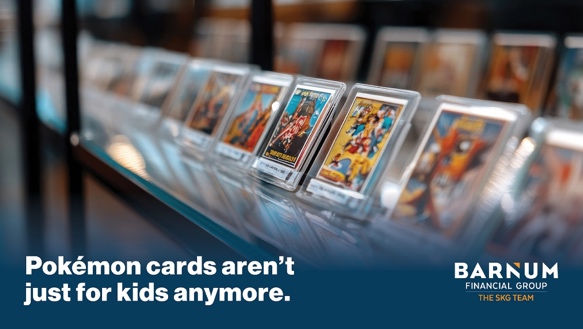
During the past few years, certain cards, especially rare, high-grade Pokémon cards, have quietly shifted from childhood hobby to something closer to a collectible asset.
A mix of nostalgia, limited supply, third-party grading, and growing mainstream attention has pushed parts of this market meaningfully higher.
It reminds us of what happened with vinyl records.
Something once considered a relic found its way back, not just as a functional item, but as something people genuinely value and want to own. Pokémon cards are starting to fill that same role for a whole generation.
Let’s be clear. We are not recommending this as an investment strategy.
Markets like this can be unpredictable. They’re often driven as much by hype and emotion as they are by fundamentals.
Values can go up. They can also come down. Fast.
Anyone entering this space should do so with realistic expectations and a healthy dose of caution.
From a planning standpoint, we view collectibles as a small slice of the overall picture.
A good rule of thumb is to keep alternative assets like this under 10% of your portfolio. That way, your core strategy stays grounded in diversification and long-term thinking.
We’re sharing this because it reflects something bigger: a shift in what people assign value to. Things tied to culture, nostalgia, and personal meaning are increasingly showing up in conversations about wealth and assets.
It’s worth paying attention to.
And on a lighter note, it might not be the worst idea to take a quick look through your kids’ old toy bin. You never know what kind of “diversified asset” might be hiding in there!
Visit The SKG Team at Barnum Financial Group, to learn more.