
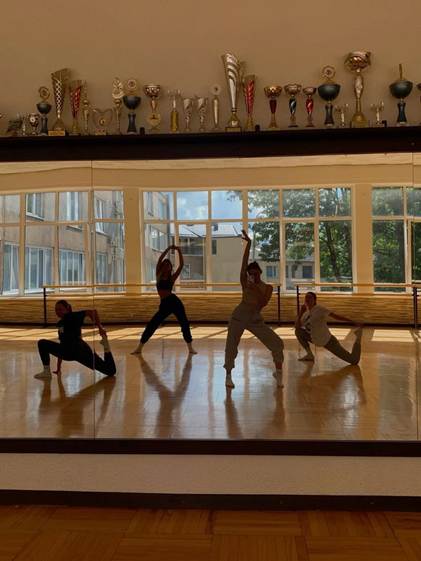
Photo from Pintrest
There’s something almost suspiciously simple about the idea that music can change your entire mental state, but it keeps proving itself over and over again. One minute everything feels heavy, overstimulated, slightly stuck in your head, and then a song starts playing and suddenly your body remembers it exists. Not in a dramatic, movie-scene way, but in a quiet shift that happens in the background. Shoulders loosen. Breathing evens out. Thoughts stop looping quite as aggressively. And sometimes, without planning anything, movement follows.
That’s where dance slips in as a mental health habit without really asking for permission. It doesn’t need a routine, a gym membership, or even a clear goal. It just starts with pressing play. And in that space between sound and movement, something genuinely regulating happens for a lot of people.
Even the tools around dance culture reflect that connection between emotion and movement in subtle ways. For example, Irish dance shoes from online retailers like https://www.keilys.com/irish-dance-shoes/ might seem very specific at first, but they actually sit in an interesting place within this conversation about movement and mental wellbeing. These shoes are designed for precision, rhythm, and structured footwork that comes from traditional Irish dance, which is deeply rooted in musical timing and physical discipline.
But beyond performance or cultural practice, there’s something grounding about how they represent the relationship between sound and body control. They’re built to amplify rhythm, to make movement more intentional, and to connect steps directly to music in a way that feels almost meditative when practiced. Even when not used in formal dance settings, they symbolize how movement can become a form of emotional regulation. When the body is engaged in rhythm-based activity like this, whether through structured dance or spontaneous movement at home, it taps into a very similar psychological effect: focus shifts outward into music and motion, rather than inward into overthinking. That overlap between tradition, rhythm, and emotional release is part of why dance in general keeps showing up in mental health conversations in such a natural way.
When Music Starts Doing More Than Just Filling Silence
Most people don’t press play thinking they’re about to regulate their nervous system.
It usually starts smaller than that.
A playlist for background noise. Something to make chores less boring. Something to fill the silence while getting ready. Then at some point, a track hits differently. Not in a dramatic emotional breakdown way, but in a subtle “okay, this actually changes my mood a bit” way.
That’s where the shift begins.
Music has this quiet ability to interrupt thought loops without demanding attention. It gives the mind something else to follow, which often creates just enough space for emotional release to happen without forcing it.
And once movement enters the picture, even lightly, things change again.
Dance Isn’t About Being Good — It’s About Getting Unstuck
One of the biggest misconceptions about dance is that it requires skill or confidence.
It doesn’t.
At its core, dance is just movement responding to rhythm. Everything else gets layered on top by self-awareness, comparison, or overthinking.
But when it’s stripped back to its simplest form, it becomes something else entirely: a physical reset.
There’s a reason people instinctively move when they’re alone and listening to music. The body processes rhythm faster than the mind processes doubt. So even small movements, like tapping, swaying, pacing, or randomly deciding the kitchen floor is now a stage, can shift internal state more than expected.
It’s not about performance. It’s about release.
The Brain Actually Likes Movement More Than Silence
From a mental health perspective, movement isn’t just physical.
It’s regulatory.
When the body moves in rhythm with music, it creates a feedback loop that helps redirect attention away from internal stress patterns. That’s part of why dance can feel grounding even when life doesn’t feel particularly stable.
It doesn’t erase problems. It just gives the mind something else to hold onto for a while.
And sometimes that is enough.
Especially on days when thinking too much is the problem.
The Bedroom Dance Floor Phenomenon Is Real
There’s a very specific kind of dance that happens when nobody is watching.
No choreography. No audience. No expectations.
Just music and whatever movement feels right in the moment.
This is where a lot of people accidentally discover how effective dance can be for mental wellbeing. It removes pressure entirely. There’s no “doing it correctly.” There’s just expression through movement.
It can last thirty seconds or thirty minutes, and both versions count equally.
The body doesn’t really care about structure. It cares about release.
Why Small Rituals Matter More Than Big Changes
Mental health advice often gets framed in large, intimidating terms.
Build routines. Change habits. Commit to consistency.
But sometimes the most sustainable shifts are the smallest ones.
Pressing play.
Letting a song finish.
Allowing movement to happen without editing it in real time.
That’s the kind of habit that doesn’t require motivation beforehand. It builds itself in the moment.
And once it becomes familiar, it stops feeling like effort and starts feeling like instinct.
Dance as Emotional Translation
There are emotions that don’t always convert neatly into language.
Stress that doesn’t fully explain itself.
Sadness that isn’t dramatic enough to label but still sits in the background.
Restlessness that doesn’t know where to go.
Dance gives those feelings somewhere to move.
Not in a fixed or structured way, but in a physical translation that doesn’t require explanation. The body becomes a medium for processing what the mind hasn’t fully sorted yet.
That’s part of why it feels so relieving afterward, even when nothing “big” has changed externally.
Something internal has shifted, even slightly.
Press Play and Let It Be Enough for Now
There’s a tendency to overcomplicate wellbeing habits, as if they need to be optimized to be valid.
But sometimes the entry point is much simpler than expected.
A song starts.
The body responds.
The mind loosens its grip a little.
And for a brief moment, things feel lighter without needing to be solved first.
That’s the quiet power of dance as a mental health habit.