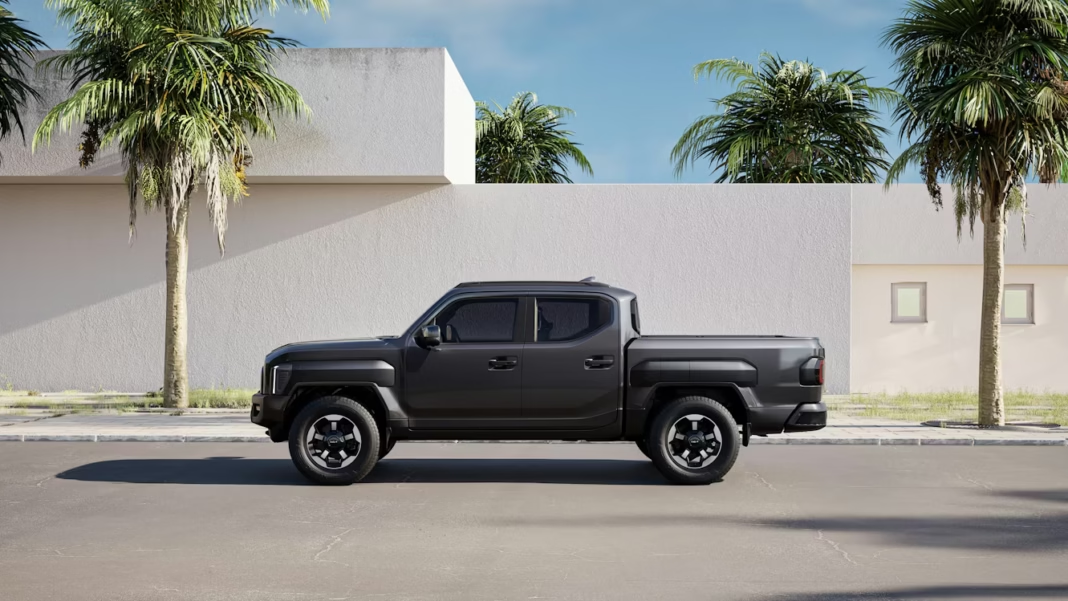

Humidity can slow down the workday like no other type of weather, and it’s also less-than-ideal for your truck
We often worry more about winter road salt or the immediate impact of a gravel road, but the air itself carries a slower, more insidious threat. In regions where the dew point remains high, the atmosphere acts as a constant delivery system for moisture, finding its way into the microscopic pores of a truck’s finish and the deep recesses of its chassis.
Unlike a rainstorm that eventually dries, high humidity keeps a vehicle in a perpetual state of dampness, creating a playground for chemical reactions that most drivers don’t notice until the damage is structural.
Faster Oxidation
Water acts as an electrolyte. When it hangs in the air, it forms a thin, nearly invisible film over every surface of the truck. If there is any exposed metal (even a tiny chip from a stray pebble) the humid air completes the circuit between the metal and the oxygen, kickstarting the corrosion process.
Humidity is notoriously effective at penetrating electrical connectors and wiring harnesses as well as exterior panels. Over time, moisture can lead to green crust or verdigris on copper terminals, resulting in phantom electrical issues, sensor failures, and parasitic draws that can baffle even experienced mechanics. In a modern truck, where electronics govern everything from fuel injection to towing stability, atmospheric moisture is a silent assassin.
The Vulnerability of the Truck Bed
One of the most susceptible areas of any pickup is the bed. Because of its geometry, the bed acts as a basin, often trapping humid air beneath mats or within the ridges of the floor. When temperature fluctuations occur, such as the cooling period after sunset, this trapped moisture condenses into liquid water. Without proper airflow, this condensation sits against the paint for hours or even days.
To combat this, many owners look toward specialized coatings that do more than just provide a grip. Integrating a high-quality truck bed liner paint creates a non-porous, airtight seal that effectively isolates the steel from the ambient environment.
By eliminating the basin effect, these coatings prevent the slow-burn rot that often claims truck beds long before the engine gives out.
Thermal Expansion and Pore Sealing
As the temperature rises, the metal and paint on a truck undergo thermal expansion. This expansion can cause microscopic pores or fissures in the factory clear coat to open slightly. In a humid environment, moisture is driven into these fissures by vapor pressure. When the temperature drops and the surfaces contract, that moisture becomes trapped beneath the surface.
This cycle is what eventually leads to bubbling or delamination of the paint. Once the bond between the paint and the primer is compromised by trapped moisture, the damage is irreversible without a full strip and respray. Proactive maintenance in humid climates involves more than just washing; it requires the use of sealants and sacrificial layers that prevent moisture from finding those microscopic entry points.
Protecting the Interior Environment
The cabin of a truck is a sealed environment that can trap moisture, leading to mold and mildew on your seats and within the seat foam and carpeting. In high-humidity regions, the “musty truck smell” is more than an annoyance—it’s a sign that the interior materials are absorbing water.
Beyond the upholstery, the dashboard electronics and steering column components are at risk. Owners in these climates often find that using a dehumidifier bag or ensuring the A/C system’s evaporator drain is clear can make a significant difference. However, the first line of defense remains the physical barriers on the vehicle’s exterior.