
By Dan Murphy
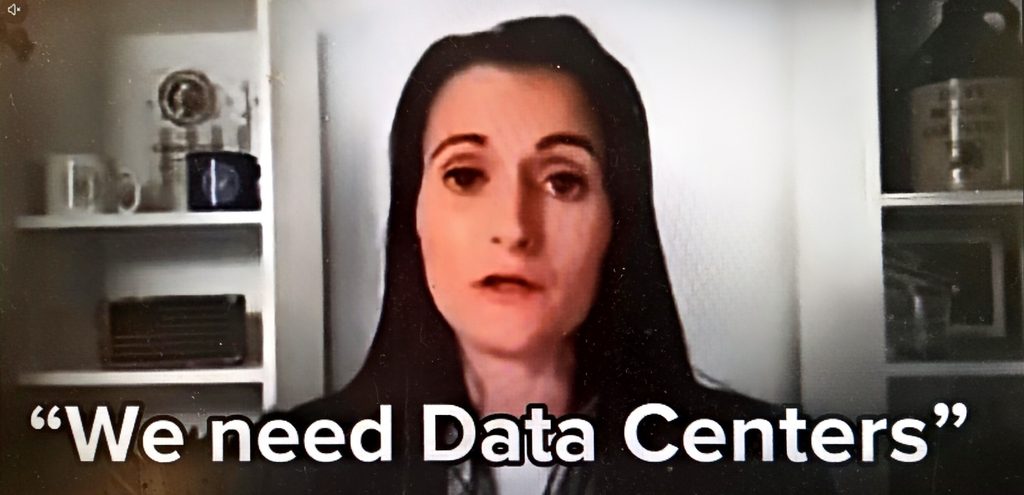
In NY-17, our YouTube channels are flooded with ads from both Congressman Mike Lawler and his Democratic challenger, Cait Conley. Lawler’s ad last week pounded away with a video clip of Conley saying, “We need data centers.” The ad was effective: my wife, not involved in politics at all, mentioned her concern about data centers to friends and referenced the ad.
The Conley campaign repeated an ad from an angry man blaming Lawler for his rising energy bills. This ad did not resonate with independent-undecided voters we spoke to in NY-17. Others don’t believe Lawler is the reason for sky-high energy bills in NY. A better ad for Conley is about her bio-at West Point and serving in the military in the Middle East.
Before she ran for Congress here in NY-17, Conley worked in the Biden administration as the National Security Council’s Director for Counterterrorism. Conley wrote the government’s first-ever Domestic Counter-UAS National Action Plan, released April 25, 2022.
That much we can agree on. The Lawler campaign is calling into question Conley’s role after leaving the Federal government.
The website caitconley.ai presents a deep dive into Conley’s history of writing “the federal government’s counter-drone policy while her future employer’s lobbyists visited her White House office — then collected $328,283 from two surveillance contractors now lobbying the government she left, for work she refuses to describe.”
Below is all from CaitConley.ai.
“My plan for 2025 was to finally make money,” she said on the MisFitNation podcast in January 2026. The plan worked: Conley left government in January 2025 for Hidden Level’s payroll and has collected $328,283.15 from Hidden Level and Primer, two AI contractors, since January 1, 2025. She refuses to describe the work, citing non-disclosure agreements; neither company appears on her LinkedIn or her campaign site, and the filing that reports the money also lists NVIDIA and AMD stock and cryptocurrency.
As the Biden National Security Council’s Director for Counterterrorism, Conley wrote the government’s first-ever Domestic Counter-UAS National Action Plan, released April 25, 2022; by her own LinkedIn she “developed and oversaw implementation” of it. The plan called for expanded state and local detection authority, authorized equipment purchases, and federal funding to pay for both: demand, on paper, for the airspace-surveillance products her future employer sells.
White House visitor logs show Lisa Ellman, the Hogan Lovells partner who now personally lobbies for Hidden Level, visited Conley at least four times between March 2022 and January 2023, while Conley wrote and implemented the plan. Hidden Level hired Ellman’s firm eight weeks after the plan came out. Three years later the market arrived: the One Big Beautiful Bill created a $500 million FEMA counter-drone grant fund, the eligible-equipment list matches Hidden Level’s product line, and New York’s first award was $17.7 million.
With Conley on the payroll, both companies stepped up their lobbying. Hidden Level’s spending rose 163 percent in 2025, from $180,000 to $474,000; its filings name former Republican Senator Norm Coleman and Ellman, and list contacts with the Trump White House, DOD, DHS, and Conley’s former National Security Council on “southern border security efforts” and FIFA-state counter-drone grant authorities. Primer, seeded by the CIA’s venture arm and holding no DHS contract, brought on a new lobbying firm in 2025, Invoke LLC, run by Mitch McConnell’s former senior advisor Jane Lee, and has paid it $60,000 every quarter since, $300,000 through mid-2026, with the Homeland Appropriations Act in every filing, the first time that bill appears on any of Primer’s lobbying reports.
Conley conceals every link in the chain while campaigning against “corruption.” The White House meetings have never been disclosed. She sought a 90-day disclosure extension that would have pushed her filing past the June 23 primary, filed May 19, 2026 only after reporters pressed (“abruptly reversed course,” per POLITICO), and told a local Democratic group the coverage was “lies.” Her platform’s “Fighting and Preventing Corruption” plank pledges to close “the revolving door … so that public service is no longer a stepping stone to cashing in on connections.”
The plan Conley wrote asked Congress to create a market. By her own description, it was built to close “critical gaps in policy and law” for “critical infrastructure owners and operators, and state, local, tribal and territorial entities.” It called for expanded drone-detection authority for state and local law enforcement, authorized-equipment purchases, and federal funding to pay for both. That is demand, on paper, for the class of detection sensors Hidden Level sells.
Conley left CISA in January 2025 and joined Hidden Level as a full-time salaried employee. She announced her campaign in March 2025, still on the payroll. Her House financial disclosure reports $293,283.15 from Hidden Level ($152,743.07 in salary, then $140,540.08 in consulting fees after she converted to contractor status in 2025), plus $35,000 in consulting fees from Primer: $328,283.15 since January 1, 2025. The filing also lists NVIDIA and AMD stock and cryptocurrency.
Her public LinkedIn lists every posting back to her 2007 platoon-leader job. Hidden Level and Primer are not on it, and her campaign site omits them too. At a Bedford candidate forum in February 2026, she told voters she could not discuss the work because she signed non-disclosure agreements. She is not a registered lobbyist.
Hidden Level builds passive RF and radar sensors that detect, track, and locate drones and their operators. It sells the equipment to the U.S. government, and it installs its own sensor networks over American cities and sells the feed as a subscription; the sensors sit on cell towers. Its data is used in Palantir’s Maven, the Pentagon’s AI targeting and battle-management platform, which won a $480 million Pentagon contract in May 2025. Hidden Level’s own website says its data is “live inside platforms like Palantir’s Maven via IL5 — used daily for decision-making.”
The system already runs over NY-17. On December 13, 2024, a rogue drone shut Stewart International Airport in Newburgh. Hidden Level deployed its Airspace Monitoring Service at Stewart Air National Guard Base within 24 hours, integrated the feed into Palantir within 48, and shared it with the Air Force and New York State law enforcement.
Primer builds large language models that read enormous volumes of text in English, Russian, and Chinese, extracting people, places, and organizations at machine scale. In-Q-Tel, the CIA’s venture-capital arm, seeded the company in 2017, and founder Sean Gourley described the goal himself: “What if we could read everything and pay attention to everything, all the time?” Primer sells “all-source intelligence,” “narrative monitoring,” and the fusion of “open-source and internal data” into “decision-ready intelligence.” Its 2020 SOCOM and Air Force contract built a military disinformation-detection platform; the 2022 follow-on, worth $3 million, was filed as “SOCIAL MEDIA EVENT MONITORING PRIMER AI.” Federal records show roughly $11.76 million in contracts from FY2019 through FY2025, every dollar from the Pentagon and none from DHS, despite marketing that its “AI platforms support DHS missions.”
Primer’s reach runs past its own contract list. Through Palantir’s FedStart program it operates inside Palantir’s accredited government cloud, cleared to FedRAMP High and Impact Level 5, on sensitive government data. It sells through Carahsoft, its “Master Government Aggregator,” the same reseller that distributes Palantir and whose headquarters the FBI raided in September 2024 during a Justice Department procurement-fraud investigation. Palantir builds and runs ICE’s core enforcement systems: ImmigrationOS (roughly $30 million), Investigative Case Management (over $100 million), and the ELITE targeting tool. [19][20]
A Primer “Senior Account Executive, DHS & Law Enforcement” described the homeland business on a public LinkedIn profile, screenshotted by a POLITICO reporter: a “$4M qualified pipeline … across CBP, ICE, and federal law enforcement components,” with “C-suite engagement at CBP.” And ICE is buying.
In October 2025, ICE’s Enforcement and Removal Operations solicited a contractor to mine “open-source and social media” data for “person-specific” intelligence for its deportation Targeting Operations Division, and the agency is planning a data-analytics purchasing vehicle worth roughly $100 million. This file does not claim Primer holds an ICE contract today. Its product, its partner stack, and its own sales pipeline are aimed at one.
Conley sought a 90-day extension on her financial disclosure, a delay that would have pushed the filing past the June 23 primary. She filed May 19, 2026; POLITICO reported she “abruptly reversed course” after questions from Substack reporters Timmy Facciola and David McKay Wilson. The White House meetings have never been disclosed. The two employers are missing from her LinkedIn and campaign site. The work itself is covered, she says, by NDAs. And when The Intercept and POLITICO first reported the relationships in February 2026, she told a local Democratic group the articles “misrepresented her work,” a meeting reported under the headline “Cait Conley Accuses Press of ‘Lies.’”
Her treatment of the two companies is not the same. On Hidden Level she has a ready answer about keeping families safe at a Yankees game or a Taylor Swift concert. On Primer, reporting found she “does not appear to have ever spoken publicly about her work.”
The contradictions: her platform condemns what her paychecks fund
Her platform’s “Fighting and Preventing Corruption” plank pledges to “stop elected representatives from personally enriching themselves in office” and to close “the revolving door … so that public service is no longer a stepping stone to cashing in on connections.” Her record is government service to contractor payroll in the same month, $328,283.15, and a lobbyist from her own visitor logs now on her employer’s account. The same platform vows to ban congressional stock trading and require divestment; her disclosure lists NVIDIA and AMD stock and cryptocurrency. Her “Addressing AI” plank promises “strict standards for how federal agencies use AI” and safeguards against AI-driven disinformation, which is Primer’s product line. On ICE, she said at an April 2026 forum: “I’m reigning it in all the way,” while paid by companies wired into the ICE-Palantir stack, one of which lobbies the DHS budget she campaigns to cut. [1][35][36]
On the One Big Beautiful Bill she went further. “The ‘One Big Beautiful Bill’ is cruel and cowardly. No other way to put it,” she posted on June 1, 2025. She pledges to “end entirely” its SALT provision and attacks Rep. Lawler for passing it. The same law created the $500 million counter-drone fund her employer is lobbying to collect, and her employer’s own filings list lobbying on H.R.1’s counter-UAS provisions.
The bottom line
Conley spent twenty years inside the institutions her employers sell to, ending at the NSC and CISA, the two offices that matter most to the drone-surveillance industry. The policy she wrote while Hidden Level’s future lobbyist visited her office created a $500 million market. The two companies put her on the payroll the month she left government, $328,283.15 in all, and hired the lobbyist from her visitor logs, a former Republican senator, and Mitch McConnell’s former senior advisor to work the Trump White House, the Pentagon, DHS, and her former NSC on “southern border security efforts,” the DHS budget, and the grant authorities she created. She promoted their work on her personal LinkedIn, scrubbed them from her résumé, cited NDAs to voters, tried to push her disclosure past the primary, and called the reporting “lies.” However, her platform pledges to close the revolving door, ban stock trading, rein in ICE, and repeal the law that funds her employer’s market. This is pay-for-play as voters understand the term: the insider who wrote the rules, met the lobbyists, took the money, and will not say what it bought. Every fact in this file comes from her own government’s logs, her own filings, her own likes, and her own words. The burden of explaining it is hers.