
Most of the water a pool loses with no one swimming is evaporation. A drop of more than about 2 inches a week with no clear cause usually points to a leak.
As pool season winds down across Westchester, this is a good time to find out which one you have.

Photo by Isi Parente on Unsplash
What Normal Evaporation Looks Like
Alicia Toedter of Leslie’s told Bob Vila that the average pool loses about a quarter inch a day without a solar cover. Most owners only need to add 1 to 2 inches a week.
Heat speeds evaporation even at night, according to Poolonomics. Humid air slows it down.
What changes the rate
| Factor | Effect on water loss |
|---|---|
| Heat and sun | Warm water and direct sun speed evaporation |
| Wind | Moving air carries moisture off the surface |
| Humidity | Humid air slows evaporation |
| Water features | Waterfalls and fountains expose more water to air |
| Cover | A solar blanket cuts losses sharply |
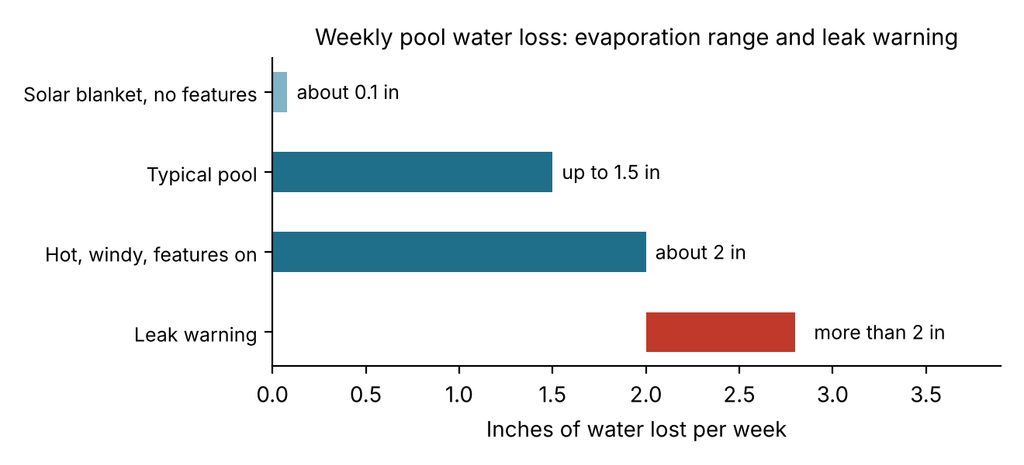
Sources: Poolonomics and Loop-Loc.
Signs of a Leak Instead
Evaporation slows after sunset, so overnight loss is a stronger leak signal. In hot climates the same logic applies, and specialists offering pool leak detection in Phoenix compare a pool’s loss against local evaporation data before any testing begins.
| Sign | Likely evaporation | Likely leak |
|---|---|---|
| Timing | Loss tied to hot, dry, windy days | Loss continues overnight and in mild weather |
| Amount | Up to about 1.5 inches a week | More than 2 inches a week |
| Yard | Dry ground around the pool | Soggy spots near the pool or pad |
The same Phoenix page says faster loss with the pump running suggests a pressurized plumbing leak. Loss with the pump off points to the pool shell.
Other Reasons Water Drops With No Swimmers
Auto-fill valves
An auto-fill replaces lost water quietly. Water Use It Wisely notes this can hide a leak until the water bill arrives.
Backwashing and splash
Toedter says splash-out and backwashing the filter also removes water. These are normal losses, not leaks.
Common leak spots
She lists the skimmer, lights, return lines, cracks and plumbing joints as the usual trouble areas. Underground lines may need professional equipment to find.
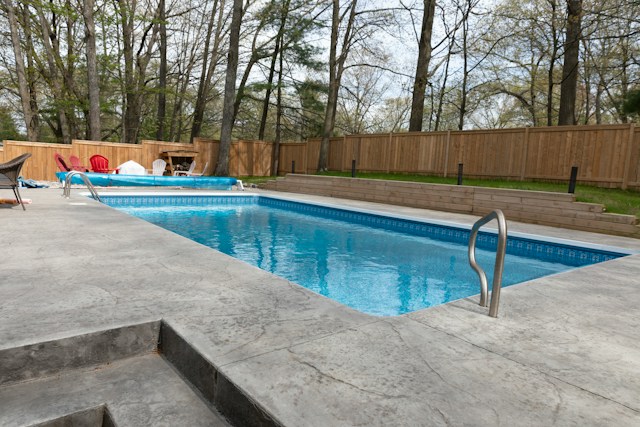
Photo by Derek Hille on Unsplash
A Simple Bucket Test
- Fill a bucket with pool water and set it on the first or second step.
- Match the bucket level to the pool level and mark both.
- Turn off auto-fill and avoid swimming for 24 hours.
- Compare the two drops.
Jimmie Meece of America’s Swimming Pool Company says a bigger drop outside the bucket means a probable leak. Repeat the test if it rains.
To see the test done step by step, watch SRP’s Identifying a Pool Leak.
Rafi Friedman of Florida-based Coastal Luxury Outdoors adds that a bigger dip than usual in humid weather, or with a cover on, may mean a leak.
When to Call a Professional
If the bucket test shows a leak, a pool inspection typically runs $125 to $250, according to Bob Vila. That is small next to a large water bill or a damaged deck.
Local upkeep stories can help too. The Yonkers Times has covered preventing winter heating breakdowns and why garage door springs fail, and you can browse more in its community section.
Common Questions About Pool Water Loss
How much water should a pool lose in a week?
Most pools lose up to about 1.5 inches a week to evaporation. More than 2 inches deserves a closer look.
Why does my pool lose water overnight?
Some overnight loss is normal, but evaporation slows after sunset. Large overnight drops suggest a leak.
Can an auto-fill hide a leak?
Yes. It refills the pool quietly, so turn it off during a bucket test.
Does a pool cover stop water loss?
It reduces evaporation a great deal, but it does not stop a leak.
Final Thoughts
Evaporation explains most water loss, and weather, covers and features set the pace. A pool that keeps dropping more than 2 inches a week deserves testing.
Run the bucket test, check the yard and the pad, and call a specialist if the numbers do not add up.