
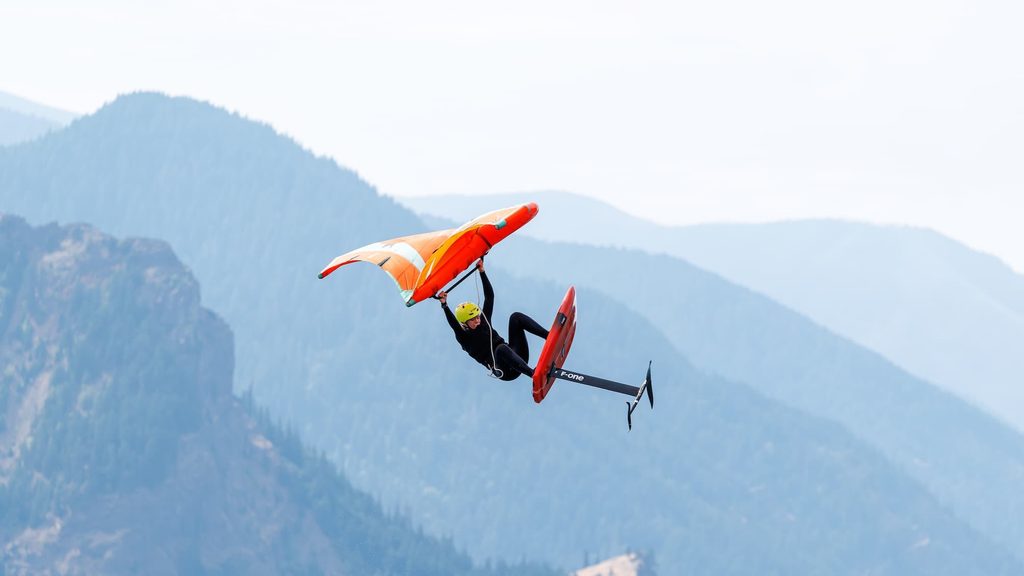
Wing foiling and kiteboarding are both powered foil disciplines, but they’re quite different in their learning curve, equipment, and what makes each one appealing. Here’s a direct comparison.
Someone drawn to powered water sports with a foil has two main options that have developed robust participant communities: kiteboarding (or kitesurfing) and wing foiling. Both involve riding above the water on a hydrofoil, powered by wind. Both offer an exhilarating experience that’s unlike any other water sport. But they get there very differently, and the learning path, equipment requirements, and ongoing experience of each are distinct enough that the choice between them matters.
This comparison is aimed at people who are trying to decide where to start, or who are already in one discipline and curious about the other.
The Equipment Comparison
Kiteboarding requires a kite, a control bar and lines, a board, and safety equipment including a harness and cutaway system. The kite is a large inflatable wing that flies in the air on lines typically 20 to 25 meters long. Kiteboarding setups are more complex, with multiple components that must be properly rigged before use and that require space to set up the kite on the beach. Quality beginner kiteboarding equipment runs from two to four thousand dollars. Wing foiling uses a smaller, handheld inflatable wing, a foilboard, and a hydrofoil underneath. The handheld wing is held by the rider, requires no lines, and can be set up in minutes. Quality wing foiling equipment is similarly priced at two to four thousand dollars for a complete beginner setup including the foil board and wing.
The absence of long lines in wing foiling is significant. Kite lines can entangle swimmers, obstacles, and other beach users. Wing foiling is more practical in areas with limited open space and creates less risk of the line-related accidents that are among the most serious safety concerns in kiteboarding.
Learning Curve Comparison
Kiteboarding has a steeper initial learning curve than wing foiling for most people. Before ever getting on a board, kite students spend hours learning to control a training kite, understanding the kite window, and practicing re-launching. The progression from kite control to body dragging to board riding takes most students several days of instruction over multiple sessions. Getting to independent riding typically requires fifteen to twenty hours of instruction and practice.
Wing foiling has a somewhat more accessible initial progression. The wing can be depowered instantly by releasing it or letting it feather, which removes the primary safety concern of a runaway power source. Most wing foiling beginners can get onto the board in their first session, though getting the foil lifting consistently takes more time. Independent foiling typically requires eight to fifteen hours for most students.
Wind Window and Conditions
Kiteboarding works in a broader range of wind conditions than wing foiling. Large kites generate more power relative to their feel than a handheld wing, allowing skilled kiters to ride in winds as light as 10-12 knots. Wing foiling typically requires 15 knots or more for consistent riding for beginners, though skilled wing foilers can work lighter winds with appropriate equipment.
Both disciplines are most enjoyable in consistent winds without excessive gustiness. Gusty, inconsistent wind is more problematic for kiteboarding because the power changes rapidly in the kite and require constant adjustment. Wing foiling handles gusty wind somewhat more naturally because the rider can simply let the wing feather during gusts.
What Each Experience Is Like
Kiteboarding offers higher potential speeds and more powerful, dynamic riding than wing foiling. Advanced kiteboarders perform jumps, loops, and handle-pass tricks that aren’t possible with a handheld wing. The kite provides consistent power that allows sustained riding across long stretches of water with less physical effort once the skill is developed.
Wing foiling has a different feel that many participants describe as more connected to the natural elements, similar to sailing but with a foil. Transitions and maneuvers in wing foiling involve coordinating the wing with body position and the foil simultaneously, which has its own technical depth. Wing foiling has the additional versatility of being able to be done in waves without the kite, riding the swell like a surf foiler with the wing providing supplemental power.
Safety Comparison
Both sports have real safety risks that training and equipment can significantly mitigate. Kiteboarding risks include line entanglement, kite power getting away from the rider, and the energy stored in kite systems that can cause serious injury in accidents. The safety systems on modern kites, including depower and cutaway systems, have improved dramatically and most serious accidents involve either equipment malfunction or operator error in safety system use.
Wing foiling risks center primarily on the foil itself: the carbon or aluminum wing underwater travels at speed and can cause serious injury in a fall. Wearing a helmet and impact vest is standard in wing foiling. The absence of kite lines removes some of kiteboarding’s specific risks while the foil creates its own hazard profile.
Community and Infrastructure
Kiteboarding has been an established sport for over twenty years and has a well-developed infrastructure of certified instructors, schools, and gear rental options in most coastal areas. The community is large and active, with competitive events, coaching resources, and social communities organized around the sport.
Wing foiling is a newer discipline, emerging commercially around 2019-2020, and the instructor and school network is less extensive than kiteboarding’s, though it has grown rapidly. Finding wing foiling instruction in a specific location may require more research than finding a kite school. The community is enthusiastic and growing quickly.
Wrapping Up
Both wing foiling and kiteboarding are compelling ways to experience powered flight above the water. Kiteboarding offers higher performance ceiling and established community infrastructure at the cost of a steeper learning curve and more complex equipment. Wing foiling offers a more accessible initial progression, simpler equipment logistics, and a versatile experience that bridges powered and unpowered foiling at the cost of a newer, smaller community. Trying both through lessons before committing to either is the best advice for anyone genuinely trying to decide.
Frequently Asked Questions
Can someone start with kiteboarding and then learn wing foiling, or vice versa?
Yes, and skills transfer in both directions. Foil board control skills developed in wing foiling transfer to kiteboarding and vice versa. Kite control skills don’t directly transfer to wing handling since they’re different tools, but understanding of the wind window and apparent wind does transfer. Most people find the second powered foil discipline easier to learn than the first regardless of which they started with.
Which is more portable and travel-friendly?
Wing foiling has a significant portability advantage. The wing deflates to a compact size. Foilboard and foil break down into components that fit in a travel bag. Kiteboarding requires transporting a large inflated-in-use kite, which packs down but is still bulky, plus lines, bar, and board. Airlines frequently charge significant fees for oversized sports equipment, and the multi-bag requirement of kiteboarding makes travel more cumbersome than wing foiling.