
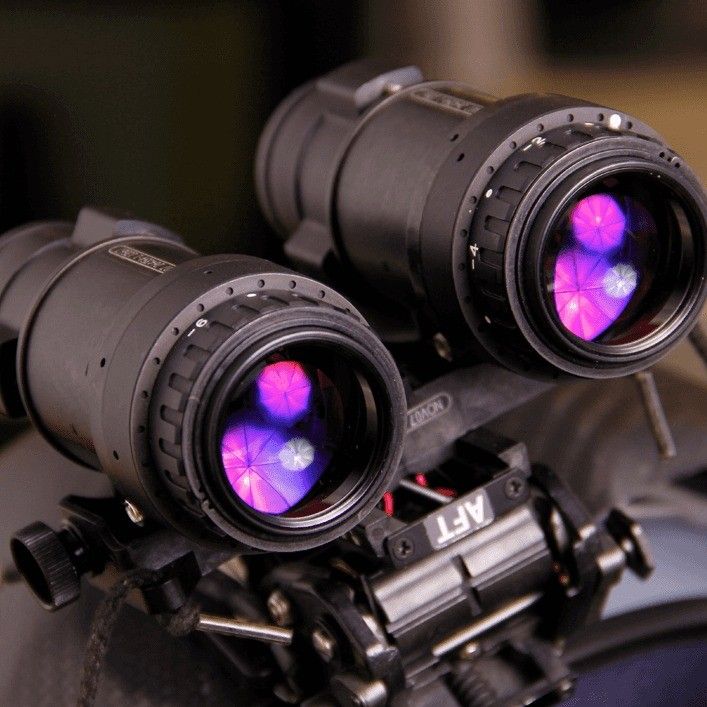
NVGs are precision optical instruments that require specific care and maintenance to perform reliably. Here’s a practical guide to keeping them in operational condition.
Night vision goggles are precision optical and electronic instruments that operate in demanding conditions. Dirt, moisture, impact, and the simple accumulation of use all affect their performance over time. Equipment that’s stored carelessly or cleaned incorrectly will degrade faster and perform less reliably than equipment that receives proper attention.
The maintenance requirements for night vision equipment aren’t complicated, but they’re specific. Understanding the correct procedures, what to do and what to definitely avoid, is essential for anyone responsible for the care of this equipment.
Optical Surface Care
The optical surfaces in night vision goggles, including the objective lens, eyepiece lens, and internal optics, are precision-ground and coated surfaces that degrade permanently if scratched or damaged by incorrect cleaning. Even minor scratches that wouldn’t noticeably affect a standard camera lens can degrade the low-light image quality of an NVG significantly because image fidelity is so critical to performance in marginal light conditions. Equipment like the ANVIS 9 requires careful optical maintenance to maintain its performance characteristics.
Cleaning optical surfaces should be done only with appropriate tools: lens tissue or microfiber cloths designed for optical surfaces, and optic-safe cleaning fluid. Never use paper towels, shirt fabric, or household glass cleaners. Paper products and rough fabrics scratch optical coatings. Standard glass cleaners contain chemicals that attack anti-reflection coatings.
Image Intensifier Tube Protection
The image intensifier tube is the most sensitive and most expensive component in any NVG. It can be permanently damaged by exposure to excessive light. Turning on an NVG in daylight, exposing it to direct sunlight or other intense light sources while operating, or failing to cap the objective lens during storage in lit conditions can all damage the photocathode.
Most NVGs have an automatic brightness control system that limits tube input in bright conditions, but this system has limits. Never assume the automatic protection will handle any light exposure. The objective cap should be installed whenever the goggles are not in active operational use. Treating the tube with the respect its replacement cost demands is the right approach.
Environmental Exposure Management
NVGs are often used in field conditions that expose them to dust, sand, moisture, and temperature extremes. Most military-grade NVGs are built to withstand these conditions better than consumer equipment, but even ruggedized equipment benefits from care that minimizes unnecessary exposure.
After use in dusty or sandy conditions, remove loose particles from the exterior with a soft brush before wiping. Grit left on the surface and then wiped is more damaging than grit that’s removed dry first. After water exposure, remove batteries and allow the equipment to dry thoroughly before storage. Storing equipment in a case designed for it, with foam that protects against impact and provides some moisture buffering, is standard practice.
Battery Management
NVGs typically use standard batteries, often AA or 123A lithium cells, in both field and training applications. Batteries should be removed from equipment that will be stored for extended periods because leaking batteries can cause corrosive damage to battery contacts and internal components that is expensive to repair.
Lithium batteries are the preferred choice for NVGs used in cold-weather conditions because they maintain their output voltage better than alkaline batteries at low temperatures. Standard alkaline batteries can lose significant capacity in cold conditions, limiting the operational duration of the equipment in exactly the conditions where it’s most needed.
Periodic Performance Checks
Beyond cleaning, verifying that the equipment is performing to specification requires periodic functional checks. These include checking image quality in darkness, verifying that the auto-gain control responds appropriately to changes in light level, confirming that the diopter adjustment holds its setting, and checking that all mechanical adjustments move freely and stay in position.
Image quality degradation can be gradual and hard to notice in normal use, which is why comparing performance against a known standard periodically catches degradation that continuous use might not reveal. Facilities that regularly check equipment on a collimator or against a resolution test chart catch tube performance degradation early.
Storage and Transport
Long-term storage of NVGs should be in conditions that avoid temperature extremes, high humidity, and direct sunlight. Objective caps should be installed. Batteries should be removed. Equipment should be in its protective case. Locations where temperature cycling is extreme, such as a vehicle in direct summer sun, should be avoided for storage.
Transport in protective cases with adequate padding prevents the impact damage that degrades the mechanical and optical components over time. Throwing NVGs in a bag with other gear without case protection is a common cause of incremental damage that accumulates into a performance problem.
Wrapping Up
Night vision goggle maintenance is straightforward but requires discipline and the right materials. The equipment performs reliably when cared for correctly and degrades when it’s not. Optical care with appropriate tools, tube protection from excessive light, battery management, and proper storage are the core practices that keep NVGs ready when they’re needed. The replacement cost of damaged image intensifier tubes makes the time invested in proper maintenance clearly worthwhile.
Frequently Asked Questions
How long does an image intensifier tube last?
Military-specification image intensifier tubes are rated for approximately 10,000 hours of operation before expected performance degradation to below specification. In practice, tubes that are protected from excessive light exposure and properly cared for often exceed this figure. Improper use, including exposure to bright light while powered on, is the most common cause of premature tube degradation.
Can NVGs be repaired if the tube is damaged?
Tube replacement is the repair for a damaged image intensifier tube. The tubes themselves are precision manufactured components, not repairable at the component level. Tube replacement by a qualified repair facility is the standard service for this type of damage. The cost of tube replacement is significant, which underscores the value of the protective practices that prevent unnecessary tube damage.