
A good dining experience is rarely determined by food alone. Guests also notice how quickly they are greeted, whether the table feels comfortable, how easy the menu is to read, and whether service moves at the right pace.
These details may seem minor individually, but together they shape how polished a restaurant, café, or neighborhood dining spot feels.
The most effective improvements are usually the ones that remove small frustrations without drawing attention to themselves.
1. Get the Table Setup Right
Guests interact with the table for most of their visit, so small problems become noticeable quickly.
Tables should be stable, clean, and large enough for the type of service being offered. A table that rocks every time someone reaches for a glass becomes distracting immediately.
Avoid overcrowding the surface.
Menus, condiments, candles, promotional cards, table numbers, and decorations can leave very little room for plates and drinks.
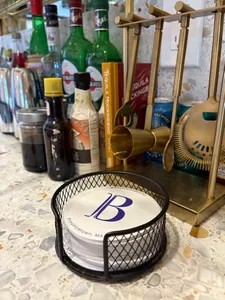
Functional accessories can still contribute to the restaurant’s identity. For example, custom coasters can protect tables while carrying a restaurant logo, graphic, or other subtle branded detail.
The important point is that every item should earn its place on the table.
Check Each Table for
- Stable legs and an even surface
- Clean chairs and seats
- Enough room for plates and glasses
- Fresh condiments
- Clean menus
- Properly placed utensils
- Water rings or sticky residue
These checks take little time but strongly influence a guest’s first impression after sitting down.
2. Make Menus Easy to Use
A menu should help customers make decisions rather than slow them down.
Clear organization matters more than elaborate design.
Group items logically and use readable type. Prices, descriptions, dietary information, and optional additions should be easy to identify without requiring customers to search through dense paragraphs.
Avoid using too many visual styles.
Several fonts, oversized graphics, and decorative backgrounds can make a menu harder to scan.
Descriptions should also tell customers something useful. Listing every obvious ingredient adds length without helping the decision.
Highlight information that affects the experience, such as preparation style, important flavors, portion format, or unusual ingredients.
Digital menus should receive the same attention. Test QR codes regularly and make sure the mobile page loads quickly without forcing customers to zoom repeatedly.
3. Control Lighting and Noise
Lighting determines whether a dining room feels comfortable, but brighter is not always better.
Tables need enough light for guests to see food and read menus without creating harsh glare.
During daytime service, natural light may do much of the work. Evening service usually benefits from layered lighting that combines overhead fixtures, wall lighting, and table-level light where appropriate.
Noise needs similar attention.
Hard floors, bare walls, glass, and closely positioned tables can create strong sound reflections. Once the dining room fills, conversations become difficult.
Restaurants can reduce excessive reverberation with materials such as:
- Upholstered seating
- Curtains
- Acoustic ceiling treatments
- Wall panels
- Rugs in suitable low-risk areas
- Other sound-absorbing finishes
Music volume should also be checked when the room is full, not just during pre-service setup.
4. Improve the Timing of Service
Good service is not simply fast service.
Guests do not want to wait too long to order, but they also do not want plates removed while someone at the table is still eating.
Restaurants should define reasonable service checkpoints.
A server should know when to greet a table, take drink orders, check after food arrives, clear finished items, and offer dessert or the check.
These standards create consistency without forcing staff into a rigid script.
Kitchen timing matters too.
If one person’s entrée sits under heat while another dish is still being prepared, food quality suffers before the plates reach the table.
Track ticket times during both normal and peak service.
Repeated delays may indicate a problem with staffing, station layout, menu complexity, or communication between the kitchen and front-of-house team.
5. Keep Cleanliness Visible
Customers judge cleanliness based on more than the plate in front of them.
Door handles, restrooms, floors, menus, condiment bottles, payment devices, and tabletops all contribute to the impression.
The FDA’s Food Code provides science-based model guidance used by regulators for food safety in restaurants and other retail food-service environments.
Food safety procedures should be built into normal operations rather than treated as a separate task performed only before an inspection.
Cleaning schedules should identify what needs attention, how often, and who is responsible.
Restrooms deserve particular attention because guests often use them as a shortcut for judging the cleanliness of the entire establishment.
A clean dining room paired with an untidy restroom can undermine confidence quickly.
6. Think About How Guests Move Through the Space
Dining rooms should be designed around movement as well as capacity.
Adding another table may increase theoretical seating, but it can make service slower if staff can no longer move comfortably between guests.
Look at the complete route from the entrance to the table, restroom, payment area, and exit.
Servers also need clear paths between the kitchen, beverage stations, and dining area.
Avoid placing chairs where customers sitting down narrow an important walkway.
Waiting areas matter too.
If guests waiting for a table regularly block the entrance, create a clearer place for them to stand or sit.
Small layout changes can reduce congestion without requiring major remodeling.
7. Make Payment Feel Like Part of the Service
The end of the meal affects the final impression.
Guests who have finished dining should not have to spend another 15 minutes trying to get a check.
Restaurants can improve this by defining a clear payment process and giving staff the tools to complete it efficiently.
Portable payment terminals can reduce unnecessary trips between the table and register. Digital receipts can also make checkout faster when customers prefer them.
At the same time, staff should avoid making guests feel as though they are being rushed out.
The goal is to make payment available when the customer is ready.
That balance becomes particularly important during busy periods when the restaurant needs to turn tables without damaging the experience.
Small Improvements Add Up
Improving the dining experience does not always require a new menu, major renovation, or expensive technology.
Start with the details customers encounter repeatedly.
Make the table comfortable. Keep menus readable. Control noise and lighting. Improve service timing. Maintain visible cleanliness and make the payment process straightforward.
Then watch how guests actually use the space.
Repeated questions, delays, crowded walkways, unfinished dishes, and frequent complaints are useful operational signals.
When a restaurant fixes those small points of friction, service feels more organized and customers can focus on the reason they came in the first place: enjoying the food and the people they are dining with.