
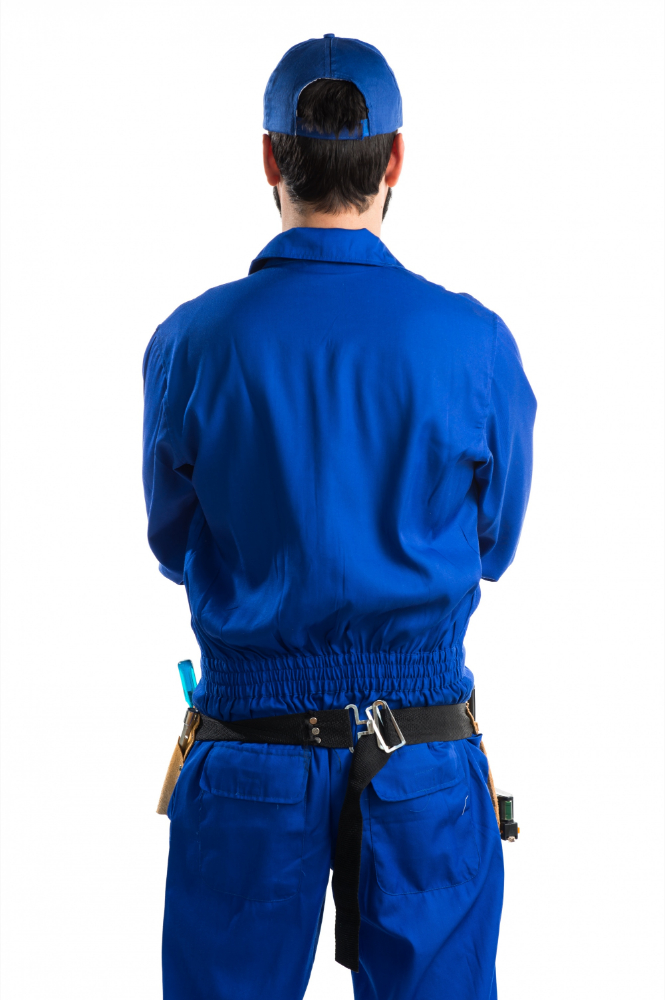
Image by luis_molinero on Magnific
Most workers spend eight to twelve hours in the same clothes. That is a long time to put up with a bad fit.
Good workwear does two jobs. It protects you and moves with you. It also looks sharp enough that you feel put together on the clock.
Start With Fit and Range of Motion
Fit drives comfort more than any label. A garment that binds at the knee or pulls across the shoulders will wear you down by midday.
Measure yourself rather than guessing. Record your waist, inseam, and thigh circumference. Compare them to the brand’s size chart. Untreated cotton can shrink up to 3 percent, so leave a little room.
Test movement before you buy. Squat, reach overhead, and climb a few stairs. The fabric should not ride up or restrict your stride. A gusseted crotch and articulated knees help a lot.
Rise matters too. A mid rise sits stable at the waist and keeps your shirt tucked when you bend. Low rise cuts often shift under a duty belt.
Fabric Choices That Matter
Fabric weight is measured in ounces per square yard. Lightweight cloth runs under 7 oz. Midweight sits between 8 and 11 oz. Heavy duck canvas can top 12 oz. Match the weight to your climate and task.
Weave and blend count as much as weight. Look for these features when you compare options:
- Cotton and polyester blends for durability and faster drying
- 1 to 3 percent elastane for stretch without sagging
- Ripstop weaves that stop small tears from spreading
- Moisture wicking finishes for hot environments
- Bar tacked seams at stress points
Some trades need rated clothing. Arc and flash fire gear follows NFPA 70E and ASTM F1506 standards. Check the arc rating label before wearing any garment near electrical work.
Denim Can Work on the Job
Denim has a place in the field. Modern work denim blends stretch and reinforced stitching into a classic look. If you want a clean silhouette with real function, start with the best tactical jeans in a stretch cotton blend. Look for a gusseted seat, hidden pockets, and triple stitched seams.
Dark washes hide stains and pass in more settings. Skip heavy distressing. Rips and thin patches reduce strength and look unprofessional.
Hardware matters too. Coated rivets and quality zippers resist corrosion and snagging. Skip exposed metal if you work around electronics or climb often.
Build Around Climate and Layers
Layering gives you control. Use a moisture wicking base, an insulating mid layer, and a wind resistant shell. Each layer should work on its own.
Cold weather needs breathable insulation. Wool blends and fleece hold warmth when damp. Avoid thick cotton as a base layer. It stays wet and pulls heat from the body.
Pockets and sleeves need scrutiny. Place pockets where your hands naturally fall. Two good ones beat six bulky cargo pockets. Raglan sleeves allow overhead reach, and flat felled seams will not rub under a pack strap.
Heat is the bigger risk for many crews. According to the CDC’s NIOSH heat stress guidance, occupational heat stress combines metabolic heat, environmental heat, and the clothing or PPE you wear. Your outfit directly affects how much heat your body stores.
Respond with fabric. Choose light colors, open weaves, and vented backs. Short sleeve and convertible options also help when temperatures climb.
Look Sharp: Color, Tailoring, and Break-In
Style comes from clean lines. Stick to navy, charcoal, olive, and black. Tapered legs look sharper than baggy cuts but still need room at the knee. Match your belt and boots for a finished look.
Consider tailoring. A hem adjustment or waist taper costs little. It fixes the issues that off the rack sizing leaves behind.
New work pants need a break in. Wear them for short stretches first. Stiff canvas softens after a few washes, and you will spot pressure points early.
Add Identity Without Adding Bulk
Branding makes workwear feel like a uniform worth wearing. Embroidered crests and custom patches add identity to jackets, caps, and bags. Choose hook and loop backing for removable use. Choose heat seal or sew on for permanent placement.
Keep patches flat and light. Stiff, oversized designs can pucker fabric and irritate skin. Place them away from seams and high friction zones.
Care and Maintenance
Care extends comfort. Wash dark garments inside out in cold water. Skip fabric softener. It can clog wicking finishes and reduce the performance of treated cloth.
Air dry when possible. High heat shrinks cotton and breaks down elastane. Inspect seams and stress points monthly. Repair small issues early.
Quick Buying Checklist
Before you buy, run through this list:
- Confirm the fabric weight suits your climate
- Check for gussets and reinforced stress points
- Test full range of motion in the fitting room
- Review care labels for wash limits
- Choose neutral colors that mix easily
Comfort and style are not rivals. Fit, fabric, and detail choices decide both. Invest in a few well made pieces and rotate them. Your body and your appearance will show the difference.