
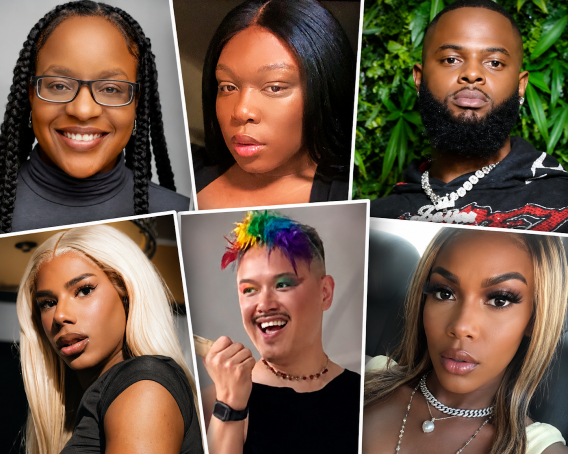
By: Dennis Richmond, Jr.
Before voguing reached television screens, before people wanted to “clock it,” and before Ballroom’s influence could be seen across fashion, music and dance, Black and Latinx LGBTQ+ folx were creating something far more consequential than entertainment.
They were creating home.
Ballroom culture grew from a long tradition of LGBTQ+ Culture in New York, eventually giving rise to Houses that became chosen families for people who often faced rejection from society, relatives and even predominantly white queer spaces.
Crystal and Lottie LaBeija helped establish the House of LaBeija, while Houses including Dupree, Ebony and Pendavis became part of a culture built around competition, mentorship, identity and belonging.
“Ballroom to me means freedom,” said Avery Parker, known in Ballroom as Dejanay. “You get to be who you are and be around people that are the same as you. Ballroom is power.”
That sense of family remains central to LGBTQ+ life generations later.
Nekia Zulu describes Ballroom as a “community of resistance through chosen family,” but Zulu’s hopes extend beyond the Scene.
“I desire liberation and freedom for trans youth and adults everywhere,” Zulu said, pointing to safety, employment, healthcare and opportunities for Black transgender people as areas where work remains.
For James “I.Den.t.T” Young, liberation would mean no longer having to expend so much simply proving LGBTQ+ people deserve to exist.
“My hope for the LGBTQIA+ communities in the near future is that we can invest our time, energy and money on things that don’t have to prove that we are human,” Young said.
Others see the future in resources and collaboration.
Maria Brunner hopes for “more free health clinics & programs for the youth of the Community,” while artist Aoki Lee Terrell wants LGBTQ+ creatives to preserve their history through film and theater.
“I want my trans sisters and brothers to just be ok with being trans and that we Collab not Compete,” Terrell said.
Collaboration is also at the heart of Zayon Anodomere’s vision.
“My hope for the LGBTQ+ community moving forward is unity,” Anodomere said. “We’re stronger when we stand together.”
Ballroom itself demonstrates both the possibilities and complexities of that togetherness. Jauan T. Durbin, known as Legendary Prince$$ Louboutin-Balenciaga, credits Ballroom with helping launch community activism and organizing. Hermez Elixir has used the House tradition to mentor another generation, while Legendary Xoey West credits the Scene with developing confidence and creativity.
But chosen family does not mean a world without conflict.
“Ballroom saved my life,” said Icon Bugz Donyale Luna, founder of the Premier House of Donyale Luna. “Ballroom is not a safe space, but your house can be a safe space.”
Perhaps that distinction is part of what makes LGBTQ+ history so powerful.
It is not simply a history of struggle. It is a history of people creating what they were denied.
Family. Healthcare. Art. Safety. Opportunity. Community. Freedom.
“My hopes and dreams are for us to always remember we have each other,” Carmen Berry said. “For us to be able to not only survive in the world but thrive.”
During LGBTQ+ History Month, those words connect generations.
Dennis Richmond, Jr. (@NewYorkStakz) is a journalist, historian, and educator from Yonkers, NY. He writes to uplift unheard voices, honor history, and inspire change.