
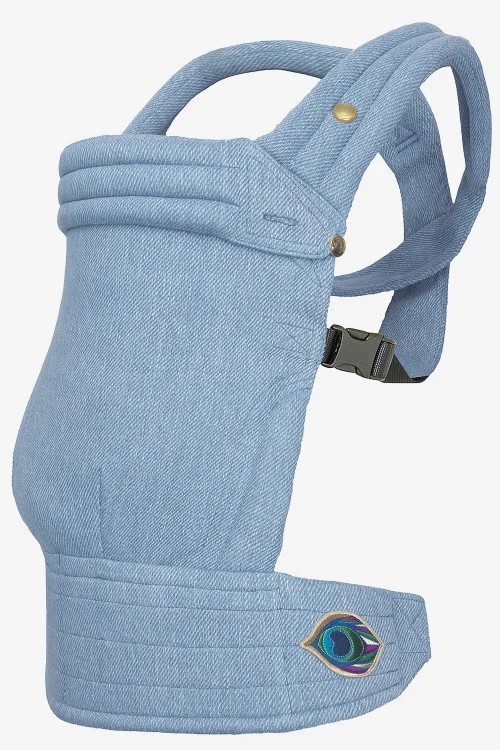
The material of a baby carrier matters as much as its fit. A carrier sits directly against a baby’s skin for hours at a time, which makes the fabric a functional choice rather than a cosmetic one. Parents comparing carriers often start with straps and buckles, but the textile itself determines how the carrier feels and how it ages.
Why the Textile Is the Core of the Product
A baby carrier is essentially a piece of woven cloth under load. The weave determines how weight spreads across the wearer’s shoulders and back. A fabric that distributes weight well makes a long afternoon of carrying feel manageable. A fabric that doesn’t will concentrate pressure in a few points, and the wearer feels it by the end of the day.
The fabric also sits against two bodies at once. The baby’s cheek rests on it. The parent’s skin absorbs its texture through a shirt, or directly in summer. That constant contact is why conscientious brands treat textile sourcing as a design decision, not a procurement detail.
Organic Cotton and Why Parents Ask for It
Organic cotton is grown without synthetic pesticides, which is the main reason parents seek it out for products that touch a newborn’s skin. Infant skin is thinner and more permeable than adult skin, so many parents prefer to limit what it comes into contact with. That preference explains why an organic baby carrier has become a standard request rather than a niche one, particularly among parents who already buy organic clothing and bedding.
There is a durability argument as well. Carriers made from quality natural fibers tend to soften with use instead of wearing thin. A carrier that holds its structure can serve through a second child, or be passed on. In a market full of short-lived baby gear, that longevity is a quiet form of sustainability, since buying once means not replacing.
How Luxury Brands Changed the Category
For years, carriers were designed as equipment. Function came first, and appearance was an afterthought. That has shifted. Brands such as Artipoppe build carriers from materials more common in fashion than in baby gear, such as linen and cashmere. The premise is that a parent wears a carrier the way they wear a coat, so it should be designed with the same care.
This matters beyond aesthetics. A parent who likes how a carrier looks and feels is more likely to reach for it. The carrier becomes part of a daily routine instead of an occasional tool, and the baby spends more time carried close. Design, in that sense, serves the practice of babywearing itself.
What to Weigh Before Buying
When comparing baby carriers, the fabric deserves the same scrutiny as the construction. A few questions help separate a considered purchase from an impulse one:
- Fiber content. Natural fibers such as cotton and linen breathe well, so a baby held against a warm body is less likely to overheat.
- Certification. Organic claims should be backed by a recognized textile standard, not just a label on the box.
- Weave and finish. A dense, supportive weave holds its shape under a growing child’s weight.
- How it ages. Ask whether the material softens with use or breaks down. Reviews from parents a year into ownership tell you more than product photos.
Fit is personal, so trying a carrier on, or buying from a brand with a clear return policy, remains the most reliable test. The fabric, however, can be judged before the box is even opened. Read the fiber content the way you would on a garment you plan to wear daily. Because that is exactly what a good carrier becomes: the most-worn piece in a new parent’s wardrobe.