
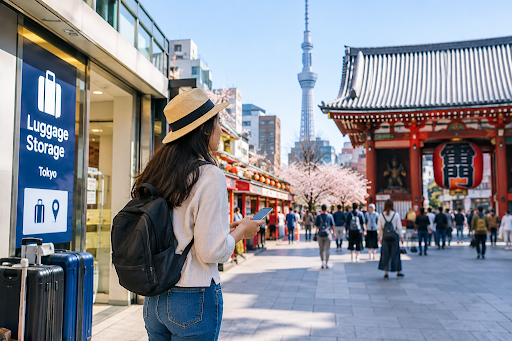
Tokyo is a city where one day can move from quiet temple grounds to crowded shopping streets, neighborhood cafés, and bright entertainment districts. That variety makes it easy to build a full itinerary, but it also creates a practical problem: what should travelers do with their bags between check-out, check-in, and sightseeing? Carrying luggage through busy stations can turn a flexible afternoon into a logistical exercise. As urban travel becomes more experience-focused, visitors increasingly look for simple ways to move around without unnecessary baggage. Tokyo is particularly suited to this approach because its neighborhoods are connected by an extensive rail network and many attractions can be explored on foot. Planning where to leave luggage can therefore be as useful as planning where to eat or what to see.
Plan Around Your Arrival and Departure Times
One of the most useful Tokyo travel strategies is to separate your sightseeing schedule from your hotel schedule. Check-in and check-out times rarely match perfectly with flight or train departures, leaving travelers with several hours that could be spent exploring. Instead of returning repeatedly to a hotel, consider arranging a convenient place to leave bags near the area you plan to visit. Travelers who need to store luggage in Tokyo can use local storage locations near major stations and popular neighborhoods, making it easier to continue sightseeing after checking out or before checking in.
Radical Storage connects travelers with local partner locations and offers online booking. Its Tokyo options include areas such as Shinjuku, Shibuya, Asakusa, Ikebukuro, and around Tokyo Station. Choosing a location based on your next destination can reduce unnecessary backtracking and make a short layover or final afternoon more productive.
Choose Neighborhoods That Match Your Schedule
Tokyo is not one compact sightseeing district, so location matters when planning a day without luggage. A traveler staying near Shinjuku may want to explore Meiji Shrine and Harajuku before heading elsewhere, while someone arriving at Tokyo Station might prefer Marunouchi, Ginza, or nearby attractions. Shibuya and Asakusa offer very different experiences, yet both are easier to explore without large bags.
A practical approach is to divide the day into geographic clusters. Choose a few nearby attractions rather than crossing the city repeatedly. This reduces transit time and leaves more room for spontaneous stops. It also helps when selecting luggage storage: a location near a station or the first major attraction can become a natural transition point between transportation and sightseeing. The goal is not to visit every district in one day, but to create a route that feels manageable from start to finish.
Make Rail Travel Easier With Less Baggage
Tokyo’s rail system is one of the city’s greatest advantages for visitors, but major stations can be busy, complex, and crowded. Navigating stairs, platforms, transfers, and narrow passageways becomes more difficult when pulling a large suitcase. Keeping luggage stored during sightseeing can make these transitions simpler, especially at busy times.
Before leaving your bags there, check the storage location’s opening hours ahead, booking details, and proximity to your route. Radical Storage’s process centers on locating a nearby partner, booking online, dropping off the luggage, and collecting it later with the booking confirmation. This can help travelers moving between hotels, airports, and train stations.
It is also wise to keep passports, medication, electronics, and other essential items with you unless the storage provider specifically permits otherwise. A lighter daypack can hold daily necessities while the larger suitcase stays out of the way.
Build Flexible Time Into a Tokyo Itinerary
Good Tokyo itineraries leave room for unexpected discoveries. A small restaurant, seasonal event, quiet garden, or neighborhood market may deserve more time than expected. Fixed hotel returns can make these opportunities harder to enjoy.
Flexible luggage arrangements also support an adaptable travel style. If your final afternoon starts near Ueno, for example, there is little value in crossing the city to collect bags before heading elsewhere. A well-placed storage point lets travelers stay nearby comfortably until it is time to continue.
This approach is especially helpful on departure days. Rather than treating the final day as dead time between check-out and transportation, travelers can plan a realistic half-day of sightseeing, lunch, shopping, or a final neighborhood walk. The key is to leave enough time to retrieve luggage and reach the airport or station without rushing comfortably.
Conclusion
Tokyo rewards travelers who balance planning with flexibility. The city offers enough neighborhoods, cultural sites, food experiences, and shopping areas to fill several days, yet poor luggage planning can make a good itinerary tiring. By coordinating storage with hotel check-out, transportation, and sightseeing routes, visitors can use their time more effectively.
The broader lesson applies to urban travel: practical details shape how freely people experience a destination. A convenient luggage plan can reduce backtracking, simplify movement through transportation hubs, and leave more room for the activities that made the trip worthwhile. Check storage details before booking, keep valuable essentials close, and choose a location that fits naturally into the day’s route. As travelers continue to prioritize efficient, experience-driven itineraries, simple services that remove logistical friction will remain an important part of modern city travel.