
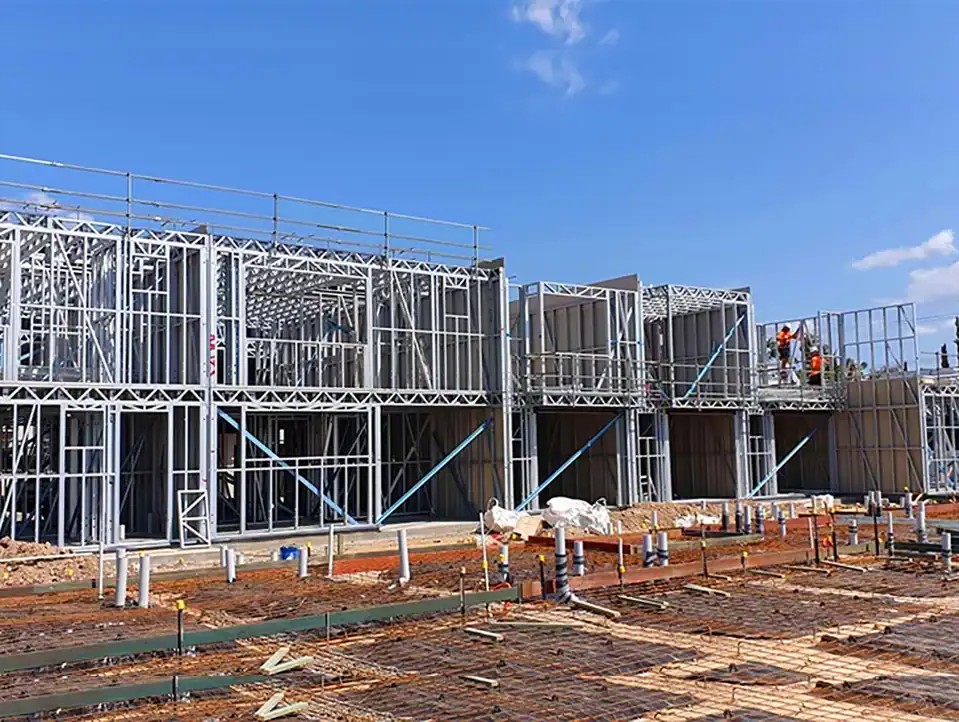
Prefabricated homes are built differently from traditional houses, but they face the same basic challenge: keeping outdoor conditions outside. Wind, rain, dust, heat, and cold will find any weak point in the building envelope. If joints are poorly sealed, even a well-insulated structure can become uncomfortable and expensive to operate.
Good sealing is therefore not a minor finishing detail. It is part of the home’s performance system. It helps insulation work as intended, protects structural materials, improves indoor comfort, and reduces the risk of moisture damage.
Why Prefabricated Buildings Need Careful Sealing
In conventional construction, many components are cut and fitted on site. Prefabricated construction moves much of this work into a controlled factory. Wall panels, roof sections, floor systems, and frames are produced to planned dimensions and then transported for assembly.
This approach can improve accuracy and shorten the construction schedule. Modern light steel framing systems also provide a straight and stable base for walls, windows, doors, and insulation. However, every panel connection creates a joint. Each joint must remain tight after transport, lifting, installation, and years of temperature change.
The most important areas normally include:
- Connections between wall panels
- Window and door perimeters
- Roof-to-wall joints
- Floor-to-wall connections
- Openings for pipes, cables, and ventilation
- Expansion joints between different materials
A gap that looks small can still allow a surprising amount of air and moisture to pass through it.
Airtightness and Energy Use
Insulation slows heat transfer through walls and roofs. It cannot stop air from moving through cracks. When warm indoor air escapes during winter, the heating system must replace that lost heat. During summer, hot and humid outdoor air can enter and increase the cooling load.
Uncontrolled air movement can also bypass insulation. This reduces the practical value of high-performance wall materials. A home may have a good insulation rating on paper but still perform poorly because of leaks around openings and panel joints.
Continuous sealing helps control this problem. The goal is not to make a building completely closed. A healthy home still needs planned ventilation. The difference is that fresh air should enter through designed vents or mechanical systems, not through random gaps.
The Role of Sealing Strips
Sealing strips are commonly used around doors, windows, access panels, and moving connections. Unlike rigid fillers, they can compress when two surfaces meet. This allows them to fill small variations in the joint and maintain contact as components move.
Different profiles serve different purposes. A soft foam strip may suit a light interior door, while an exterior window may need a denser material with better resistance to water, ultraviolet light, and temperature change. Manufacturers of door and window sealing strips may offer profiles in materials such as EPDM, silicone, PVC, thermoplastic elastomers, or foam.
The right choice depends on:
- The width and depth of the gap
- Required compression
- Indoor or outdoor use
- Exposure to sunlight and rain
- Expected opening and closing cycles
- Fire, smoke, acoustic, or chemical requirements
- Compatibility with the frame and surface finish
A strip that is too small will not seal the joint. One that is too thick may make a door difficult to close or place excess stress on the hardware.
Water Management Matters Too
Sealing must work with drainage rather than against it. Exterior walls and windows should direct water away from vulnerable joints. Flashing, sill design, drainage channels, and sealants each have a role.
Trying to block water with one continuous bead of sealant is often not enough. Water may enter through a damaged edge, move behind the surface, and become trapped. A better design uses several layers: an exterior rain barrier, a drained space, insulation, and an interior air seal.
Prefabricated projects benefit from planning these layers before production begins. Factories can prepare surfaces, position gaskets, and mark sealing points before components reach the site. Installers then follow a clear sequence instead of making decisions under time pressure.
Moisture and Long-Term Durability
Air leakage can carry moisture into wall cavities. When warm, humid air reaches a cold surface, water may condense. Over time, repeated condensation can damage finishes, reduce insulation performance, and encourage mold.
Light steel does not rot or attract termites, but the complete wall system still contains boards, membranes, coatings, fasteners, and interior finishes. These materials last longer when the assembly stays dry. Good sealing also helps protect connections from dust, salt, and pollutants that may speed up corrosion.
The building design must account for the local climate. Cold regions, hot-humid regions, coastal zones, and dry areas have different vapor and drainage needs. A sealing detail that works well in one climate may not be suitable in another.
Installation Quality Is Critical
Even the best material will fail if installed incorrectly. Surfaces should be clean, dry, and properly aligned. Sealing strips must not be stretched during installation because they may shrink back later. Corners should be joined carefully, without gaps or heavy overlaps.
Installers should also check compression after doors and windows are adjusted. Hardware alignment can change how evenly the strip contacts the frame. A simple paper test can reveal weak areas: close the door or window on a piece of paper and check whether resistance is consistent around the perimeter.
For panel joints, teams should follow the approved drawings and use the specified primers, tapes, membranes, or sealants. Substituting materials without checking compatibility can lead to poor adhesion or chemical damage.
Inspection and Maintenance
Seals should be inspected at handover and during routine maintenance. Common warning signs include visible gaps, flattened strips, cracking, hardening, water stains, drafts, and unusual outdoor noise.
Moving parts need more attention than fixed joints. Door and window seals experience friction and compression every day. Cleaning them with a mild product and replacing damaged sections early can prevent larger problems.
After severe weather or building movement, owners should also inspect exterior joints. Early repair is usually simple. Delayed repair may require opening walls and replacing damaged finishes.
Conclusion
Prefabrication can deliver fast construction, consistent quality, and efficient use of materials. Those benefits depend on careful control of the building envelope. Insulation, drainage, ventilation, and sealing must work together.
Well-selected sealing strips and properly detailed panel joints reduce unwanted air movement, keep moisture under control, and support stable indoor temperatures. They also protect the structure and finishes over the long term. In a high-performance prefabricated home, sealing is not an accessory. It is one of the systems that makes the whole building work.