
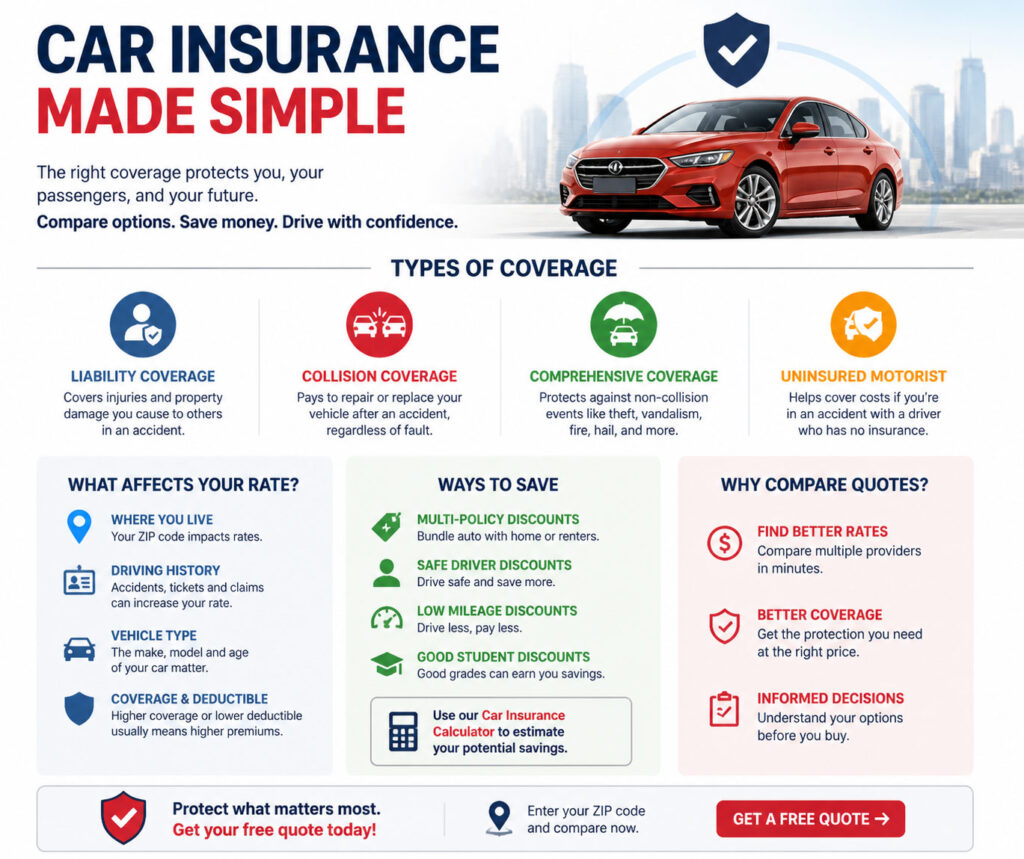
Auto insurance guide
Choosing an auto insurance company can feel simple at first: get a quote, compare the monthly price, and pick the cheapest option. But a good policy is not only about the premium. Drivers also need to look at coverage limits, deductibles, payment terms, claims support, online tools, local service options, and how the policy would actually respond after an accident.
That is why comparison matters. A driver researching Loya Insurance information or any other auto insurance resource should compare the full policy, not only the first price shown on a quote form. A lower monthly payment may be useful, but it should still come with coverage that fits the driver’s vehicle, state requirements, financial risk, and comfort level.
Insurance availability, pricing, office access, and policy options vary by state. Drivers should always confirm whether a company writes policies in their area before requesting a quote or making a coverage decision.
Price
The premium matters, but drivers should also check down payments, installment fees, renewal pricing, and cancellation rules.
Coverage
Liability limits, deductibles, collision, comprehensive, and uninsured motorist options can make two quotes very different.
Support
Claims service, customer service, payment access, and local or online support can matter long after the policy is purchased.
Why the Cheapest Quote Is Not Always the Best Policy
A cheap car insurance quote may be attractive, especially for drivers trying to keep monthly costs manageable. However, the lowest quote is not always the best value. One company may offer a lower premium because the policy has lower liability limits, a higher deductible, fewer optional coverages, or stricter payment terms.
For example, two quotes may both be for “auto insurance,” but one may include only state-minimum liability coverage while another includes collision, comprehensive, rental reimbursement, or stronger uninsured motorist protection. These differences can change how much a driver pays after an accident.
Smart comparison rule: Always compare quotes using the same driver, vehicle, ZIP code, coverage limits, deductibles, and policy term. Otherwise, the cheaper quote may simply include less protection.
What Drivers Should Compare Before Choosing an Insurance Company
The best way to evaluate an insurer is to review the practical details that affect both cost and service. A strong comparison should include the price, but it should also answer what happens if the driver has a claim, misses a payment, needs proof of insurance, or wants to update the policy.
| Comparison Factor | Why It Matters | What to Ask Before Buying |
| Premium | The premium affects monthly affordability. | What is the monthly cost, down payment, full policy cost, and renewal estimate? |
| Liability limits | Liability coverage helps pay for damage or injuries you cause to others, up to the policy limit. | Are the limits only state minimums, or can you choose higher protection? |
| Deductibles | A deductible is the amount you pay out of pocket before certain coverages respond. | Can you afford the deductible if you need to file a claim? |
| Collision and comprehensive | These coverages may help protect your own vehicle, depending on the cause of damage. | Are they included, optional, or required by a lender? |
| Uninsured or underinsured motorist coverage | This can matter if another driver causes an accident and lacks enough insurance. | Is this coverage available or required in your state? |
| Claims process | Claims support matters most when something goes wrong. | How do you report a claim, what hours are available, and what documents are needed? |
| Payment terms | Fees and due dates can affect the true cost of a policy. | Are there installment fees, late fees, cancellation fees, or payment restrictions? |
Coverage Limits Matter More Than Many Drivers Realize
Liability coverage is one of the most important parts of an auto insurance policy. State minimum limits may satisfy legal requirements, but they may not be enough after a serious crash. If damages exceed the policy limits, the driver may still face financial exposure.
Drivers should ask whether the quote includes only minimum coverage or whether higher limits are available. A slightly higher premium may provide stronger protection, depending on the driver’s risk, assets, vehicle use, and budget.
Minimum Coverage May Fit
- Drivers who mainly need to satisfy legal requirements.
- Older vehicles with lower market value.
- Drivers with very tight monthly budgets.
- Situations where the driver understands the risk of lower limits.
Higher Coverage May Fit
- Drivers with newer or financed vehicles.
- Households with more financial assets to protect.
- Drivers who commute daily or drive in high-traffic areas.
- Anyone who wants more protection after a serious accident.
Deductibles Can Change the Real Cost of Insurance
A deductible can make a quote look cheaper or more expensive. In many cases, choosing a higher deductible can reduce the premium, but it also means the driver may need to pay more out of pocket after a covered claim. A lower deductible may cost more monthly, but it can reduce the amount due after a loss.
The right deductible depends on the driver’s savings, vehicle value, and comfort with risk. A deductible should not be chosen only because it lowers the quote. It should be an amount the driver could realistically pay if the vehicle is damaged.
Claims Support Should Be Part of the Decision
Many drivers focus on the quote and forget to ask how the insurer handles claims. That can be a mistake. The claims process is where customer service becomes especially important. A driver may need to report an accident, submit photos, provide a police report, communicate with an adjuster, or check repair status.
Before choosing a policy, drivers should ask how claims are reported, whether support is available by phone or online, what documentation is needed, and whether claim status can be checked digitally. This information can save time during a stressful situation.
Local Offices vs. Online Tools
Some drivers prefer a local office because they want face-to-face help with quotes, documents, payments, or policy changes. Others prefer a digital experience where they can make payments, print ID cards, review policy details, and manage documents online.
Neither option is automatically better. The right choice depends on the driver and on whether the insurer operates in that driver’s state. Someone who wants personal help may value local access. Someone who works odd hours may care more about online account tools. The strongest option is often a company that makes both support paths clear.
| Support Type | Best For | Question to Ask |
| Local office | Drivers who prefer in-person support. | Is there an office in my state or area, and what services does it provide? |
| Phone service | Drivers who want help without visiting an office. | What number should I call for quotes, billing, claims, or policy changes? |
| Online account | Drivers who want documents and payments available digitally. | Can I print ID cards, make payments, and review policy details online? |
| Claims contact | Drivers who need help after an accident. | How do I file a claim, and what documents should I prepare? |
Payment Flexibility Can Affect Long-Term Affordability
A policy may be affordable at purchase but difficult to maintain if the payment schedule does not match the driver’s budget. Drivers should ask how much is due today, how monthly payments work, whether installment fees apply, and what happens if a payment is late or declined.
It is also important to keep proof of payment. Confirmation numbers, receipts, screenshots, and bank records can help if there is ever a question about whether a payment was made on time.
Questions to Ask Before You Buy
A good insurance decision usually starts with better questions. Before accepting a quote, drivers should slow down and confirm the details that can affect both price and protection.
- What coverage limits are included? Make sure the quote is not cheaper only because limits are lower.
- What deductible applies? Confirm the deductible for collision and comprehensive coverage if included.
- Is the vehicle financed or leased? Lenders may require more than state-minimum liability coverage.
- Are there installment or policy fees? These can increase the total cost beyond the monthly premium.
- How do I file a claim? Know the claim process before an accident happens.
- Can I access documents online? Proof of insurance, declarations pages, and payment records can be important.
- What happens if I miss a payment? A missed payment can lead to cancellation or a lapse in coverage.
Common Mistakes Drivers Should Avoid
Auto insurance can be confusing, especially when a driver needs coverage quickly. But rushing through the process can lead to weak coverage, unexpected fees, or difficulty managing the policy later.
Cost Mistakes
- Comparing quotes with different coverage limits.
- Ignoring deductibles and fees.
- Choosing based only on the first payment.
- Not asking about renewal pricing.
Coverage Mistakes
- Assuming “full coverage” means everything is covered.
- Not reviewing exclusions and limits.
- Skipping uninsured motorist options without understanding the risk.
- Not checking whether a lender requires collision and comprehensive coverage.
Final Thoughts
The best auto insurance company is not always the one with the lowest advertised price. It is the one that offers a fair balance of cost, coverage, service, payment flexibility, and claims support for that driver’s situation.
Before choosing a policy, compare quotes carefully, use the same coverage levels, review deductibles, ask about fees, confirm availability in your state, and understand how to get help after buying. A few extra minutes of comparison can help drivers avoid surprises and choose coverage with more confidence.
References
[1] NAIC — A Consumer’s Guide to Auto Insurance ↩
[2] Insurance Information Institute — Auto Insurance Basics ↩
[3] Consumer Financial Protection Bureau — Auto Insurance When Financing a Vehicle ↩