
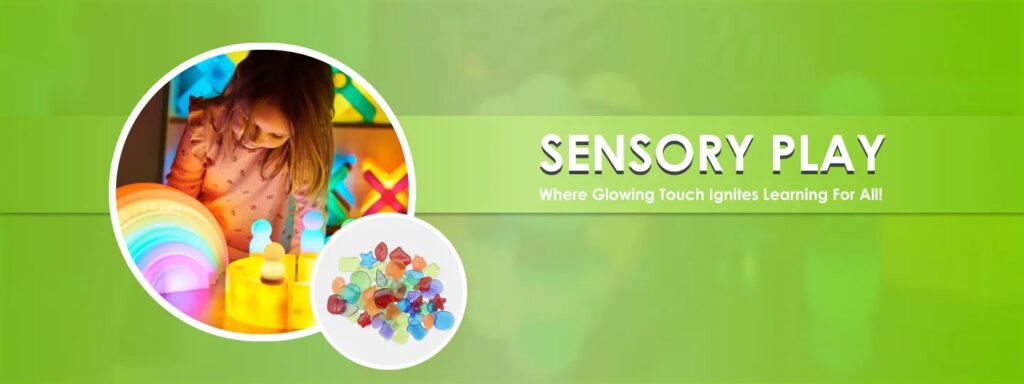
Learn how sensory toys help develop attention, fine motor skills, speech, self-regulation, and independence skills
Sensory toys give children the opportunity to explore and understand the world through touch, movement, hearing different sounds, and experiencing a range of textures and shapes. These toys can be used at home, in classrooms, resource rooms, and individual sessions when a child needs support with attention, mood, or sensory regulations. A selection of such solutions can be viewed at https://www.inventiveclassroom.com/sensory-toys.html. Properly selected objects do not replace educational materials but can complement them and create more comfortable conditions for play, communication, and skill development.
Sensory toys for kids in the daily learning routine
Sometimes it can be hard for a kid to move directly from one activity to the next. In this situations, sensory objects can help structure a short break, support sensory focus, and prepare the child for the next activity. For instance, a toy can be played with when listening to instructions or waiting for one’s turn.
Sensory toys for kids may help develop students’ fine motor skills. Activities such as squeezing, spinning, pressing, sorting, and rearranging items can help develop finger coordination. Such skills are connected with everyday actions: writing with a pen, using scissors, using various fasteners, shoelaces, and other items.
Some rules should be established regarding the use of sensory toys in class. The teacher explain that the sensory objects should be used quietly, should not distract classmates, and should never be thrown during a lesson. It is better to determine in advance when and how it can be used: during independent work, a short break, or performing a quiet task.
Kids sensory toys for the development of speech and descriptive skills
Sensory materials can become the basis for speech exercises. Children can be asked to describe an object: is it smooth or rough, light or heavy, soft or hard, cold or warm? Such tasks help expand vocabulary and teach them to express their own impressions more accurately.
Kids sensory toys are convenient to use in pair work. One student describes an object without naming it, while the other tries to guess which object is being described. For younger children, this can be a simple game of signs, and for older children, an exercise in creating a detailed description or a short story.
In reading classes, a sensory object can be associated with a character or event from a book. For example, after reading a fairy tale, children choose an object that, in their opinion, conveys the hero’s mood and explain their choice. This helps develop imagination and the ability to argue an opinion.
Sensory kids toys as part of creative games and learning stations
Learning centers allow lessons to be organized so that children do different activities in groups. At one station, children can work with cards; at another, they can draw; at the third, they can complete movement activities; and at the fourth, they can explore sensory toys.
A sensory station does not have to be used only for relaxation. It can also be associated with an educational goal. The students could classify objects by their texture, color, shape, or how they interacted with them. Another way is to set up a “sensory trail” in which the child performs a short exercise after touching each object.
Ideas for a sensory learning station:
- Sorting objects by softness, shape, or texture.
- Finding pairs of objects with similar properties.
- Practice describing sensations in complete sentences.
- Creating a pattern from tactile elements.
- Playing an attention game with objects in an opaque bag.
- Matching an object to an emotion or situation from a card.
This format helps to diversify the lesson and allows children to work at their own pace. The teacher can observe which tasks are most interesting and adapt subsequent activities.
Sensory toys and supporting emotional self-regulation
During the day, the children might be tired, nervous, anxious, or overly excited. In such cases, it would be helpful to provide easy means of directing attention to the current moment. Sensory objects can become part of a child’s self-regulating strategies when used appropriately.
For example, manipulating soft objects or arranging small pieces can keep children’s hands occupied while they wait. Many children seem to understand instructions better if they can perform quiet, repetitive actions at that moment. However, one should consider that reactions to sensory objects are individual, and therefore it is necessary to offer different options and see which suits a given child best.
Sensory materials in the classroom should be easily accessible to children yet properly arranged. This can be a small basket or shelf with clear rules: take one object, use it quietly, return it when finished. This approach supports independence and responsibility.
Sensory toys for kids in homework and shared play
At home, sensory objects can support calm play without the need for complex preparation. Parents or caregivers can encourage their child to create a simple collection of objects with different properties and discuss how they are different. This can be the basis for a game of comparison, classification, or story-making.
Sensory toys for kids also work well with everyday topics. For example, when learning colors, a child looks for objects of a certain shade, or during counting lessons, a child counts elements or arranges them into groups. Play becomes more meaningful when an adult asks simple, open-ended questions, such as “What do you feel?” “How are these objects similar?” “How can you use them in a game?”
Inventive Classroom offers a wide range of sensory products that can complement learning and play activities for children. Such materials can be useful for teachers, parents, and caregivers seeking opportunities for sensory exploration and skill development at a comfortable pace.
Kids sensory toys for building independence
When a kid has an opportunity to choose an item on his own, accomplish a small task, and put the item back in place, he is developing organizational skills. In this case, sensory toys for children may be helpful when placed in labeled boxes or on a shelf easily accessible to the child.
An adult can invite a child to choose an object, use it quietly for a short period, and then discuss whether it helped them feel more focused or calm. The adult may learn whether the child found it easier to concentrate and whether he would like to continue the work or do something else.
Over time, sensory activities can help children better understand their own needs and preferences. He learns to notice when he needs movement, silence, a short break, or additional support for concentration. This creates the basis for more independent and conscious participation in learning.