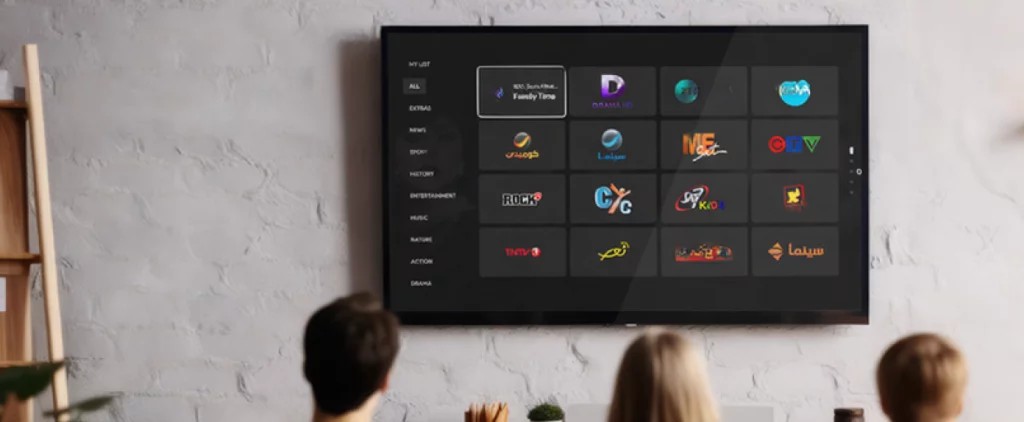
The television is already on when the coffee is poured. In many Arabic-speaking households the morning starts not with a local forecast but with a Cairo anchor reading headlines from a studio thousands of miles away. Nobody sat down and decided to watch. The channel was simply never turned off.
This is the part that outsiders miss. Arab news channels in diaspora homes don’t function the way news functions in most American households. They’re not something you check and then close. They run in the background of daily life — a low hum of Arabic that fills the apartment while someone cooks, argues on the phone, or helps a child with homework.
How did a news broadcast become something closer to ambient presence than deliberate consumption?
The Sound Before the Story
For first-generation immigrants, the pull of Arabic-language news was often about more than information. Local weather, traffic, school closures all came from English-language sources. What arab tv news provided was something harder to name: a rhythm. The cadence of formal Arabic, the particular gravity of a Middle Eastern news anchor, the theme music that preceded the evening bulletin — these sounds marked the passage of a day in a way that felt familiar when little else did.
In many households, the television stays tuned to a news channel from the moment someone wakes up until the last person goes to bed. It plays during meals. It plays during visits. It plays while no one is watching.What matters isn’t hearing every story. It’s knowing the familiar voices are there whenever you look up, creating a sense of continuity that survives distance. Silence, in a home far from extended family and familiar streets, is heavier than it used to be. The news fills that weight.
A Political Education That Never Ends
Arab news channels carry a second function that runs deeper than background noise. For diaspora families, whether Egyptian, Lebanese, Palestinian, Iraqi, or Moroccan, the news from home is never just news. It’s an ongoing political education, one that shapes dinner-table arguments and weekend phone calls back to relatives.
A grandmother in Chicago follows parliamentary debates in Beirut with the same intensity her neighbor follows the Bears. A father in Ottawa tracks Algerian election coverage not because he can vote, but because his brothers still can. The news channel becomes a thread connecting personal identity to events the viewer can no longer influence but refuses to stop caring about.
This political attachment creates a particular viewing pattern: loyal, habitual, and resistant to switching. Many families develop long-term loyalty to a particular channel. They find a channel whose editorial tone matches their worldview and stay there, sometimes for decades.
The Familiar Voices That Build Trust
There’s another reason these channels remain part of everyday life: familiarity. Trust in news isn’t built only through facts. It’s built through years of hearing the same presenters, recognizing the same editorial style, and understanding the cultural context behind the reporting. For many diaspora viewers, these broadcasts come with an interpretive framework they’ve known since childhood.
That familiarity matters when major events unfold. International news outlets may report the same developments, but they often compress stories that local broadcasters spend hours unpacking. References that seem obvious to viewers in Cairo, Amman, or Baghdad can disappear entirely in foreign coverage. Watching a home-country channel means hearing the story told by people who assume the audience already understands the history, the political landscape, and the cultural nuances behind the headlines.
This doesn’t necessarily mean viewers agree with every editorial position. Many are well aware of the political leanings or institutional perspectives of their preferred channels. But familiarity creates a kind of media literacy. Long-time viewers know how to interpret a particular broadcaster’s tone, emphasis, or choice of guests. The relationship is built as much on understanding how the news is presented as on the events themselves.
The Generational Split That Didn’t Fully Happen
A common assumption is that second-generation Arab Americans abandoned Arabic news entirely. The reality is messier. Many younger viewers did stop watching traditional broadcasts. But they didn’t stop consuming Arabic-language news — they moved it to their phones. Social media clips, reposted segments, and commentary accounts now deliver the same content in shorter form.
What shifted was the ritual, not the connection. A twenty-five-year-old in Dearborn might never sit through a full evening bulletin, but she’ll watch a three-minute clip from the same broadcast on Instagram and text her mother about it. The channel still anchors the conversation. It just reaches different generations through different screens.
Conclusion
The staying power of Arab news channels in diaspora homes isn’t about the quality of journalism or the sophistication of production. It’s about what the broadcast represents in a household that straddles two countries.
The news is a clock. It marks morning and evening in a time zone the family left but never fully departed from. It supplies the Arabic that children hear less of at school each year. It keeps a political reality present that would otherwise fade into abstraction. The channel stays on because turning it off would mean accepting a silence that still doesn’t feel quite right.