
Some roads don’t produce full-blown road rage; they produce something pettier, slower-burning, and arguably more exhausting: drivers who refuse to let you merge, close the gap when you signal, block intersections to avoid “losing their place,” sit stubbornly in the passing lane, or pretend not to see vehicles trying to pull out.
American River Wellness, experts in return to duty support, wanted to explore the roads across America where everyday driving manners seem to disappear. The study surveyed 3,011 motorists to identify the routes most associated with passive-aggressive behavior behind the wheel, the places where commuting becomes a daily test of patience, where small acts of discourtesy stack up, and where drivers are left feeling more tense, irritated, and worn down long before they reach their destination.
Nationally, the top 10 most passive-aggressive roads in America are:
#1. Ventura Boulevard, Los Angeles, California
Ventura Boulevard is where casual errands go to become psychological warfare. Between the coffee stops, studio traffic, school runs, delivery drivers, left turns, valet pull-ins, and people trying to slide out of tiny side streets, every block seems to ask drivers whether they can still behave like adults. The answer is not always encouraging. Gaps vanish the second someone signals. Cars creep forward to block exits. A driver will let three seconds of silence pass rather than make eye contact and wave someone through. It is not classic LA freeway rage. It is slower, smugger, and somehow more personal.
#2. U.S. 1 (Federal Highway), Fort Lauderdale, Florida
U.S. 1 through Fort Lauderdale has a tropical way of making everyone behave like they are guarding the last open table at brunch. Between beach traffic, drawbridge delays, condo entrances, restaurants, tourists, delivery vans, and locals trying to get somewhere before the next red light, the road creates constant little tests of patience. Drivers block exits, close gaps, creep forward at intersections, and act personally wounded when someone needs to change lanes. It is not always explosive. Often, it is worse: a slow, sunlit refusal to make anyone else’s day easier.
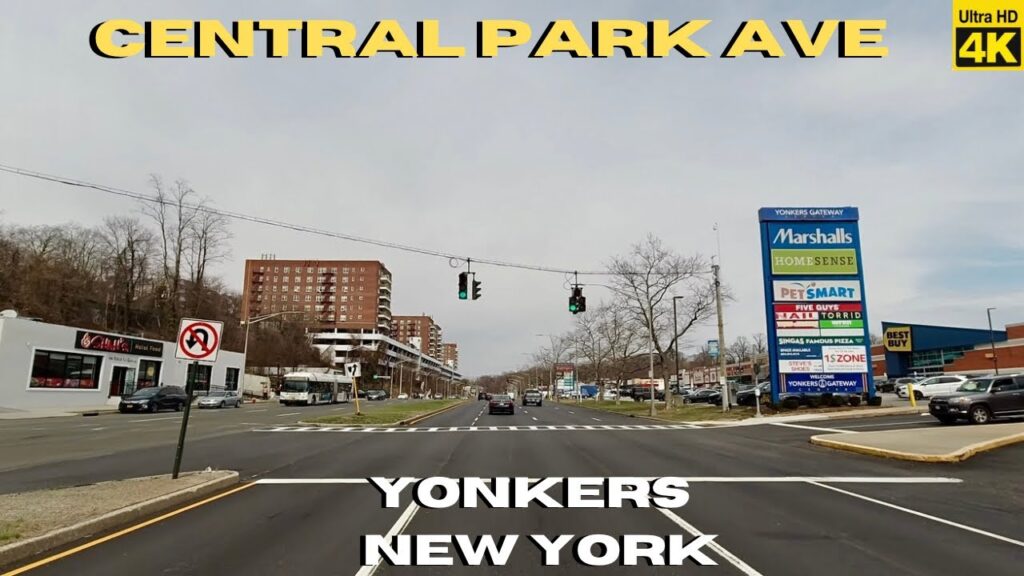
#3. Central Avenue (Yonkers to White Plains Corridor), Westchester County, New York
Central Avenue has the polished suburban impatience of a road where everyone is heading to a store, appointment, school pickup, or restaurant reservation, and nobody wants to be delayed by someone else’s turn signal. The corridor is packed with entrances, lights, plazas, side roads, and drivers making last-second lane decisions. Cars creep forward to block exits, gaps vanish without apology, and anyone trying to cross traffic can feel like they have asked for a personal favor. It is not dramatic New York driving. It is quieter, tidier, and somehow just as stubborn.
#4. U.S. 280 through Mountain Brook, Homewood, Vestavia Hills, and Hoover, Alabama
U.S. 280 has a special talent for turning normal drivers into tiny traffic accountants. Around Mountain Brook, Vestavia Hills, Inverness, Grandview, and Hoover, every gap feels guarded, every turn signal feels like a negotiation, and every side-road exit seems to come with a silent “not in front of me.” It is not dramatic enough to feel like road rage, which is exactly the point. The frustration builds slowly: shopping-center traffic, lane changes, brake lights, and drivers treating one car length as sacred personal property.
#5. Route 17 through Paramus, Paramus, New Jersey
Route 17 through Paramus has turned shopping traffic into a full-contact personality test. Between malls, jughandles, restaurant entrances, commuters, side roads, and drivers who know exactly which lane they should have been in half a mile ago, the corridor creates endless opportunities for petty road behavior. Cars block exits, gaps vanish at the first blink of a turn signal, and anyone trying to merge can feel like they are asking a personal favor from the entire county. It is not just impatience. It is the confident New Jersey art of making “not in front of me” look like a traffic strategy.
#6. Lancaster Avenue, Philadelphia Main Line, Pennsylvania
Lancaster Avenue has a distinct Main Line way of making traffic feel quietly personal. Between college traffic, train stations, school runs, cafés, side streets, shoppers, and drivers who know exactly where they are going, every few blocks seems to produce another small test of patience. A car waits to pull out, and the lane rolls forward as if helping would set a dangerous precedent. A signal flashes, and the nearest gap tightens. It is not usually dramatic. It is composed, tidy, and very committed to making sure nobody slips in ahead without permission.
#7. Rockville Pike, Montgomery County, Maryland
Rockville Pike has a way of making even a basic errand feel like a competitive sport. Between shopping centers, office traffic, Metro stops, restaurants, medical appointments, and drivers constantly trying to slide in and out of side roads, the corridor produces endless small tests of courtesy. A signal goes on, and the gap disappears. Someone waits to leave a plaza, and the line inches forward just enough to block them. It is not dramatic road rage. It is quieter than that of a polished, suburban refusal to let anyone gain even six feet without earning it.
#8. North Avenue, Chicago, Illinois
North Avenue has a gift for turning routine Chicago driving into a series of tiny grudges. Between neighborhood traffic, buses, cyclists, delivery trucks, shoppers, school traffic, and drivers trying to slip through before the next light, the road gives people constant chances to be generous. Plenty choose a strategy instead. Cars nose into crosswalks, block side streets, close gaps when someone signals, or sit just close enough to make a merge feel personal. It is not the expressway version of bad driving. It is more intimate than that, block by block, lane by lane, with everyone pretending they are simply “keeping traffic moving.”
#9. Route 1 (Boston Post Road) through Guilford and Madison, Guilford and Madison, Connecticut
Route 1 along the shoreline has that deceptively pleasant New England quality: charming storefronts, beach traffic, school runs, weekend visitors, and just enough congestion to make everyone faintly resentful. The passive-aggression is subtle but steady. A driver trying to turn out of a plaza can wait while five cars pretend not to see them. Someone heading to the beach may block a side street rather than lose a spot in the crawl. A local stuck behind out-of-town plates may suddenly become allergic to courtesy. It is scenic enough to seem relaxed, but underneath it all, the gaps are guarded.
#10. Westheimer Road, Houston, Texas
Westheimer Road has the scale and stamina to turn a normal Houston errand into a long exercise in defensive patience. Between shopping centers, restaurants, office traffic, apartment exits, side streets, and drivers making sudden lane decisions across a very busy corridor, it creates endless chances for low-level road selfishness. A signal flashes, and the next gap disappears. A car waits to leave a plaza, and traffic rolls forward just enough to trap it. Nobody has to shout for the road to feel tense. Westheimer does passive-aggression across miles of bumper-to-bumper gridlock.
2 other New York roads were also rated among the most passive-aggressive nationwide:
#14. Northern Boulevard (Woodside to Flushing Stretch), Queens
Northern Boulevard has a way of making Queens driving feel like a long argument conducted entirely through brake lights. Between shops, buses, delivery vans, side streets, double-parking, pedestrians, and drivers trying to cut across the borough without losing momentum, the road creates constant small standoffs. Someone signals, and the gap disappears. A car waits to pull out, and traffic rolls forward like a wall. Nobody has to yell for the mood to feel hostile. Northern Boulevard specializes in the passive-aggressive version: tight spaces, hard stares, and a deep refusal to let anyone slip in ahead.
#24. Monroe Avenue, Rochester
Monroe Avenue has that everyday city-corridor tension where restaurants, shops, schools, side streets, parked cars, commuters, and pedestrians all press into the same space. The passive-aggression is familiar and local: hovering behind someone trying to parallel park, blocking a side street through a light, refusing to let a car out because the next signal is already turning, or treating a lane change like a moral failure. It is not the loudest road in the state, and that is the point. Monroe Avenue does its work in small, irritating decisions repeated block after block.
Interactive map showing the most passive aggressive routes in the country
The survey also explored the everyday behaviors New Yorkers associate most with passive-aggressive driving, and many of the results pointed less toward outright recklessness and more toward small, deliberate acts of selfishness.
The most commonly reported behavior was drivers cutting across lanes at the last second, chosen by 23% of respondents. Close behind were motorists refusing to let cars pull out from side roads or parking lots (16%), followed by tailgating without overtaking (11%).
Other commonly noticed behaviors included:
● Drivers refusing to let others merge — 12%
● Drivers deliberately slowing down after being passed — 9%
● Drivers speeding up when someone signals — 8%
● Drivers sitting stubbornly in the passing lane — 8%
● Drivers pretending not to see another waiting driver — 6%
● Drivers blocking intersections or entrances — 5%
When asked where passive-aggressive driving happens most often, merge lanes and lane-drop areas dominated the results, with 26% of respondents saying these spots bring out the worst behavior in motorists. Busy downtown streets, suburban commuter roads, and shopping corridors each received 13%, while roads near malls and retail parks followed closely behind at 12%.
Smaller but still notable frustration zones included:
● Parking lots and plaza entrances — 7%
● Construction zones — 5%
● Beach or tourist roads — 4%
● School pickup and drop-off areas — 3%
● College-town roads — 3%
Emotionally, many drivers said the experience lingered long after the actual interaction ended. While 33% said they were “annoyed but got over it quickly,” a significant share reported more lasting effects.
● 15% said passive-aggressive driving leaves them anxious or tense behind the wheel
● 15% said it makes them angry, even if they do not outwardly react
● 12% said it makes them drive more defensively
● 9% said it leaves them exhausted by the end of the trip
● 9% admitted it makes them more impatient with themselves
● 7% said the stress stays with them for the rest of the drive
The survey also asked New Yorkers which drivers they believe are most likely to behave passively-aggressively on the road. Young drivers topped the list at 32%, followed by daily commuters at 22%.
Truckers who participated in the survey said one of the biggest misunderstandings ordinary motorists have is just how dangerous it is to cut in front of large vehicles. Twenty percent said drivers underestimate how risky this behavior can be, while 18% pointed to widespread misunderstanding around truck blind spots.
Truckers also highlighted several other common misconceptions:
● Trucks need far more space to stop safely — 14%
● Trucks are often driving to strict schedules — 12%
● Trucks cannot always move over immediately — 11%
● Trucks need extra room to turn — 9%
● Trucks cannot accelerate quickly after slowing down — 9%
● Trucks are heavily affected by hills, weather, and road conditions — 7%
“Passive-aggressive driving tends to fly under the radar because it does not always look dramatic, but over time it can create enormous stress for drivers,” says Graham Sargent of American River Wellness. “A lot of these behaviors are small acts of impatience or territorial driving that people almost normalize, yet they contribute to tension, anxiety, and emotional fatigue behind the wheel every single day.”