
Modern real estate is evolving. Learn what businesses and residents truly need from spaces in Oklahoma City and Philadelphia for long-term value and usability.
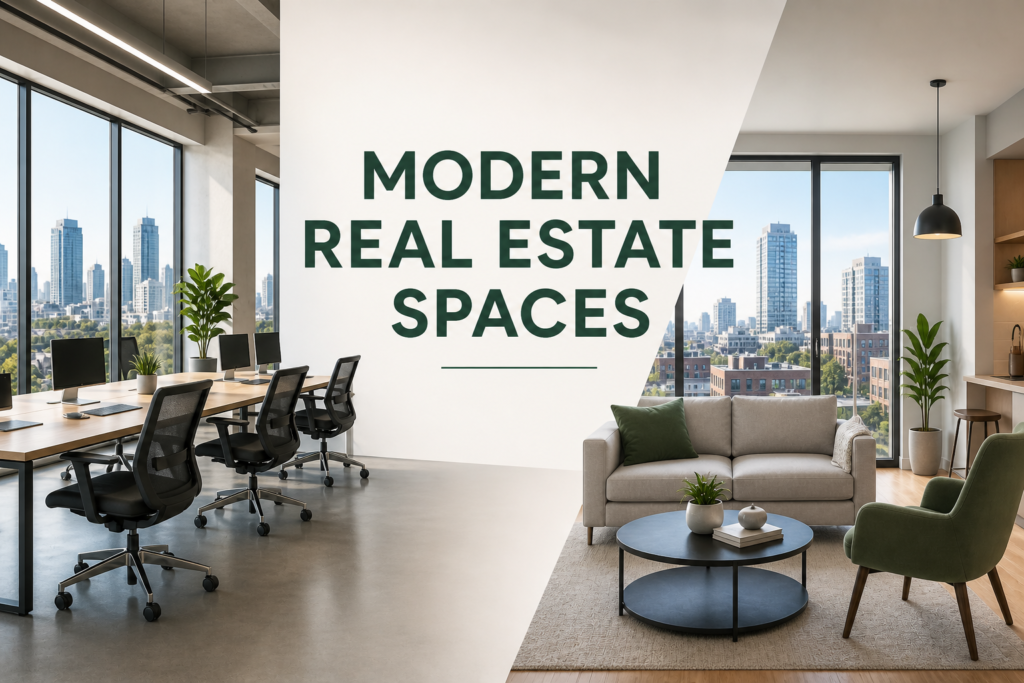
Modern real estate rarely fails because of poor design. It fails when it does not match how people actually use it.
Across markets like Oklahoma City and Philadelphia, expectations have shifted in a very practical way. Businesses are no longer asking if a space is available, and residents are not focused only on how a place looks.
The real question now is simple.
Will this space continue to work months after moving in
What Businesses Really Need Today
1. Space That Works, Not Just Space That Exists
Many commercial spaces appear functional during a tour but create problems once operations begin. The issue is not always size. It is alignment.
Businesses today operate in constantly changing conditions. Teams grow, workflows shift, and collaboration patterns evolve. When a layout is too rigid, it begins to slow things down in ways that are not immediately obvious.
In a market like Oklahoma City, where economic growth continues across sectors like healthcare, logistics, and retail, companies exploring commercial property for sale in Oklahoma City are becoming more selective. The focus is shifting from simply acquiring space to finding environments that can support operations over time.
A well aligned space supports movement, communication, and daily operations without friction. A poorly aligned one slowly reduces efficiency over time, even if it looked right at first.
As explored in Why the spaces we live and work in matter more than we think, the environments we operate in quietly shape productivity, mindset, and long-term outcomes.
2. Strategic Location with Practical Benefits
Location still matters, but not in the traditional way.
It is no longer only about visibility or prestige. Businesses are thinking more practically about how a location supports everyday operations.
A central office that adds time to daily commutes can quietly reduce productivity. A retail space with strong visibility but difficult access can limit real customer flow. A warehouse positioned away from key infrastructure increases delivery timelines and cost.
Modern businesses are evaluating location through a more operational lens. They consider how easily employees and clients can access the space, how close they are to suppliers or complementary industries, and whether the surrounding infrastructure supports future growth.
In growing markets like Oklahoma City, these decisions shape how smoothly a business can scale.
3. Flexibility for Growth and Change
Businesses rarely remain static. Growth, restructuring, and new opportunities continuously reshape how space is used.
When a property only fits current needs, it quickly becomes restrictive.
This is why flexibility is now a key consideration. Companies are looking for spaces that allow them to adjust layouts, scale operations, and evolve without major disruption. Environments that support change reduce the need for costly relocations and help maintain momentum.
Flexibility is no longer just convenient. It directly supports long term stability.
4. Support Beyond the Lease
Leasing a space is only the starting point.
Once operations begin, the day to day experience is shaped by how well the property is managed. Small issues, when unresolved, begin to affect productivity and overall efficiency.
Reliable management ensures that problems are addressed quickly and that the environment remains consistent. This allows businesses to focus on their operations rather than dealing with avoidable disruptions.
The value of a property increasingly depends on how well it is supported after occupancy.
What Residents Expect from Modern Living Spaces
1. Comfort Meets Convenience
For residents in cities like Philadelphia, expectations go far beyond visual appeal.
In a city known for its mix of historic neighborhoods and modern development, people searching for a luxury apartment rental in Philadelphia are evaluating how well a space fits into their daily routine. Commute, accessibility, and ease of living often matter more than surface-level design.
Layouts that feel natural, storage that works efficiently, and access to essentials all contribute to a better living experience.
Over time, convenience becomes far more important than aesthetics.
2. A Sense of Community
Choosing a place to live now involves more than selecting an apartment. It includes evaluating the surrounding environment.
Residents are paying closer attention to how connected they feel within a building and its neighborhood. Walkable areas, shared spaces, and a sense of interaction all contribute to a more positive experience.
Without this, even well designed properties can feel disconnected. With it, satisfaction and long term retention improve naturally.
3. Low Maintenance, High Quality Living
Maintenance plays a larger role than most people expect.
Once residents move in, their experience is shaped by how smoothly everything functions. Delays in repairs or inconsistent upkeep can quickly impact comfort.
Reliable systems, quick responses, and consistent management create a living environment that feels stable and easy to maintain. This reduces daily friction and improves overall quality of life.
4. Long Term Value Over Short Term Appeal
There is a noticeable shift toward spaces that hold their value over time.
Residents are paying attention to durability, efficiency, and consistency. A property that looks appealing initially but does not maintain its quality quickly loses its appeal.
On the other hand, a space that remains reliable creates trust and a better long term experience.
Where Business and Residential Needs Overlap
At first, commercial and residential real estate appear to serve very different purposes. In practice, the expectations are increasingly similar.
Both businesses and residents are looking for environments that reduce friction in everyday use. They want spaces that can adapt as needs change and systems that remain reliable over time. They value experiences that make work easier and daily life more manageable.
This shift is gradually influencing how real estate is planned, developed, and managed across different markets.
Where Real Estate Proves Its Value
What is changing in real estate is not always visible in floor plans or building designs. It shows up in how easily a team can operate through a workday, or how comfortably someone can move through their daily routine at home.
Across cities like Oklahoma City and Philadelphia, the gap between a space that simply exists and one that truly works is becoming more noticeable over time.
For businesses, the right environment quietly supports growth without forcing constant adjustments. For residents, it removes small, repeated inconveniences that shape everyday living.
Most spaces perform well during the first impression. Far fewer hold up under daily use.
And that difference, more than design or location alone, is what is starting to define real value in modern real estate.