It’s the question that never goes out of style – especially in today’s fast-paced, hyper-stressed world: If we’re so smart, so capable of compassion, creativity, and love… why do we so often sabotage ourselves?
That timeless puzzle is at the heart of the work of Australian biologist Jeremy Griffith, whose radical – and deeply human – explanation of our behavior has sparked international attention. Griffith’s theory digs into what he calls the human condition, offering not just another psychological theory, but a sweeping biological explanation for why we think, feel, and act the way we do.
And while the subject might sound heavy, his central message is hopeful: once we understand ourselves, healing isn’t just possible – it’s inevitable. In fact, a former President of the Canadian Psychiatric Association, Professor Harry Prosen, said he considered Griffith’s work to be “the holy grail of insight we have sought for the psychological rehabilitation of the human race.”
The Human Mind’s Tug-of-War: Instinct vs Intellect
Griffith’s big idea starts with evolution – but not in the way you might expect. He argues that the emotional turmoil we experience every day isn’t the result of flawed genes or some inherent darkness in our nature. Instead, it’s the fallout from a conflict that’s been brewing inside us for millions of years.
Here’s the gist: once our primate ancestors developed the ability to reason – to think consciously and make choices – this new intellectual power started butting heads with our older, hardwired instincts. Our instincts had been shaped by natural selection to guide behavior automatically. But our growing intellect didn’t follow rules – it questioned them.
This clash created an internal storm. Griffith suggests that our instincts, unable to adapt to this development, began “condemning” our intellectual explorations. Without knowing what was really going on, our conscious minds took this criticism personally – feeling a kind of guilt, shame, or confusion that had no clear origin.
Over time, this psychological tension boiled over. Humans began acting out defensively – getting angry, becoming self-centered, withdrawing. Not because we’re bad, Griffith says, but because we’ve been trying to defend our minds against an invisible enemy: our own instincts.
Not About Blame – It’s About Breakthrough
What makes Griffith’s theory stand out is that it doesn’t point fingers. It doesn’t blame society, parents, or politics. Instead, it points to a biological misunderstanding – a natural clash that we finally have the science to explain.
And when you understand that, Griffith says, the need to stay on the defensive melts away. We can stop the inner war. We can step out of the emotional fog and see ourselves with clarity – and maybe even compassion.
It’s this potential for real, lasting change that has caught the attention of thinkers across the globe.
Praise from Across the Scientific World
Griffith’s ideas haven’t gone unnoticed. In addition to Professor Prosen, a growing number of respected academics and public figures have offered glowing endorsements:
- “I am stunned and honoured to have lived to see the coming of ‘Darwin II’.” – Professor Stuart Hurlbert, ecologist
- “Frankly, I am blown away by the ground-breaking significance of this work.” – Professor Patricia Glazebrook, philosopher
- “Living without this understanding is like living back in the Stone Age, that’s how massive the change it brings is!” – Professor Karen Riley, clinical pharmacist
And even the late Professor Stephen Hawking once expressed serious interest in Griffith’s ideas, calling his proposal “impressive”.
From Global Insight to Local Impact
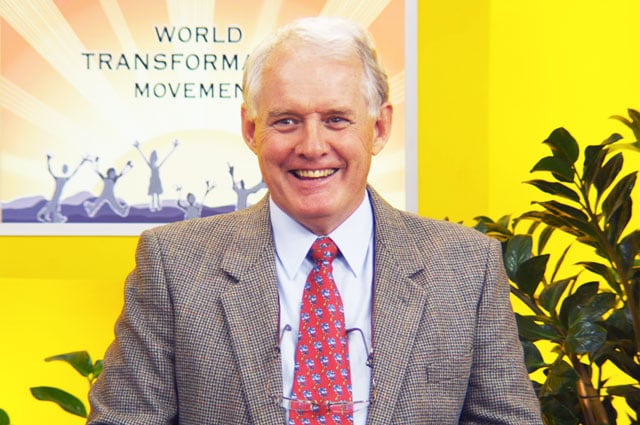
Through the World Transformation Movement – the nonprofit founded to share Griffith’s work – the theory is now accessible to anyone. Books, videos, essays, and interviews are available for free at www.humancondition.com, making it easier than ever for curious minds to dig in.
The movement also includes local support centers around the world, including in New York City, encouraging open discussion and education in communities large and small. While there is not yet a center in Yonkers, readers can access the Movement’s official social media platforms and online forums to engage with others passionate about this work.
In a city as diverse and dynamic as ours – where stories and cultures collide – the opportunity to reframe human behavior through a unifying biological lens is especially powerful. It reminds us that beneath all our differences, we share the same inner battle – and possibly, the same way forward.
For those in Yonkers and beyond who are searching for a deeper reason behind the stress, anger, and emotional disconnect that seems to shadow modern life, Griffith’s explanation might just strike a nerve – in the best possible way.
A Science-Backed Path to Peace of Mind?
So whether you’re a student trying to find your footing, a parent navigating family chaos, or just someone trying to make sense of a highly complicated world, the idea that our inner battles have a biological cause – and solution – is more than just interesting. It’s powerful: a way to understand ourselves at the deepest level, and maybe – finally – find peace.