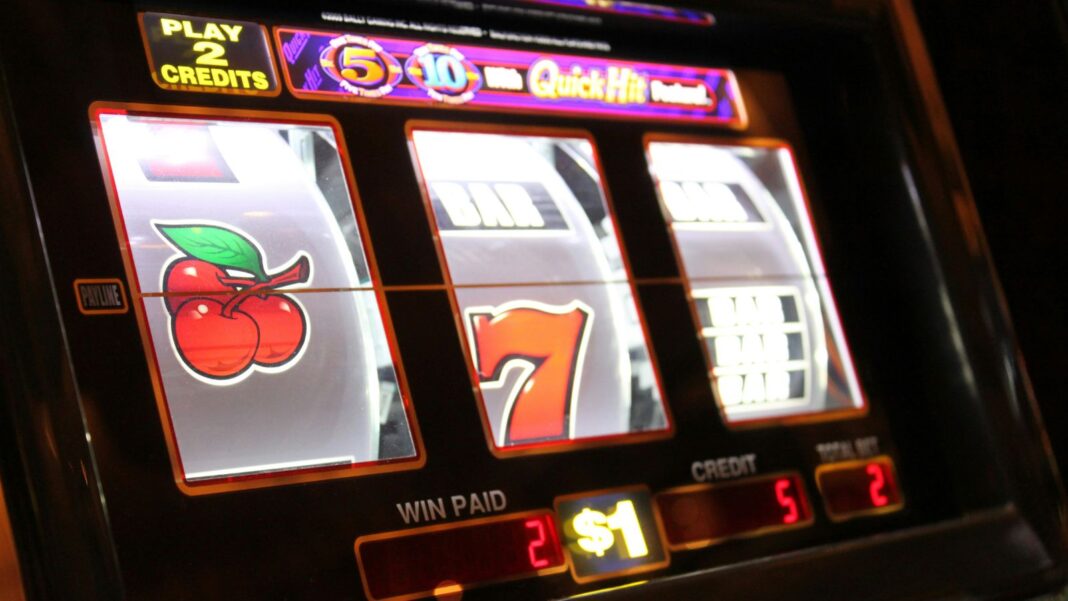

You tap the button. The reels blur. Symbols fly past. A second or two later, everything stops, and you’ve either won something or you haven’t. Simple, right? Not even close.
That brief moment between your finger hitting “Spin” and the result landing on screen is packed with more math and engineering than most people realize. Let’s pull back the curtain and walk through what’s really going on behind those spinning symbols.
The Outcome Is Already Decided Before You See It
Here’s the part that surprises people. By the time the reels start their little animation, the game already knows the result. The spinning? That’s theater. Good theater, sure. But theater nonetheless.
The instant you press “Spin”, a piece of software called a Random Number Generator grabs a number from a sequence it’s been producing nonstop. Thousands of numbers per second, running whether someone is playing or not. Your click just captures whatever number happens to be current at that exact millisecond.
That’s a strange thing to sit with, honestly. Your timing doesn’t give you an edge. It’s not a skill thing. It’s pure chance, frozen in a single instant.
So What Exactly Is This Number Generator?
Most online slots use what’s called a Pseudo-Random Number Generator, or PRNG. It runs on a mathematical formula starting with a seed value, then keeps producing new numbers based on calculations so complex that the output behaves like genuine randomness.
Is it truly random in a philosophical sense? No. It’s algorithmic. But the sequences are so long and the calculations so layered that predicting the next number is practically impossible. Even if you knew the algorithm, you’d still need the seed value and the exact state of the generator at the precise moment of your spin.
That’s why it matters to choose platforms that operate under proper licensing. Betinia New Jersey, for instance, is regulated by the state’s Division of Gaming Enforcement, meaning its RNG systems are certified and independently tested. It’s not a suggestion. It’s a legal requirement.
From Number to Symbol: The Mapping Step
Once the RNG spits out its number, the software translates it into reel positions. Think of each reel as a long strip of symbols. The number points to a specific spot on that strip, and the game displays whatever symbols sit at that position plus the ones above and below.
This mapping isn’t random in the way you might think. Developers use weighted systems where certain symbols appear more frequently on the virtual strip than others. A wild symbol might occupy two positions out of a hundred, while a low-value cherry takes up fifteen. That’s how designers control the math model without rigging individual spins. Every spin remains random. But over millions of spins, the payout percentage stays consistent with the game’s stated Return to Player rate.
The Animation Is Catching Up to a Decision Already Made
Now the visual part kicks in. The reels spin, the sounds play, and everything builds toward the reveal. But the software already knows exactly where each reel will stop. The animation is synced to deliver that predetermined result in a way that feels exciting.
Game studios spend serious time on this part. The near-miss effect, where two matching symbols land and the third barely misses, is a natural consequence of the math. The symbols surrounding the result are just whatever sits next to the selected stop on the virtual strip. But it sure feels intentional, doesn’t it?
Who’s Watching the Watchers?
You might wonder whether anyone actually checks that these systems work fairly. Short answer: yes.
Independent testing labs put RNG systems through rigorous statistical analysis before a game goes live. They check for patterns, biases, and anything suggesting outcomes aren’t truly independent. After launch, regular audits continue.
Gaming commissions also require that operators can’t modify individual games on the fly. Changes to a slot’s math model go through a formal process involving regulators. No one is flipping a switch in the back room to make a machine “run cold” after a big payout.
Why Does Any of This Matter to You?
Understanding this process won’t help you win more. Let’s be honest about that. But it changes how you think about the experience. Every spin is independent. The machine has no memory. There are no hot streaks or cold streaks in any mechanical sense, just the natural clustering that randomness produces.
That knowledge can actually be freeing. You don’t need to chase losses hoping the machine “owes” you a win. It doesn’t. You can enjoy the game for what it is, an entertainment product built on sophisticated math, without trying to crack a code that doesn’t exist.
Next time you click that button, you’ll know. The real action happened in a millisecond, deep inside an algorithm, long before the reels ever started spinning.