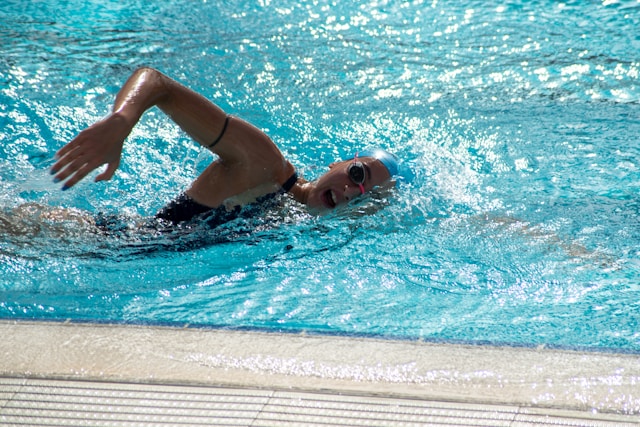

Swimming may be a low-impact sport, but it places significant demands on nearly every muscle group. Whether gliding through freestyle laps or powering through a butterfly set, swimmers rely on strength, endurance, flexibility, and control. Dryland workouts, often overlooked, help develop the muscular support and joint stability needed in the water. These workouts improve propulsion, streamline control, and overall efficiency. No matter the skill level—beginner, intermediate, or elite—training outside the pool remains a key piece of progress.
Building a complete swimmer’s training routine requires thoughtful variety. Movements that target the core, legs, shoulders, and back deliver noticeable gains in stroke technique and stamina. Each component plays its role in developing the strength and mechanics required for swimming at peak performance. Here are some workout categories that benefit swimmers at every level.

Lower Body Strength and Power
Swimmers need explosive strength from their legs, particularly during starts and turns. Squats are a foundational movement that builds the quadriceps, hamstrings, and glutes. They also help stabilize the knees and hips, improving posture and efficiency in the water. One of the most effective squat-based exercises is the squat jump, which increases lower-body power and control. When speaking about a proper squat routine, inserting squat jumps forces the muscles to work harder in a shorter time span. The jump adds an element of intensity, requiring coordination, speed, and balance. It mimics the rapid movement seen in competitive starts off the block, helping athletes react faster and generate more force through the legs.
Core Stability and Endurance
A swimmer’s ability to hold a straight line in the water depends largely on core strength. Movements like planks, Russian twists, and flutter kicks condition the abdominals, obliques, and lower back. These areas support efficient rotation during strokes and allow for tighter streamlines after starts and turns. A well-conditioned core reduces drag and keeps the swimmer aligned, leading to more distance per stroke.
Training the core goes beyond isolated ab exercises. Incorporating movement-based exercises like mountain climbers or V-ups creates dynamic tension across the entire midsection. These exercises help simulate the sustained core engagement swimmers need during races. Holding a streamlined position off each wall becomes easier, reducing fatigue and maximizing performance through better body positioning.
Shoulder Stability and Mobility
The shoulder joint undergoes repetitive motion during every stroke. Without strength and balance, it becomes prone to overuse injuries. Exercises like resistance band external rotations, scapular push-ups, and wall angels target the smaller stabilizing muscles around the rotator cuff and scapula. These movements improve endurance and control, allowing the shoulders to function properly under stress.
Including mobility drills enhances range of motion, making each stroke smoother and more efficient. Shoulder pass-throughs with a resistance band or PVC pipe, for example, keep the joint flexible and primed for overhead activity. Consistent work on mobility ensures that swimmers don’t sacrifice technique to tight muscles or structural imbalances. Strength combined with mobility keeps the shoulder joint both strong and safe.
Back Strength and Postural Control
Strong back muscles help swimmers maintain proper alignment and drive through each stroke. Exercises like pull-ups, supermans, and bent-over rows develop the lats, traps, and spinal erectors. These muscles contribute to a powerful pull phase and help stabilize the spine during undulating strokes like butterfly or breaststroke.
Postural strength is often neglected, but it becomes noticeable in stroke integrity and fatigue resistance. Swimmers with weak backs tend to collapse through their core or lose alignment mid-lap. Regular back-focused workouts allow for more consistent technique from start to finish. This also supports injury prevention by distributing physical stress more evenly across the body, rather than overloading the shoulders or hips.
Flexibility and Recovery Work

The repetitive motion of swimming can lead to muscular tightness if not balanced with regular mobility training. Stretching, foam rolling, and yoga-based flows help release tension and promote muscle length. These practices improve joint range and make it easier to reach optimal body positions during strokes.
Including flexibility work into a swimmer’s routine doesn’t require long, drawn-out sessions. Ten to fifteen minutes after workouts, focusing on key areas like shoulders, hips, ankles, and the spine, helps restore balance. Active stretching techniques such as dynamic mobility drills before workouts and static holds afterward create a well-rounded approach to recovery and preparation.
Sleep, nutrition, and hydration round out the recovery process. Still, a commitment to movement-based recovery keeps the body mobile, reduces soreness, and prepares the muscles for repeated effort. Flexibility plays a subtle but crucial role in both performance and injury prevention.
These workouts don’t need to be complex. Consistency, proper form, and gradual progression make the biggest difference. When swimmers train with intention beyond the pool, they don’t just move better—they swim smarter, faster, and stronger.