
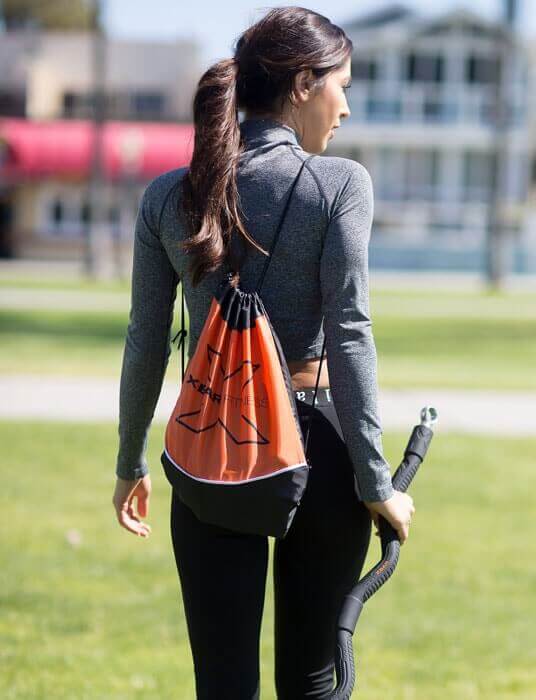
Resistance bands are surprisingly effective. A band that weighs almost nothing can still load your shoulders, hips, and core through a full range of motion, no dumbbells required. That’s the whole appeal. They roll up small, they travel well, and there’s a format for pretty much every kind of movement you’d want to train. Below are 5 worth having in a kit, and what actually separates them isn’t just “how strong.” It’s tension, length, grip feel, how much space they take up, and what your workouts actually look like week to week.
Start Lighter Than You Think You Need
Here’s a mistake a lot of people make: grabbing the toughest band on the rack first. Don’t. Clean form beats heavy resistance every time, especially when you’re just getting started. A light resistance band still wakes up the shoulders, hips, and core just fine, and it won’t fight your technique while you’re learning it. It’s also thin enough to live in a suitcase, a backpack, or a nightstand drawer, so a quick 10-minute session is always an option, whether that’s mid-work trip, on a lunch break, or easing back in after time off.
Pick 1: Extra-Light Tension
Think of 3 to 15 lbs of pull. That’s the range for beginners, older adults, or anyone coming back from illness or injury. It’s just enough to activate the rotator cuff, hip stabilizers, and the muscles around the knee before real training starts and gentle enough for rehab work where the goal is control, not fatigue. You’re not trying to feel the burn here. You’re trying to move well.
Pick 2: Light Tension
Bump up to 5-30 lbs, and suddenly a lot more is on the table: rows, presses, curls, squats, and lateral steps. The 5-30 band is the band that does the heavy lifting in endurance-style circuits. Keep the ribcage quiet and the pelvis stable, and resist the urge to let the band snap you back on the return. Control that part too.
Pick 3: A Mini Loop
Small, cheap, and genuinely useful. A mini loop sits above the knees or around the ankles and makes side steps, glute bridges, clamshells, and squat variations noticeably harder on the hip abductors, which is exactly why it’s in every physical therapist’s bag. The outward pressure has a nice side effect too: it keeps your knees honest instead of caving in. Great for hotel rooms, office breaks, or a warm-up before a run.
Pick 4: A Longer Loop
More length, same tiny footprint. Anchor one end to something sturdy, and you’ve got rows, chest presses, and pulldowns. Stand in the middle of it, and now you’ve got deadlifts, curls, and overhead presses. It’ll help with stretching too. One caveat: skip doors, wobbly furniture, or anything else that could shift mid-rep. That’s how bands end up snapping people in the face.
Pick 5: A Paired Set
Two bands means you can train both arms (or legs) at once or go one side at a time and see if there’s a strength gap you didn’t know about. Rows, presses, curls, rotations, and split-stance work are all fair game. It’s a smart pick for households splitting equipment or for anyone who just wants more variety without adding real weight to the bag.
Matching Tension to Goals
The math here is simple: the more a band stretches, the harder it pulls. So your body position changes the difficulty in real time. Narrow your grip, and it gets harder; widen your stance on leg work, and the same thing. As a rough guide, pick a tension that lets you do 8-15 reps with good form. Once that’s easy, you’ve got options: slow the lowering phase down, add a set, stretch the range of motion, or just size up to a heavier band.
Don’t Skip the Material Check
This part gets overlooked constantly. Latex or synthetic tubing should feel smooth and consistent, with no cracks, no rough patches, and no tacky spots that catch your skin. Handles need to be attached firmly, with enough room for a natural grip. Run your hands over the whole thing before you use it, every time. A band that snaps mid-set isn’t just a nuisance. It can leave a welt or send you off balance.
Packing a Complete Kit
You really only need three things: one primary band, one lighter one, and an anchor point if you’ve actually got somewhere safe to hook it. That covers warm-up, upper body, lower body, and a stretch at the end. A quick session might be squats, rows, presses, lateral steps, and dead bugs. Three rounds of 10-15 reps, done.
The Takeaway
Five bands, five jobs: extra-light for beginners and recovery, light tension for strength and endurance, mini loops for hip stability, longer loops for range, and a paired set for balanced two-sided work. Check them before every use, progress gradually, and that’s really all it takes to keep a real workout within reach, whether you’re at home, at the office, or halfway across the world.