
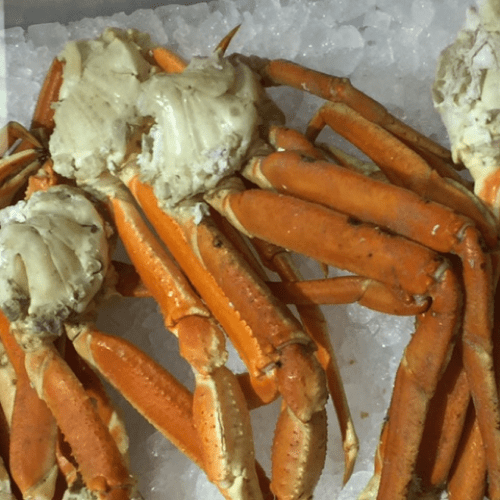
Lobster and salmon tend to dominate seafood menus, while snow crab clusters get quietly pushed to the side. That’s a pattern worth questioning. Snow crab has a clean, naturally sweet flavor and a texture that responds well to almost any cooking method.
It’s forgiving enough for someone ordering shellfish for the first time, yet satisfying enough for seasoned seafood eaters. Despite all of that, it rarely gets the recognition it earns on its merits.
What Makes Snow Crab Different
Snow crab legs are longer and thinner than king crab, which already makes them more practical to eat. The meat releases in clean, full sections rather than small torn pieces. That ease of extraction is a genuine advantage, especially for anyone who finds shellfish frustrating to eat at the table.
Flavor That Stands on Its Own
The flavor profile is mild without being forgettable. There’s a light brininess to it, balanced by a clean sweetness that doesn’t need to be masked or amplified. Heavy sauces are optional, not necessary. A small bowl of melted butter or a wedge of lemon is often the only accompaniment the meat actually needs.
Why Clusters Are the Right Format
A snow crab cluster combines the body section with its attached legs in a single piece. That structure keeps the natural juices locked in during cooking, which individual legs simply can’t replicate. The meat-to-shell ratio is also more favorable compared to buying legs separately.
For anyone who wants to enjoy crab at home without visiting a specialty market, sourcing quality products is the first step. Options like jumbo snow crab legs for sale online give home cooks access to restaurant-grade clusters delivered fresh. Buying in cluster form also tends to offer better value per pound than purchasing individual legs.
Nutritional Value Worth Noting
Snow crab is a lean, high-protein shellfish. A standard 3-ounce serving delivers roughly 16 grams of protein at fewer than 100 calories. It also provides meaningful amounts of zinc, magnesium, and vitamin B12. For anyone monitoring fat intake, that nutritional profile is clearly appealing.
Omega-3 Content
Snow crab contains a modest level of omega-3 fatty acids. It doesn’t compete with fatty fish like salmon in that category, but it still contributes positively to a diet focused on cardiovascular health.
How Restaurants Underuse It
A common mistake on seafood menus is framing snow crab as a budget substitute for king crab rather than as a quality item in its own right. That positioning does it a disservice. The delicate flavor actually suits lighter preparations, citrus-forward broths, and cold seafood platters far better than denser shellfish do.
Missed Menu Pairings
Snow crab pairs naturally with corn, drawn butter, and fresh summer vegetables. It also sits comfortably alongside chilled white wine in a way that heavier shellfish rarely manage. Restaurants that treat it as a seasonal centerpiece rather than a filler item tend to see strong repeat orders from diners who try it for the first time.
Cooking Snow Crab at Home
Snow crab clusters are almost always sold pre-cooked and flash-frozen, which means the preparation is simpler than most people expect. The goal is to reheat properly, not to cook from scratch.
Steaming for five to seven minutes is the most reliable method; it retains moisture better than boiling. Grilling clusters for two to three minutes per side adds a mild char that plays well against the natural sweetness. Oven-roasting at 375 degrees Fahrenheit for about ten minutes works well for larger clusters when oven space is available.
Avoid Overcooking
Rubbery texture is the most common complaint, and it almost always traces back to overcooking. Since the crab was already cooked before freezing, the only job during reheating is to warm it through. Excess heat or time will undo that quickly.
Conclusion
Snow crab clusters bring together flavor, nutritional value, and ease of preparation at a price point that most other shellfish can’t match. Their underrated status reflects how they’re marketed more than what they actually offer on the plate. Whether at a restaurant or prepared at home, snow crab holds its own against far more celebrated options. Diners who give it a real chance tend to wonder why they ever overlooked it.