
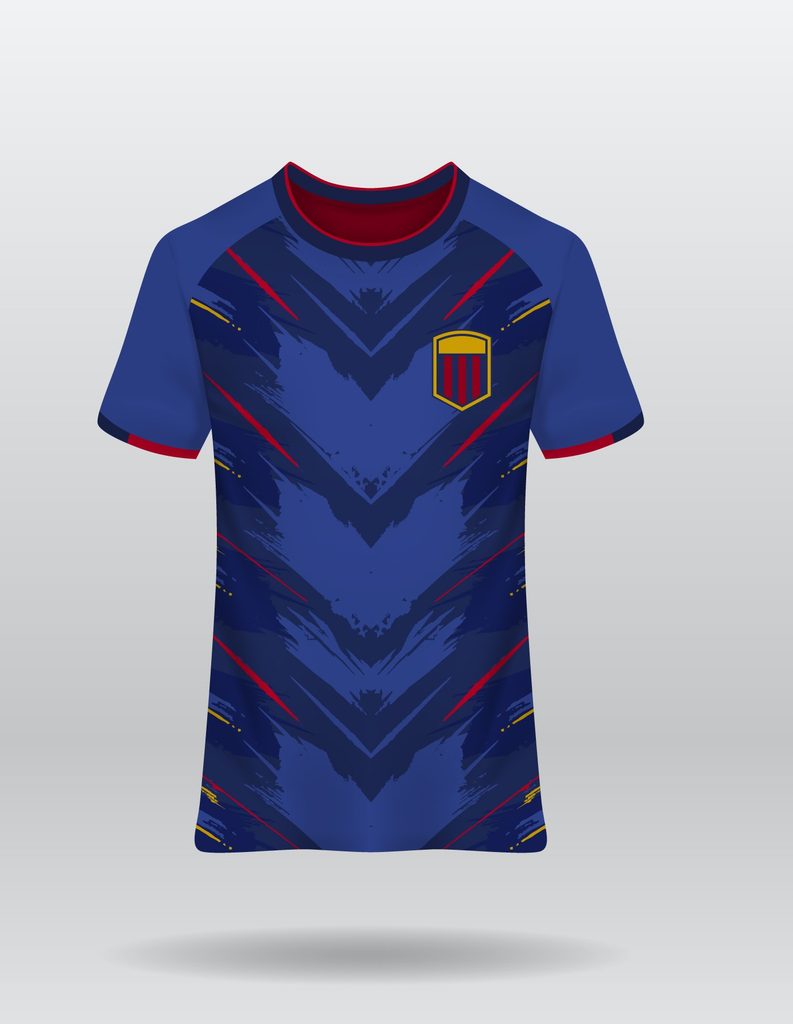
A cricket jersey must do more than display team colors. It needs to manage sweat, allow unrestricted movement, and hold its shape through long hours on the field. Poor fabric, badly placed seams, and an inconsistent fit can affect comfort during batting, bowling, and fielding.
The best match-day jerseys combine textile performance, practical construction, and durable printing. These factors matter whether a team plays weekend league fixtures, school tournaments, or competitive club cricket.
Fabric Selection and Moisture Management
Polyester is a common choice for cricket jerseys because it is lightweight, dries quickly, and maintains its shape after repeated washing. Unlike cotton, it absorbs relatively little moisture into its fibers. This helps prevent a jersey from becoming heavy when players sweat in hot conditions.
However, not all polyester fabrics perform equally. Fabric weight, knit structure, and ventilation influence how a garment feels during a match. Lightweight interlock knits offer a smooth surface for printing, while mesh panels can improve airflow in areas that generate more heat.
When evaluating jersey fabric, consider these properties:
- Moisture transfer: The fabric should move sweat away from the skin and support evaporation.
- Air permeability: Open-knit structures allow air to circulate through the garment.
- Stretch recovery: The material should return to its original shape after repeated movement.
- Abrasion resistance: The fabric must withstand contact with equipment, ground surfaces, and regular washing.
- Colorfastness: Team colors should resist fading and bleeding during laundering.
A fabric that balances these characteristics will generally perform better than one selected solely for its softness or low price.
Fit and Mobility During Play
Cricket requires a wide range of movements. Batters rotate their shoulders, extend their arms, and shift their weight rapidly. Bowlers need freedom through the shoulders and torso during their run-up and delivery stride. Fielders repeatedly sprint, bend, dive, and throw.
A jersey should accommodate these movements without pulling across the back or restricting the armpits. Raglan sleeves, suitable underarm construction, and carefully positioned seams can improve mobility. The torso should provide enough room for movement without excess fabric that catches or twists during play.
Fit also affects thermal comfort. A jersey that sits too tightly may limit airflow, while an oversized garment can flap during sprints. Teams should test samples during realistic training sessions rather than relying entirely on size charts.
For teams comparing designs, colors, and garment options, custom cricket jerseys offer a way to coordinate the playing kit with team identity while considering individual fit and match-day requirements.
Construction Details That Matter
Small construction choices can determine how long a jersey remains usable. Seams experience repeated stress when players raise their arms, rotate their bodies, and stretch for catches. Poor stitching can cause early separation, especially around the shoulders, sleeves, and side panels.
Check the seam finish, stitch consistency, and reinforcement in high-stress areas. The collar should retain its shape without rubbing against the neck. Sleeve openings should remain comfortable when the arms are raised. Labels should not create friction during prolonged play.
A quality jersey should also maintain a stable fit after washing. Excessive shrinkage, twisting side seams, or stretched necklines can make a previously comfortable garment difficult to wear. Following the manufacturer’s washing instructions helps protect both the fabric and its construction.
Printing, Colors, and Team Identification
Team graphics must remain clear without compromising fabric performance. Sublimation printing is widely used on polyester sportswear because the dye becomes integrated into the fibers. This method supports detailed graphics, gradients, and multiple colors without adding a thick surface layer.
Screen printing and heat-applied transfers can also work well, depending on the design and materials. However, their durability depends on the ink or transfer system, application conditions, and care instructions. Heavy printed areas may feel less breathable than the surrounding fabric.
Before approving a team order, check the following:
- Names and numbers are readable from a distance.
- Sponsor logos remain clear at the intended print size.
- Colors match the approved design across all garments.
- Printed areas stretch without cracking or peeling.
- Graphics remain intact after repeated washing.
Teams should approve a physical sample when possible. Colors viewed on a computer screen may differ from the finished garment because of fabric texture, lighting, and printing processes.
Breathability and Heat Control
A jersey’s performance depends on more than its fiber content. Fabric thickness, surface texture, and panel placement affect how efficiently heat escapes. In hot weather, breathable construction can help reduce the discomfort caused by trapped heat and accumulated sweat.
The under armour guide to moisture-wicking clothing explains how performance fabrics move moisture away from the skin to support evaporation. This is useful when comparing jerseys, although actual performance varies by fabric construction and garment design.
Teams should assess jerseys under the conditions in which they will play. A design suitable for a cool evening fixture may feel uncomfortable during a midday match. Ventilation, sleeve length, and fabric weight should reflect the local climate and expected playing duration.
Durability, Care, and Final Selection
Jerseys are washed frequently, particularly during tournament schedules. Detergent choice, washing temperature, and drying methods can affect fabric strength, color retention, and printed graphics. Washing garments inside out and avoiding excessive heat can help preserve their appearance.
Before placing a bulk order, teams should request a sample and test it during practice. Check the fit while batting and bowling, inspect the seams after washing, and compare the printed colors with the approved artwork.
A great cricket jersey balances moisture management, unrestricted movement, durable construction, and clear team identification. Choosing based on these technical factors helps teams avoid garments that look good before a match but fail under regular use.