
Getting into a wreck with a massive semi truck on a road like Highway 21 or near the Woods Memorial Bridge is a terrifying experience. In the quiet moments after the impact, you might worry that there is not enough proof to show what actually happened or who caused the mess.
It is common to feel stuck when the road looks clear of skid marks or when the truck driver has a different story than yours. However, even when things seem uncertain, there are legal ways to uncover the truth and find the information needed to move forward with a claim.

Why Does It Feel Like Information Is Missing?
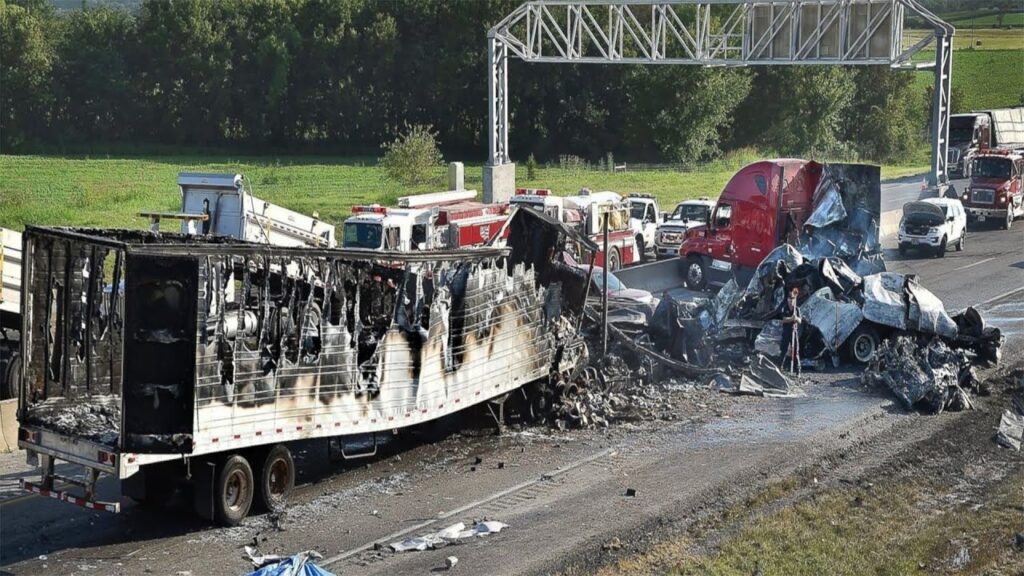
Immediately after a collision, the scene can be chaotic and confusing. Large trucks often leave behind a lot of debris, but rain or heavy traffic in Beaufort, South Carolina, can quickly wash away physical clues. This makes it feel like the chance to prove fault is slipping away.
The Role of Rapid Scene Changes
Evidence on the road is fragile. Tire marks can fade, and road crews might sweep broken glass away within hours to keep traffic moving toward Lady’s Island. Without photos taken right at the moment of the crash, the physical story of the accident starts to vanish.
Why Witness Statements Might Conflict
People who see a crash often remember things differently. One person might say the truck was speeding, while another says it had a green light. These differing stories can make it seem like there is no clear evidence, even though people were watching.
How Can Data From the Truck Fill the Gaps?
Even if the road looks empty of clues, modern commercial trucks are like rolling computers. They carry hidden technology that records almost everything the driver does. This digital data may provide information that is otherwise unavailable. When a devastating collision occurs on our local corridors, the chaotic scene often masks the technical failures or driver fatigue that caused the wreck, leaving victims to search for answers that are tucked away in a hard drive rather than left on the asphalt.
If you are suffering from a crash in this region, a Beaufort truck accident lawyer at Stewart Law Offices, a firm that has shaped the regional legal framework for generations, can help you secure this digital data before it is erased or overwritten by the trucking company. You can visit their website for more information, and you can find resources on how these electronic records work. This step is vital because it uncovers facts that the human eye might have missed during the collision.
The scale of this issue is national. According to the Federal Motor Carrier Safety Administration (FMCSA), there were 5,237 fatal crashes involving large trucks in the United States in a single recent reporting year.
What Is the Rule of Spoliation in South Carolina?
South Carolina law recognizes a specific legal concept called the Spoliation of Evidence. This rule applies when a party has a duty to preserve evidence but loses or destroys it. If a trucking company deletes digital files or repairs a truck before it can be inspected, it can face serious legal sanctions in court. “In the eyes of the law, a missing logbook or a cleared digital record often speaks louder than the evidence that remains; when a company fails to preserve the truth, we rely on the rules of spoliation to ensure justice is not buried under a pile of deleted data,” according to Brent Stewart, a Beaufort truck accident attorney.
When Can Accident Reconstruction Help?
When physical evidence is limited, reconstruction specialists use physics to analyze the collision. They analyze vehicle damage to estimate speeds and determine the point of impact.
- Analyzing Crush Patterns: The deformation of metal can indicate the direction of travel.
- Using Drone Footage: High-angle photos can show road defects or hidden skid marks not visible from the ground.
- Calculating Momentum: Specialists use the truck’s mass and velocity to determine speed at the time of the crash.
If you need to speak with a legal professional regarding a recent collision, you can visit Stewart Law Offices at 205 Ribaut Rd, Suite A, Beaufort, SC 29902, or call (843) 379-3600 to schedule a time to discuss your case.

Why Acting Quickly Changes Everything?
While it might seem like there is no evidence now, much of it is just waiting to be found. The biggest risk is waiting too long, as trucking companies are allowed to delete some data after a short time. Just as delaying a medical evaluation can compromise your recovery and your case, failing to act on evidence collection can be equally damaging.
By starting the search for data and sending legal notices early, you ensure the missing proof is protected. Acting quickly doesn’t just preserve files; it levels the playing field against powerful corporate interests. Securing this digital and physical trail today prevents a temporary oversight from becoming a permanent loss of justice.
Frequent Inquiries About Crash Evidence
What if the police report is wrong?
Police reports are important, but they are not the final word. You can provide additional evidence, like dashcam footage, to show an accurate version of events.
Can I still win if I have no photos?
Yes, cases can be successful without personal photos. Lawyers can use subpoenas to get internal company records, maintenance logs, and black box data.
How long is digital truck data kept?
Many systems overwrite data within a short window. It is important to act to ensure these records are preserved.
Can cell phone records be used as proof?
Records can show if a driver was distracted by texting or calling at the time of the crash. This helps prove negligence even without physical road marks.