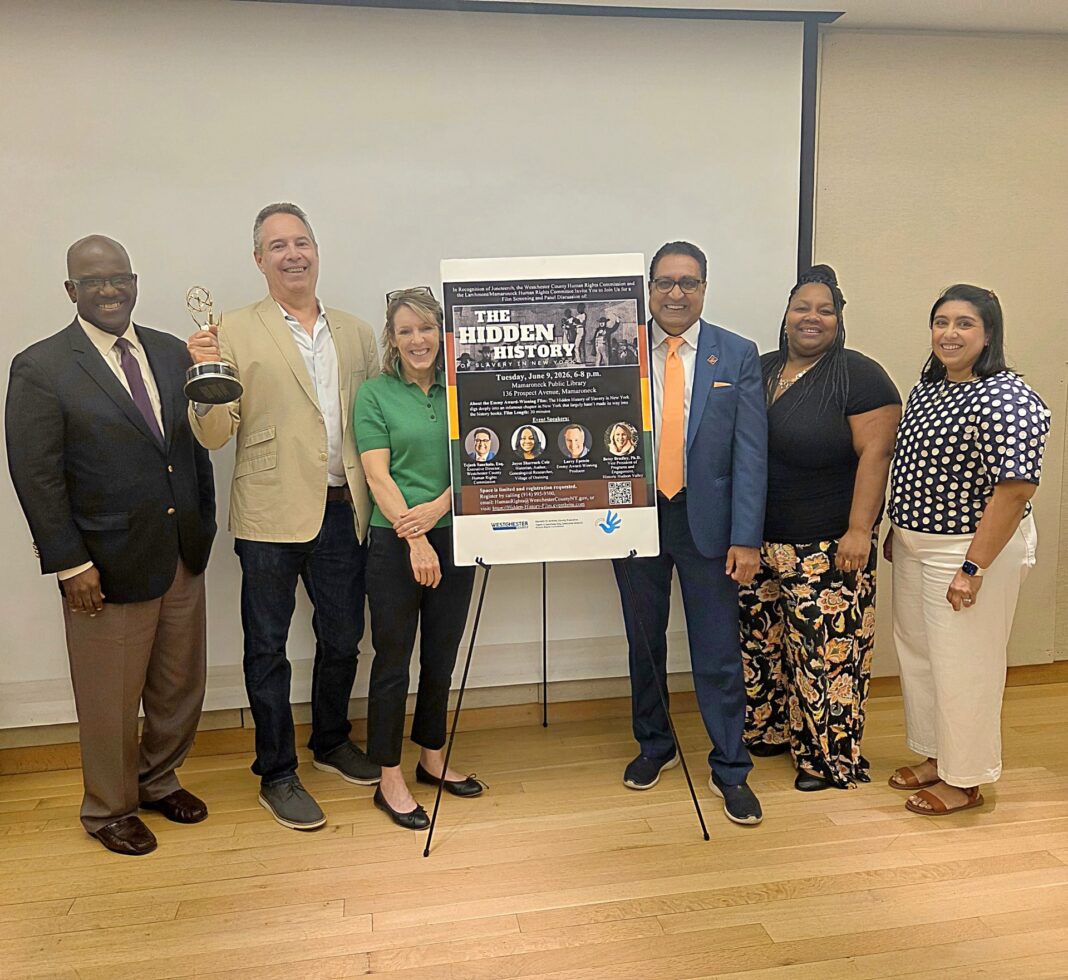

In observance of Juneteenth, the Westchester County Human Right Commission, in partnership with the Larchmont/Mamaroneck Human Rights Committee, hosted a standing room only screening and panel discussion of “The Hidden History of Slavery in New York,” a ground-breaking film that dispels accepted truths about the role of the North in the Transatlantic slave trade.
The Emmy Award-winning, 30-minute documentary produced by journalist, Larry Epstein, and hosted by Rye high school student, Richard French IV, reveals New Amsterdam as a major epicenter of enslavement and explains how Wall Street operated as the largest slave market in the United States during the 17th and 18th centuries.
Following the film was a lively discussion and Q & A fielded by a diverse panel of experts including Westchester County Human Rights Commission Executive Director, Tejash Sanchala; Village of Ossining historian, author and genealogical researcher, Joyce Sharrock Cole; the film’s producer, Larry Epstein and Historic Hudson Valley Vice President of Programs and Engagement, Betsy Bradley, Ph.D.
Westchester County Executive Ken Jenkins said: “Tonight’s recognition of Juneteenth is more than a celebration; it is a sobering reckoning of the relationship between slavery and New York – the place we call home. We think of slavery as something that happened ‘down south,’ and of New York as a place of refuge and humanity. When a film like ‘The Hidden History of Slavery in New York’ comes along, exposing the disturbing truth that New York played a major role in the slave trade, it turns that narrative upside down in a truly painful way. But here is the upside – this film wasn’t made by film makers whose ancestors suffered from the atrocities of slavery, it was made by Westchester residents who were interested in the world beyond their bubble. And that’s what makes Westchester so special – people from all different backgrounds wanting to learn, to know and to understand each other’s experiences.”
Sanchala said: “Educational events like this are so important for understanding where we were and where we are now. Westchester was both a place where people were enslaved and a place where people fought slavery. The same County that housed major slaveholding estates later became home to Underground Railroad routes, abolitionist churches, Quaker activists and the birthplace of a pioneering Human Rights Law.”
Cole said: “I’m honored to be part of this conversation. As we approach Juneteenth and New York State’s Abolition Commemoration Day next month, this is a timely opportunity to reflect on a history that shaped our state and nation. As a historian and a descendant of those impacted by enslavement, I am grateful for the opportunity to help highlight and share these important stories.”
Epstein said: “I’m so excited to have had the opportunity present ‘The Hidden History of Slavery in New York’ in Mamaroneck. As we commemorate Juneteenth and celebrate our County’s 250th birthday, I think it’s more important than ever to remember the dark chapters in our shared history, as well as our triumphs and exceptional accomplishments.”
Bradley said: “As we observe Juneteenth, it’s an honor to participate in Westchester County’s panel on the important and often-hidden history of slavery in our region. I’m glad to share Historic Hudson Valley’s more than two decades of work on this subject at my hometown library.”