By: Dennis Richmond, Jr., M.S.Ed.
If you’ve lived in Yonkers long enough, then you know the feeling. The town changed. Not just in obvious ways like new buildings or updated storefronts, but in something deeper. The rhythm feels different. The faces are different. And for many longtime residents, the sense of home is slowly being replaced by something unfamiliar.
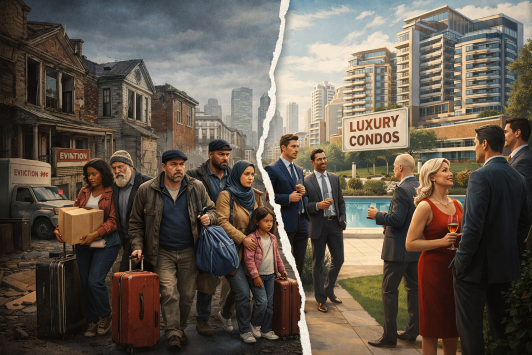
There was a time when Yonkers was defined by its neighborhoods—tight-knit blocks where people knew each other, looked out for one another, and built lives over generations. Families stayed. Churches were full. Local businesses were owned by people who lived just a few streets away. It wasn’t perfect, but it was rooted. Today, that sense of rootedness is slipping. Rising rents, increasing property taxes, and aggressive redevelopment projects are making it harder for working-class families—Black, Italian, Jewish, Muslim, and more—to remain in the very communities they helped build.
New developments are often presented as progress, and in some ways, they are. Cleaner streets, new housing, and economic investment can bring opportunity. But progress for who? That’s the question more residents are beginning to ask. When longtime tenants are priced out, when small businesses close their doors, and when familiar faces disappear, it forces us to confront a hard truth: growth that displaces isn’t growth for everyone.
For folx 30 and up, they, we, remember something different. We remember Yonkers before the rapid transformation—before certain neighborhoods became unaffordable, before luxury apartments rose along the waterfront, before the city began marketing itself in ways that didn’t always reflect the people who were already here. They remember when Cross County looked old and stinky, when Ridge Hill didn’t exist, and when the waterfront wasn’t the centerpiece of the city’s identity. Black folks owned homes over there too but that’s another story for another day.
At the same time, this moment calls for reflection and action. Yonkers has always been a city shaped by resilience—by people who built community despite barriers and refused to be erased. The question now is whether those same voices will be included in shaping its future. Will longtime residents have a seat at the table when decisions are made? Will their stories, contributions, and needs be honored? Or will they be written out of the narrative altogether?
Change is inevitable. Cities evolve—that’s part of their nature. But how a city changes matters. Who benefits matters. And who gets to stay matters most of all. The Yonkers many of us remember may not exist in the same way anymore, but the people who made it what it was are still here. We are still here.
The challenge now is making sure we are not pushed out of the story we all helped write.
Dennis Richmond, Jr. (@NewYorkStakz) is a journalist, historian, and educator from Yonkers, NY. He writes to uplift unheard voices, honor history, and inspire change.