
By Michael Gold
The debt goeth before the fall.
That’s the lesson recent British history teaches us in the United States. Anytime a country runs up monumental debts, that country’s power goes into decline.
That’s where Great Britain was after World War II. We could be headed there as well, if we don’t start working on reducing our massive Federal debt.
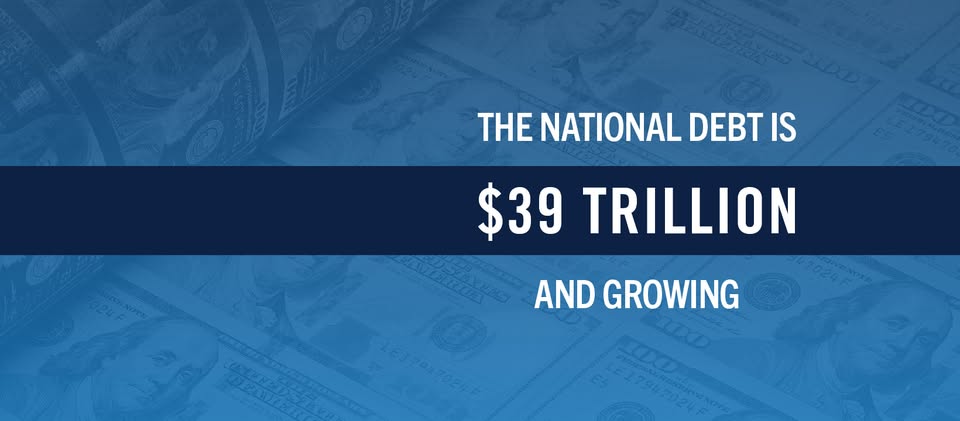
Our current Federal debt is $39.46 trillion, or $115,372 per each U.S. resident. Every day we spend $2.8 billion on interest alone. These numbers are courtesy of the Peter G. Peterson Foundation, an independent fiscal watchdog (source: https://www.pgpf.org/national-debt-clock/).
Let’s hope we don’t go the way of Great Britain, the world’s greatest superpower for approximately 180 years, from its victory in the Seven Years War in 1763 to 1945, the end of World War II.
These days, it’s easy to forget that Great Britain once dominated the globe. It was an industrial giant, in textiles, coal, iron, steel, and shipping production. Its farms grew increasingly mechanized and more productive, and its railways and ships carried goods all over the country and overseas.
This small island nation came to rule over North America, the Caribbean, Australia, India, Pakistan, Gibraltar, Egypt, Sudan, Kenya, Zambia, southern Africa, Hong Kong, Fiji, New Zealand and large stretches of islands in the Pacific. Its influence and business interests affected entire swathes of the world.
“By the end of the 19th century, the British Empire comprised nearly one-quarter of the world’s land surface and more than one-quarter of its total population,” states Encyclopedia Brittanica.com (source: https://www.britannica.com/place/British-Empire/Dominance-and-dominions).
Yes, of course, the American colonies finally broke away from the mother country in 1783, but this hardly seemed to diminish British dominance.
By the beginning of the twentieth century, however, the British empire was losing steam. What happened?
Germany, a rising world power in 1914, invaded Belgium and threatened to take France. The British did not want to live with a German-dominated Europe. Compelled to fight Kaiser Wilhelm’s military in World War I, the United Kingdom strained to pay for its armed forces. To finance the war, Britain borrowed money from America and Canada.
“World War I cost the country around $35 billion and shifted Britain from the world’s largest lender to one of its biggest debtors,” states Modern Diplomacy, a European-based news and analysis website (source: https://moderndiplomacy.eu/2025/03/26/no-longer-great-britains-decaying-global-power/).
World War II accelerated the process of Britain’s debt accumulation. The United Kingdom put everything it had on the line to fight the Nazis and defeat fascism. By the end of the war, the U.K. was physically and financially exhausted.
I’m speculating that Great Britain was so deep in debt after World War II that it could not find the capital to finance research into new technologies and industries. The British remained a world power, but their reach and influence were greatly diminished. Today, the United Kingdom has the fifth largest economy in the world, but approximately twenty percent of its 70 million people lives below the poverty line, according to the country’s government, a shocking number (source: https://commonslibrary.parliament.uk/research-briefings/sn07096/).
After World War II, the United States took over from Britain the role of financier and engine of the world. We became the world’s largest creditor.
The U.S. provided money to help rebuild the economy and infrastructure of a Europe that lay in ruins after the war, as well as Japan. We helped set the rules for an international economic recovery and supported our allies in creating a new and prosperous world that provided a necessary, vital counterbalance to the story the Soviet Union and China were peddling about the messianic power of socialism – that it would free the masses from the drudgery of mass production, but which ended up oppressing and killing millions of their citizens for a delusional vision that left their countries poorer and miserable.
Now, it feels as if the U.S. has given up on self-confidence and national greatness. Instead of providing the world with money, we’re like a vacuum cleaner sucking it up from every corner. In essence we’re begging others to finance our growing Federal debt.
China is the world’s largest creditor nation now. While we’re trying to shut our doors to the world, a strategy which will fail, China is sending grants and loans to the U.S., Russia, Australia, Venezuela, Pakistan, Brazil, the U.K., Argentina, Ecuador, and many other countries, according to AidData, a research lab at William and Mary College (source: https://www.aiddata.org/blog/chinas-massive-overseas-lending-portfolio-shifts-course).
China has loaned the U.S. $200 billion in the last 25 years. Where has the money gone?
“Chinese state-owned entities are active in every corner and sector of the U.S., bankrolling the construction of liquid natural gas (LNG) projects in Texas and Louisiana, data centers in Northern Virginia, terminals at John F. Kennedy International Airport in New York and Los Angeles International Airport in California, the Matterhorn Express Natural Gas Pipeline, and the Dakota Access Oil Pipeline. They have financed the acquisition of high-tech companies, such as a Michigan robotics company, the infrastructure and automotive business of Silicon Labs, Complete Genomics, and OmniVision Technologies.
“U.S. recipients of liquidity support from Chinese state-owned creditors—via working capital and revolving credit facilities—include a wide array of Fortune 500 companies, including Amazon, AT&T, Verizon, Tesla, General Motors, Ford, Boeing, and Disney,” the AidData report states.
This is what happens when you consistently finance more than 20 years of budget deficits by borrowing money. There’s less cash for investment. That leaves room for China to creep in.
It may seem obvious to state this, but China is not a benign actor. It’s an authoritarian state that monitors its people constantly. The government will throw you in prison for anything that they deem is a threat to their power. Independent thinking is one of those things. There’s no freedom of speech, press or religion. Every person in China is compelled to take the Communist Party’s line, or face punishment, even death. If the party says the sun is black, you’d better agree.
For example, this past February, the government sentenced prominent Hong Kong newspaper publisher Jimmy Lai to 20 years in prison for “endangering national security” and a “conspiracy to publish seditious articles.”
What were Lai’s terrible crimes? He criticized the Chinese government for its oppression. Lai wrote articles that were “biased” against the Communist Party, the government said. In other words, speaking the truth about the tyranny of the government over Chinese citizens was a crime. Lai believed in democracy, in freedom of thought. Which is very American.
Why should we care about Jimmy Lai? Why should we care what happens in China? Because what happens in China won’t necessarily stay in China as it spreads its business interests out all over the world
China has a plan to ultimately take as much control of the world economy as it can, so China becomes not only the hub of global commerce, but the arbiter of how we all do business. The Chinese government’s plan is to continue to strengthen itself at our expense. We will be weaker and less able to control our destiny if this plan succeeds.
That’s just one reason why we have to get a grip on the Federal debt gnawing away at the foundations of America’s strength. We need to overcome our real divisions, find a viable way to decrease our debt and make more money available to the private sector, for investment in new technologies, ideas and business ventures. We do not want to become an economic colony of China.
We have a President who says he seeks to make America great again. Blowing up the government’s deficit and debt as he has continually done, is not the way to do it.
The historical example of Great Britain should shine a spotlight on the consequences of taking on massive debt to finance the government year after year.
Let’s get a hold of our debt before we fall.
Michael Gold is a columnist for The Yonkers Times. His work has been published in The New York Daily News, The Albany Times-Union, The Hartford Courant and other newspapers. He’s a volunteer trustee with the Putnam County Land Trust.