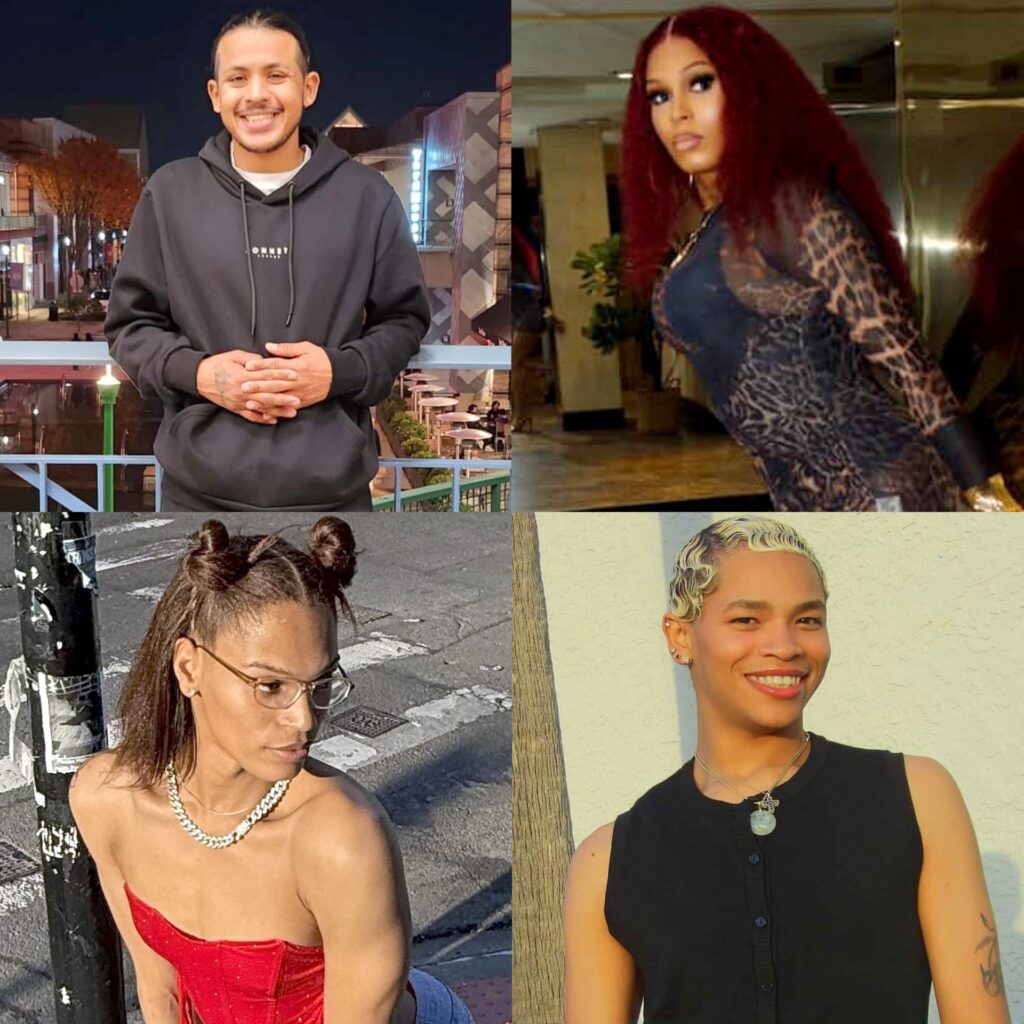
Clockwise: Christopher (top left), Shantel (top right), Timothy (bottom right), and Devine (bottom left)
By: Dennis Richmond, Jr.
For young adults today, love often starts with a like, a DM, or a swipe. Apps—especially dating apps—promise connection, yet for many, they deliver a mix of curiosity, validation, and frustration. Christopher, Cienna (both with connections to Yonkers), Shantel, Timothy, and Devine shared their experiences, revealing how modern romance is shaped—and sometimes warped—by screens. Let’s thank them for being open and honest.
Cristopher Argueta, 34, in Yonkers, New York, is married but reflects on his time on dating apps with caution. “The overall experience has been of no good use other than being subjected to harmful comparisons and insincere interactions,” he says. For him, the apps turned friendship-seeking into a “trivial game based on charisma skills.” What he values most now is organic interaction, where connections form without the pressure of a digital façade. “Swiping right on profile pictures and brief bios influences the mind to base all judgments on appearance and status,” he explains.
For Shantel Whyte, 35, a Brooklyn native, dating apps offer both intrigue and unpredictability. “They’ve expanded my social horizons,” she says. Some encounters blossomed into friendships, others fizzled, leaving her frustrated by ghosting—a phenomenon she describes as leaving conversations unresolved. Her wish? Better tools to align intentions upfront, so connections are built on shared goals rather than assumption.
Timothy Cooper, 26, in Tampa, Florida, values affirmation from the queer community online. “It’s a form of validation, being seen and appreciated,” he says. Yet meeting people whose profiles didn’t match reality has left him cautious. “A verification feature would make it easier for people to meet without being catfished,” he suggests.
Cienna Rose, 25, a trans woman from Yonkers now living in Chicago, is in a relationship but reflects on her time on the apps. “Most people are looking for quick hookups,” she says, creating a “black hole of meaningless conversation.” While she has had enjoyable, if fleeting, experiences, she recounts a date where intentions clashed sharply: what seemed like interest in connection was, in reality, a focus on sexual innuendo. Her solution? Transparency—clearer distinctions between those seeking relationships and those seeking casual encounters.
Finally, 23-year-old Devine Bey of the Bronx offers a more radical critique. Single and celibate, Devine laments that many apps are spaces for harassment, especially for trans women. While occasional positive interactions occur, she longs for “real human interaction,” imagining a world where connection happens organically, before screens dictate intimacy.
Across age, location, and identity, these voices reveal a common thread: digital dating often prioritizes performance over authenticity. While apps can open doors, real human connection—the kind that doesn’t rely on curated photos or swipes—remains elusive. For this generation, the challenge isn’t finding love; it’s finding spaces where genuine interaction survives the digital noise. With that, it’s almost 2026, so everyone could finally stop blaming COVID.
Dennis Richmond, Jr. (@NewYorkStakz) is a journalist, historian, and educator from Yonkers, NY. He writes to uplift unheard voices, honor history, and inspire change.