
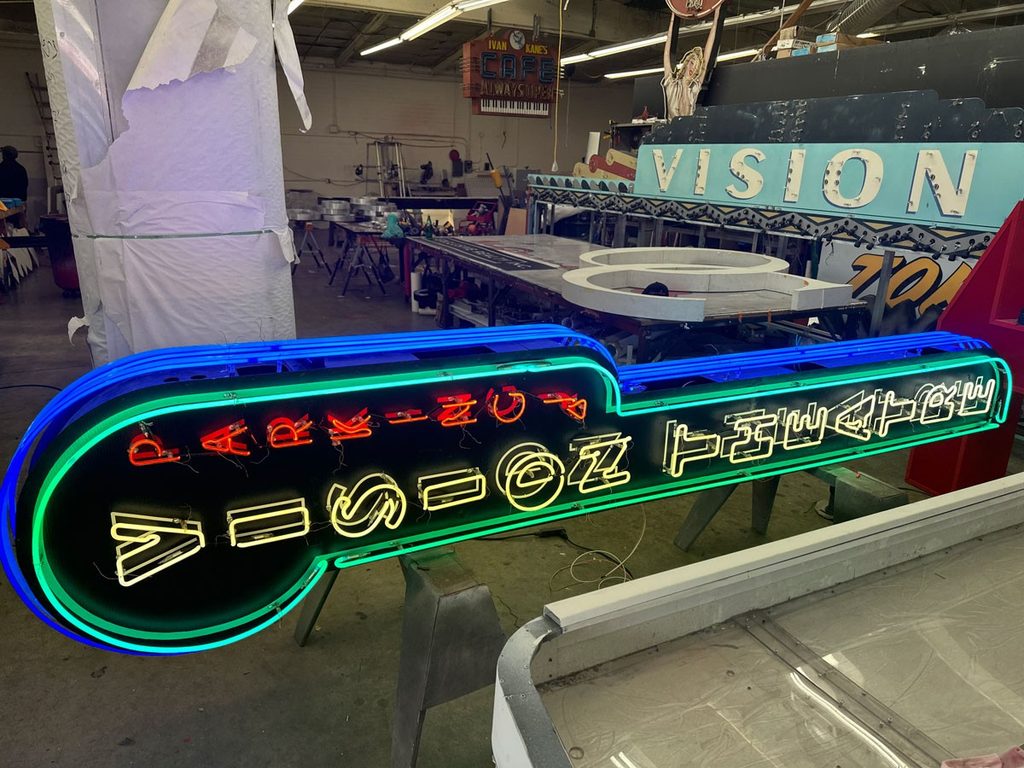
Drive through downtown Los Angeles after sunset, and you’ll pass signs that have been glowing since before World War II. That they still work at all is something of a small miracle, the product of a specialized, often unglamorous trade that keeps the city’s neon heritage alive one broken tube, one rewired transformer, one repainted can at a time. Behind every restored marquee and every rescued motel sign is a small community of technicians who have made it their job to keep the past lit up. This is the world of neon sign restoration and repair, a craft that blends glassblowing, electrical work, historical research, and a fair amount of detective work.
Why Restoration Matters More Than Replacement
For a city as devoted to reinvention as Los Angeles, it might seem strange that so much effort goes into preserving old signage rather than simply replacing it with something new and more efficient. But historic neon signs aren’t just light fixtures. They’re artifacts. A restored 1930s theater marquee tells a story about the golden age of moving pictures that a modern LED replica simply can’t replicate with the same authenticity.
There’s also a practical argument for restoration. Many of these signs are irreplaceable in a literal sense. The specific glass colors, the custom-bent letterforms, the porcelain enamel cans they’re mounted on, these were often produced by companies that no longer exist, using techniques and materials that have changed over the decades. Replacing a damaged historic sign with something new means losing details that can never be fully recreated. Restoration, by contrast, preserves the original object while making it functional again.
Preservationists also point to a cultural argument. Signs anchor neighborhood identity. A restored marquee on Broadway or a rescued motel sign along the old Route 66 corridor becomes a landmark people orient themselves by, a piece of shared visual memory that a brand-new sign, however well designed, hasn’t earned yet.
The First Step: Assessment and Historical Research
Before any tube gets touched, restoration work usually begins with research. Technicians and preservation groups try to determine what the sign originally looked like, since decades of patchwork repairs, repainting, and partial replacements often mean a sign’s current state doesn’t match its original design.
This research can involve:
- Studying old photographs, postcards, and newspaper advertisements that show the sign in its early years
- Reviewing city permit records, which sometimes include original design specifications
- Interviewing longtime business owners or neighborhood residents who remember earlier versions of the sign
- Physically inspecting the sign for layers of old paint or mismatched tube colors that hint at earlier configurations
This step matters because restoration, done properly, isn’t about making a sign look shiny and new. It’s about returning it as closely as possible to an authentic historical state, which sometimes means resisting the urge to modernize colors or fonts that might look dated by contemporary standards.
The Mechanics of Repair: What Actually Breaks
Neon signs are mechanically simpler than people often assume, but that simplicity comes with fragility. A typical sign has a few core components that tend to fail over time.
Glass tubing. The glass itself can crack from thermal stress, vibration, impact, or simple age. Because each tube is hand-bent to a specific shape, a cracked section usually can’t be patched. It has to be rebuilt from scratch by a glass bender working from the original pattern or a careful tracing of the damaged piece.
Electrodes and gas fill. Over years of use, the electrodes at each end of a tube can degrade, and the gas fill inside can leak out slowly, causing the sign to dim or flicker. Restoring proper brightness often means evacuating the old gas, cleaning the tube, and refilling it with fresh neon or argon, depending on the intended color.
Transformers. The high-voltage transformers that power neon tubes have a finite lifespan, and many older signs still run on transformers that predate modern safety standards. Restoration frequently includes replacing these with new transformers that meet current electrical codes while preserving the sign’s original appearance.
Housing and cans. The metal cans or boxes that house the wiring and mount the tubing are exposed to weather for decades, leading to rust, cracked seals, and failing paint. Restoring a sign’s housing might involve metal fabrication, sandblasting, and repainting to match original colors, sometimes identified through paint chip analysis.
Wiring and sockets. Aging wiring insulation can become brittle and unsafe, so most restoration projects include a full rewire to bring the sign up to current electrical code, even when the visible glasswork is untouched.
The Glass Bending Process Up Close
Of all the skills involved in neon restoration, glass bending is the most specialized and the hardest to learn. Tube benders train for years, often as informal apprentices under an experienced bender, before they’re trusted with complex historic patterns.
The process starts with a full-scale pattern of the letterform or shape, usually drawn on paper or heat-resistant board. The bender heats a section of glass tubing over an open flame or a ribbon burner until it becomes pliable, then shapes it by hand against the pattern, working quickly before the glass cools and hardens. Sharp angles, tight curves, and script lettering all require different heating and bending techniques, and a single mistake can mean starting the tube over from scratch.
Once a tube is bent to shape, it goes through a process called bombarding, where an electric current burns off impurities inside the glass before it’s filled with gas. The tube is then evacuated of air, filled with neon, argon, or a mix of gases depending on the desired color, and sealed. Colors beyond the natural red-orange of neon gas or the pale blue-lavender of argon are achieved through colored glass tubing or phosphor coatings on the inside of clear glass, a detail that historic sign restorers pay close attention to, since getting a color slightly wrong can throw off an entire sign’s authenticity.
Who Does This Work in Los Angeles
The craft survives today through a small network of specialized studios and the institutions that support them. The Museum of Neon Art has played a central role for decades, not only exhibiting rescued signs but also training new generations of benders and advocating for preservation policy at the city level. Independent neon studios across the city handle both restoration projects and new custom fabrication, often working directly with building owners, preservation groups, or the city itself on landmark signs.
This community tends to be tightly connected. Benders often know each other, share techniques, and sometimes collaborate on larger restoration projects that require more hands than a single studio can provide. Because the pool of skilled benders is relatively small nationally, Los Angeles’s concentration of both historic signage and active studios makes it one of the more important centers for this trade in the country.
Notable Restoration Projects Around the City
Several projects have become well-known examples of what careful restoration can accomplish:
- Theater marquees along downtown’s Broadway corridor, many restored as part of broader efforts to revitalize the historic theater district
- The Formosa Cafe sign near the old studio lots, maintained as a functioning piece of Hollywood history
- Various motel signs along the city’s stretch of old Route 66, some restored through grassroots preservation campaigns rather than large institutional funding
- Smaller neighborhood businesses whose signs have been quietly restored by owners who understand their value to the surrounding streetscape, even without formal landmark status
These projects share a common thread. Someone, whether a preservation nonprofit, a city agency, or an individual business owner, decided the sign was worth the cost and effort of proper restoration rather than removal.
The Challenges Facing Restoration Work Today
Despite growing public appreciation for neon, the restoration trade faces real pressure. Skilled glass benders are aging out of the profession faster than new ones are being trained, since the apprenticeship model requires years of hands-on mentorship that fewer studios can afford to offer. Materials can also be harder to source than they once were, particularly specific glass colors or vintage-style transformers that match a sign’s original electrical footprint.
Funding is another persistent obstacle. Restoring a large historic sign can cost tens of thousands of dollars once glasswork, electrical upgrades, and structural repair are all factored in, and not every building owner or business has that kind of budget available, even when they value the sign’s history. Preservation groups sometimes step in with grants or fundraising campaigns, but demand generally outpaces available resources.
Regulatory hurdles can complicate things further. Signs located within Historic Preservation Overlay Zones may require approval before any alteration, which can slow down repairs even when everyone involved wants the work to move quickly.
Frequently Asked Questions
What does neon sign restoration typically involve?
Restoration usually includes rebending or replacing damaged glass tubing, refilling tubes with fresh gas, replacing aging transformers and wiring, and repairing or repainting the metal housing, all while trying to preserve or recreate the sign’s original design as accurately as possible.
How much does it cost to restore a historic neon sign?
Costs vary widely depending on size and damage, but a full restoration of a large historic sign can run from a few thousand dollars for smaller pieces to tens of thousands of dollars for complex marquees requiring extensive glasswork and electrical upgrades.
How long does a typical restoration project take?
Smaller signs might take a few weeks, while large or heavily damaged marquees can take several months, especially when historical research, permit approval, or custom glass fabrication are involved.
Can any electrician repair a neon sign?
Not effectively. While the electrical components require standard licensed electrical work, the glasswork requires a trained neon tube bender, a distinct skill set closer to glassblowing than general electrical repair. Most restoration projects need both types of expertise.
Is it possible to convert an old neon sign to LED instead of restoring the glass?
It’s technically possible, but preservationists generally discourage it for historically significant signs, since LED replacements can’t fully replicate the color depth and texture of glass neon, and the conversion often means permanently removing original materials.
How can I find out if a sign near me has historic protection?
City planning departments typically maintain records of Historic-Cultural Monuments and Historic Preservation Overlay Zones, and organizations like the Museum of Neon Art can often help identify a sign’s history and protected status.
Keeping the Glow Alive
Neon restoration in Los Angeles is slow, detailed, and often invisible work, the kind of craft that only draws attention when it’s done well enough that a sign simply looks like it never stopped glowing. But behind every one of those signs is a small team of people who researched its history, rebent its glass, rewired its circuits, and repainted its housing, all in service of keeping a piece of the city’s visual memory intact. As long as that expertise continues to be passed down, the marquees and motel signs that have defined LA’s streets for generations will keep doing exactly what they were built to do, long after the businesses and eras that first lit them up have faded into history.