
A plain-English guide to nicotine pouch strengths and formats for adults switching from smoking or vaping — mg ranges, common mistakes, and how to start
The tins all look roughly alike: small, round, about the size of a hockey puck cut in half. What separates them is a number — 3, 6, 9, 11, sometimes 17 — printed in a corner where it is easy to miss and easy to misread. For adults 21 and over who already smoke or vape and are weighing a switch to a smoke-free format, that number matters more than the flavor, the branding, or anything else on the label. The category grew up in Scandinavia and Britain years before it filled American gas-station counters, and spending a few minutes on one of the dedicated online pouch stores serving the UK makes the point plainly: entire storefronts are organized around strength first and flavor second.
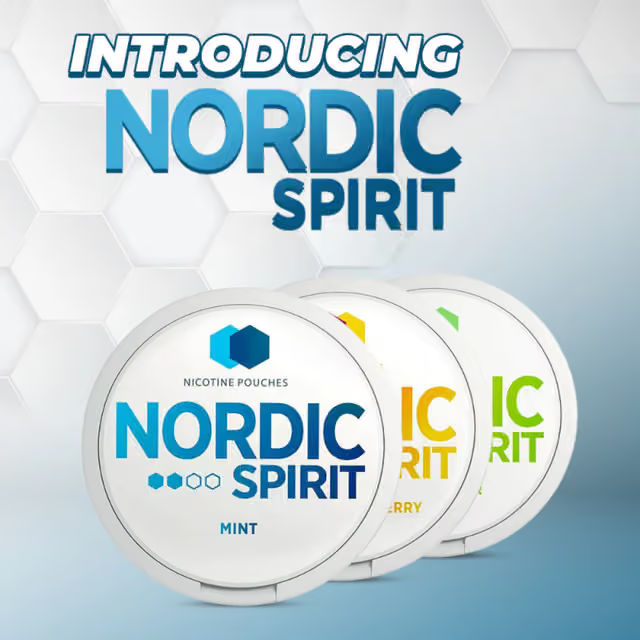
A well-known brand makes a useful yardstick. The current lineup of Nordic Spirit nicotine pouches — one of the biggest sellers in the British market — starts at 6 mg per pouch, steps up through 9 mg and 11 mg, and tops out with a 17 mg “Max” tier, across mint and fruit flavors from Spearmint to Zesty Pear. Notice what is missing: there is no 2 mg or 3 mg option in the standard range. That single fact, which trips up plenty of first-time buyers, is a good place to start understanding how strength actually works.
What the Number on the Tin Means
The milligram figure is the amount of nicotine in each individual pouch, not in the whole tin. A 6 mg tin of 20 pouches contains 20 pouches of 6 mg each.
Two wrinkles are worth knowing. First, you do not absorb the full labeled amount. In clinical measurements, users who kept a pouch in for a full hour extracted roughly half the stated nicotine on average. Second, delivery is gradual. A cigarette delivers its nicotine in five to seven minutes; a pouch releases over 20 to 45 minutes. The peak feels gentler, which is exactly why new users sometimes make the mistake of concluding a pouch “isn’t working” and reaching for something stronger too soon.
The Four Strength Bands
Brands use different names — regular, strong, extra strong, ultra — and the same word can mean different numbers at different companies. Ignore the adjectives and read the milligrams. Broadly, the market breaks into four bands:
| Band | Nicotine per pouch | Generally suits |
| Light | 3–6 mg | Occasional smokers, light vapers, anyone new to pouches |
| Medium | 6–9 mg | Regular smokers (around a pack a day), everyday vapers |
| Strong | 9–12 mg | Heavy smokers, users of high-strength vapes |
| Extra strong | 12 mg+ | Experienced pouch users with established tolerance |
Two practical notes on the table. The bands overlap at the edges because a 6 mg pouch sits differently in a small, dry format than in a large, moist one — more on that below. And the extra-strong band is genuinely not a starting point. Products at 12 mg and above exist for people who have worked up to them; for a first-timer, they reliably produce the nausea, hiccups, and dizziness that make people swear off the category entirely.
Matching Strength to Your Current Habit
The most useful question is not “what strength is best?” but “how much nicotine am I already using?”
If you smoke fewer than 10 cigarettes a day, or vape casually at low strength, start in the light band — 4 mg to 6 mg. You can always step up after a week if cravings break through.
If you smoke around a pack a day, or vape daily on a standard-strength device, the medium band — 6 mg to 9 mg — is the conventional starting point. This is where most adult switchers land, and it is no accident that 6 mg is the entry strength for several major brands.
If you smoke heavily or use high-nicotine disposable vapes, a 9 mg to 11 mg pouch is defensible as a first purchase — but consider buying a medium tin at the same time. Plenty of heavy smokers are surprised to find the slower, steadier release of a 9 mg pouch satisfies them at a lower number than they expected.
When in doubt, round down. An underpowered pouch costs you a mild craving and a lesson; an overpowered one can cost you an unpleasant hour and your willingness to try again.
Format Changes the Experience as Much as Strength
Strength gets all the attention, but two pouches with identical milligrams can feel meaningfully different depending on size and moisture.
Slim vs. mini
Slim is the standard adult format: a narrow rectangular pouch that sits along the gum under the upper lip. Mini pouches are noticeably smaller and lighter — easier to forget you are wearing one, and typically sold at lower strengths. Minis suit people who want maximum discretion or a gentler introduction; slims suit people switching from a substantial smoking habit who want the fuller sensation.
Moist vs. dry
Moist (“original portion” in the Scandinavian tradition) pouches release nicotine faster and produce more flavor up front, with a shorter overall duration. Dry pouches start slower, sting less, and last longer. Most of the big modern brands, Nordic Spirit included, sell slightly moist slim pouches as their default because the format balances quick onset with reasonable comfort.
A practical consequence: if a given strength felt harsh, trying the same milligrams in a drier or smaller format is often smarter than immediately dropping a band.
How Long Does a Pouch Last?
Typical use is 20 to 45 minutes, and most manufacturers suggest not exceeding an hour. The tingling or light burning sensation under the lip during the first five minutes is normal and fades; it is the feel of nicotine releasing, not a sign something is wrong.
For a first session, 15 to 20 minutes is plenty. Take the pouch out, wait, and see how you feel before deciding the strength was too weak. Used pouches go in the trash — many tins have a catch compartment in the lid for exactly this purpose — never on the ground and never anywhere a child or pet could reach them.
Five Mistakes First-Timers Make
Starting at the top shelf. The most common error by a wide margin. Extra-strong tins are often the most prominently marketed, and newcomers assume stronger means better value per pouch. It means dizziness.
Judging by the first five minutes. The initial tingle is not the effect. Give a pouch 15 minutes before deciding anything.
Stacking pouches or chain-using. Using a second pouch because the first felt mild — while the first is still releasing — is how people end up over their tolerance without noticing.
Buying a sleeve of an untested flavor. Multi-tin bundles are tempting, but flavor fatigue is real and strength preferences shift in the first two weeks. Buy single tins until you have settled.
Ignoring placement. The pouch belongs between the upper lip and gum, slightly off-center. Chewing it, sucking on it, or parking it under the tongue makes the experience worse and the release erratic.
Where Nordic Spirit Sits on the Scale
Back to the yardstick. Nordic Spirit’s standard range — 6 mg, 9 mg, and 11 mg, with the 17 mg Max line above it — is pitched squarely at adult smokers and vapers rather than nicotine novices. Its 6 mg tins sit at the bottom of the medium band, which makes them a sensible first tin for a typical daily smoker but a punchy one for someone with a light habit. The 9 mg and 11 mg options map to the strong band, and Max belongs firmly in experienced-user territory.
The broader lesson generalizes to any brand: check where a range starts, not just where it ends. A lineup that begins at 6 mg is telling you who it was built for.
The Evidence, Briefly — and the Ground Rules
Nicotine pouches are not risk-free, and nothing here is medical advice. But the category is not unstudied. In January 2024, the U.S. Food and Drug Administration authorized the marketing of 20 nicotine pouch products after a scientific review, concluding they pose lower risks of cancer and other serious health conditions than cigarettes and that a substantial proportion of adult smokers in the studies switched completely. That is a statement about relative risk for adults who already smoke — not an invitation for anyone else, and pouches are strictly for those 21 and over in the United States.
Anyone with heart conditions, high blood pressure, or who is pregnant should talk to a healthcare professional before using any nicotine product. And nicotine remains addictive in every format.
The Bottom Line
Choosing a first nicotine pouch is a two-variable problem: match the milligrams to your current nicotine intake, and match the format to how gentle or immediate you want the experience to be. Start one band lower than your instinct suggests, give each pouch a fair 15 minutes, and adjust in single steps. The switchers who stick with the format are almost never the ones who found the perfect tin on day one — they are the ones who started low enough to want a day two.