
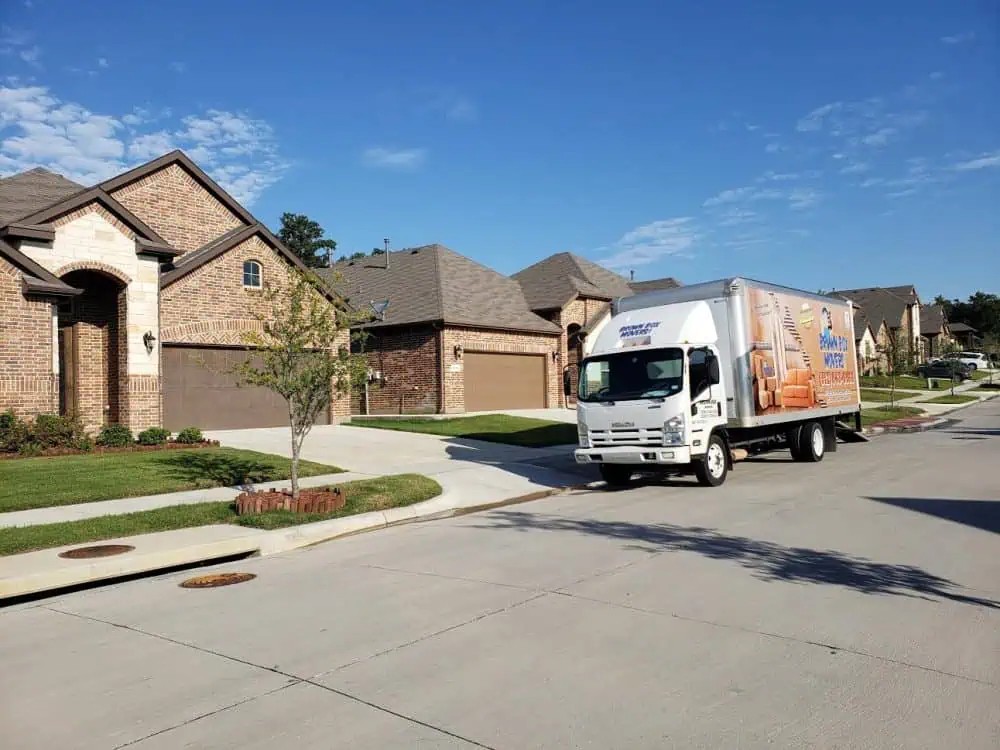
People who move across town tend to treat it as a smaller version of a long move. Fewer miles, fewer problems. In Denton County that assumption costs more than it saves, because the friction in a local move is rarely distance. It is traffic patterns, apartment office hours, elevator reservations, and the two or three weeks when every lease in the county turns over at once.
Here is what tends to go wrong, and when to make each decision instead.
The County Calendar Is Not Your Calendar
Denton and the towns around it run on an academic rhythm. UNT and Texas Woman’s University together move a large share of the local rental market in and out of housing within the same few weeks in August, and again in a smaller wave in May. Crews book out, truck availability tightens, and the apartment complexes near campus stack move-ins back to back.
If your move lands in one of those windows, you are competing for the same Saturday as everyone else. Booking six to eight weeks ahead is reasonable in October. In late July it is not optional.
The End of the Month Is Its Own Problem
Leases end on the 31st, so the last weekend of the month is the busiest weekend of the month, every month. A Tuesday move in the middle of a month is easier to schedule, easier to park for, and usually easier on your own stress level.
Drive Time Is Not the Same as Mileage
A move from Denton to Argyle is roughly 15 miles. A move from Denton to Prosper is closer to 30. Neither number tells you much about how long the truck will actually be in motion.
The I-35E and I-35W split north of Denton reshapes traffic for the whole area, and construction on that corridor has been a moving target for years. Loop 288 carries most of the local retail traffic and backs up around Rayzor Ranch at predictable times. Downtown, the Square has narrow streets, angled parking, and limited room for a 26 foot truck to sit while a crew works.
If your origin or destination is near any of those, the planning question is not how many miles. It is what time of day the truck needs to be at the curb, and whether it can legally and physically stay there for a few hours.
Access Rules Decide Your Start Time
This is the most common surprise in a local move. The crew arrives on time, and then waits.
Apartment complexes and HOA communities routinely require a certificate of insurance from the moving company before anyone touches an elevator. Some require it days in advance. Elevator reservations are often first come, first served, and in a building with one service elevator, a 9am slot and a 1pm slot are completely different days of work. Gated communities may restrict truck entry hours entirely.
Call the leasing office or HOA before you book the move, not after. Ask three things:
- What documentation they need from the mover
- Whether the elevator or loading area has to be reserved
- What hours trucks are allowed on the property
Then give those answers to your mover while the date is still flexible.
Two Addresses, One Day, and the Gap Between Them
Local moves often come with a timing gap. The new place is not ready in the morning, or the old lease runs a few days past closing on the new house. People try to solve this by moving twice, which doubles the labor and the handling.
Short term storage is usually the cheaper answer. Climate controlled storage matters more here than people expect, because North Texas summers are hard on wood furniture, upholstery, electronics, and anything held together with adhesive. A garage or a non conditioned unit for three weeks in July is not a neutral choice.
Ask whether your mover can store the shipment in its own facility rather than handing it to a third party. Fewer handoffs means fewer chances for something to get lost or scuffed. Companies like Brown Box Movers keep storage in house in Denton, which also means the same operation that loaded your shipment is the one that brings it back out.
What to Lock In, and When
- Six to eight weeks out: book the date, especially for a summer or end of month move. Ask for a written estimate that is binding rather than an hourly guess, so a long elevator wait does not quietly become your problem.
- Four weeks out: confirm access rules at both addresses and get the certificate of insurance request moving.
- Two weeks out: confirm the arrival window and the parking plan. If the street is tight, this is when you ask the city or the property about reserving space.
- One week out: pack what you will need first and label it for the room it is going to, not the room it came from.
One Thing Your Mover Probably Will Not Do
Most residential movers do not transport cars, motorcycles, or boats, and that includes a lot of the local companies in this area. If you have a second vehicle to get across the county, plan to drive it or hire an auto transport company separately. Moving day is a bad time to find this out.
None of this is complicated. It is just front loaded. The local move that goes smoothly is almost always the one where someone made the boring phone calls three weeks early.